
Tagged: Christmas
A Difficult Joy

Listen to me, you who pursue righteousness,
you who seek the Lord.
Look to the rock from which you were hewn
and to the quarry from which you were dug.
Look to Abraham your father
and to Sarah, who bore you,
for he was but one when I called him,
but I blessed him and made him many.
For the Lord will comfort Zion;
he will comfort all her waste places
and will make her wilderness like Eden,
her desert like the garden of the Lord;
joy and gladness will be found in her,
thanksgiving and the voice of song. (Isa. 51:1-3 NRSV)
Hope to the Exiles
One of my favorite Christmas songs is O Come O Come Emmanuel. It is probably one of the oldest songs we sing in church, being written in 800 AD (1200 years ago). This old hymn was sung by monks as part of their Christmas vespers or prayers.
O come, O come, Emmanuel,
And ransom captive Israel;
That mourns in lonely exile here,
Until the Son of God appear.
Rejoice! Rejoice! Emmanuel
Shall come to thee, O Israel.
One thing I love about it is its slow and lamentful tone, as well as its proclamation of hope and joy.
This verse speaks to what this passage in Isaiah is really talking about: the difficult joy of God’s hope. The people are in exile and ruin. Their capital city, Jerusalem, Zion, with its temple, the centerpiece to how the people relate to God, how they know God is present to them, has been leveled to the ground and burned, reducing the countryside, as the prophet describes here, to a waste.
They have experienced the loss of their homes. Many of their family members were killed, and the people were divided. Poor peasants were left to the broken countryside of a now vassal state for an oppressive empire. If you were educated or useful in some way, you were taken captive in Babylon to serve the imperial house in some way. Many of these people were innocent people. These were not sinners being punished, but people who sought righteousness, the text says, yet endured the trauma of seeing Jerusalem fall and the hardship of exile. This is what Daniel and others faced, and they wondered where God was in all this. Why wasn’t God coming to their rescue? Why did it seem like they were getting punished with the rest of Israel that went the ways of idolatry and corruption? It did not make sense.
Captive Israel, that mourns in lowly exile here.
And while the people of God were able to come back to their homeland after the exile, they still faced the oppression of being ruled by tyrannical foreign powers till the time of Jesus. One empire after another oppressed God’s people in history: the Egyptians, the Assyrians, the Babylonians, the Persians, the Greeks, and, finally, at the time of Jesus, the Romans.
Year in and year out, the people had to live with a sense that things were not right; things are not as joyful as they were promised to be.
Difficult Christmas
I think many of us can feel the same way about Christmas approaching, that it is not as joyful as it should. I don’t know what it is about this year, but I feel like I have heard a lot more about people having a hard time finding joy at Christmas. I don’t know why.
I spoke to one lady. We talked about favorite Christmas traditions. I had just put up my tree with my kids, which I love doing because we have so many ornaments on our tree that represent different memories and milestones for our family (I also have a sweet set of Star Wars ornaments).
She turned to me to confess that she really could not get into the Christmas spirit because of how bad her relationship was with her father, who was particularly mean around the holidays.
Another told me that they don’t really do much for the holidays since they don’t have family in the area. They were probably just going to treat Christmas Day as a day off and watch TV; otherwise, remembering it was Christmas just made them feel really alone.
I spoke to another person who just said that the expectations of Christmas, whether the food or the gifts, or the winter heating bill, were always so expensive, and it was always hard to get into the Christmas spirit amidst all the worries about money. For some, the Christmas holidays are often just one day off, packed with more busyness than one is expected to do, all before having to go back to the grind of working a difficult, stressful job.
Another person voiced to me that this year, the state of the world has impacted them so severely: the wars that are happening, the political turmoil, and climate change. It makes any privilege we do have to feel bittersweet, even joyless. It is hard to celebrate and be merry when it feels like the rest of the world is burning.
This week, we light the Joy candle, but sometimes, we have to recognize how difficult joy can be in our world. It does not come easy. Have you felt that? Have you had a Christmas that just did not feel joyful? Perhaps you are having that season now?
The holiday season does something: it often amplifies whatever you are feeling. What do I mean by that? If you are having a pretty fortunate year, if you have lots of family and food around you, Christmas can just magnify those feelings of gratitude and fulfillment. However, if your year just isn’t going well, you are feeling down on your luck, feeling a bit alone, Christmas can intensify those feelings also, not to mention you can feel guilty for not feeling happier.
Can we be honest about those feelings? Because if I am honest, I sometimes feel those things too. I often feel them around this year, but especially this year.
Tuesday, Dec. 17th, will mark the 15th year since my mother died. That has been really weighing on me. Let me tell you the story. Forgive me for dumping my emotions on you this morning, but here it goes…
My mother died of breast cancer that went to her liver. Meagan and I had gotten married in May of that year. She looked well at our wedding like she had beaten the cancer. That is what we all thought. She had been battling it since I was in high school.
Then, the cancer returned according to a diagnosis in the early fall. It was everywhere. My mother was obsessed with new-age alternative medical treatments, thinking they would do something, but they didn’t work. I got a text from my brother, “Spencer, the doctors say she only has a few more months to live.” She was in denial at first, but we all knew it was true. She did not want to go to the hospital, so my sister, who lived at home, cared for her for the most part. Meagan and I came on the weekends. Her physical condition got worse and worse.
It finally came to the point where she had to go into hospice care. It was approaching Christmas time. There was no snow on the ground in Hamilton, but it was bitterly cold with strong winds off the lake. My brother, who lived down in the US, flew in to be at her bedside. We all took shifts, but we more or less all lived at the hospital for the next week. We survived on cafeteria food and coffee.
A lot of relatives and friends came by to visit my mother at this time.
Her state worsened over the next day or so. I just sat with her. She was awake less and less. In the moments then, I just kept telling her that I loved her and I would pray. Her breathing took on a rattle. Someone remarked that it sounded almost like coffee percolating—thanks to whoever said that—because for almost a year after, I could not be in the room while a loud coffee machine was brewing (and if you know me, you know that I love coffee, so that was awful).
The time had come, the nurse informed us. The family was all there by her bed. Someone invited me to pray. I prayed, thanking God for her and inviting her to go and be with Jesus. My mother took her last breath, and that was it.
We sat there for a few minutes in sober silence. The nurses came in and took her body away.
We slowly turned to practical matters like planning the funeral. We had the funeral the day before Christmas Eve. I don’t remember a lot of the service, but I do recall a friend of the family playing “In Christ Alone” for the service.
That Christmas, my family was all assembled at my mother’s home: my brother, sister, Meagan, and I.
On Christmas Day, we all sat together around the tree. There were no gifts because none of us really thought about buying anything in all the chaos.
I used to hear that some people did not like Christmas, and I thought those people must be some sort of mean, Grinch-like, Ebenezer Scrooge-like, Baw hum-bug grumps. Now I understood it. The next Christmas just was not all that enjoyable. Everything reminded me of my mom when I heard Christmas music, like my mom’s favorite Christmas song, Feliz Navidad. The lights, the food, the sounds, the ornaments—the expectation of being merry did the opposite.
Finding joy was difficult.
The Shepherds
It is in this context, this place, this space, this situation of joy being difficult, that we find the Christmas story. Or better stated, the Christmas story finds us. The reasons it was for them back then is different from us today, but we see a promise that applies to both.
There are many folks in the Christmas story that we could describe as in a place of difficulty.
I think of Mary, the poor young girl who agrees to bear Jesus. Joseph, who now had to navigate this strange new relationship and responsibility, how this will look with his family and his reputation in the community, how he had to flee political threats now from Herod.
But I am drawn to the shepherds in the Christmas story, in Luke chapter 2.
Shepherding was one of the poorest jobs one could have in that society (and not to mention dangerous, out in the wilderness with the elements, wild animals, and bandits). It was a job for outcasts. It is a job for people who were down on their luck.
Remember that King David was once a shepherd. He wasn’t one because the job was prestigious. He was the youngest of a large family, and so his father gave him the least desirable job in the household, tending flocks out in the wilderness. It was a job for the unwanted.
What would be the equivalent of their job today? Overnight Gas station attendant, perhaps. People who work at call centers are forced to do telemarketing because they need the money. People who have to drive taxis for a living. These are, according to reports, some of the least desirable jobs in our communities. Shepherds were marginalized folk, folk that did not have a lot to be joyful about in their lives.
Yet, this is who the Gospel is announced to. The angel announced, “Do not be afraid, for I bring you glad tidings of great joy for all people.”
Sometimes we can hear “good news for everyone,” but it can sound like “good news for people except me,” or “except for them.”
Isn’t it interesting that while the glad tidings are good news for all people, the angels did not appear to everyone? They appeared to the shepherds as if to say, if this is good news for you, for the least fortunate of society, then people can understand that this is good news for everyone.
The shepherds go and find Jesus, and the angels say that you will find your messiah wrapped in ragged cloth and lying in an animal feeding trough, a manger, and these things will be a sign to you of God’s good news for everyone. Most commentators of this passage say that this sign is just how to find the messiah, sort of like if you meet a person you have never seen, and they text you saying I’m the one wearing a red shirt.
However, I think it is more than that. These things are a sign to you. You will find the messiah born into poverty, lying in a dirty feeding trough, wrapped in rags, not expensive clothes, not in a golden crib. This messiah is a messiah for those in difficult circumstances. He is your king.
This is a sign that God understands us. God understands what we are going through. God is with us.
Since God is with these folks, we know God is with everyone.
If this event were to happen here, what would be the equivalent of the manager? We have such a whitewashed notion of the manger scene, so clean and regal. It is not a dirty alleyway stable; it is in so many nativity scenes.
It was this kind of space that Jesus was born in, wrapped in someone’s tattered second-hand coat. Who might come to see him? The poor, the drug addicts, the folks that work night shift struggling to get by realize if this baby is going to be our leader, things are going to get better, but he’s one of us.
Today in Kentville, you could imagine Jesus being born by the dumpers in a parking lot at Center Square.
A messiah born into poverty rather than power and privilege: This messiah is good news. He gets us. He is on our side because if God is on the side of the least of us, God is for everyone.
These are glad tidings of great joy that will be for all people.
You don’t have to love all the running around, all the expenses, or all the expectations of Christmas. You don’t have to love eggnog fruit cake or turkey (although I don’t know how anyone could not like those things). You don’t have to love movies with Macaulay Culkin or Chevy Chase in them (again, I don’t know how, but everyone is different). There is a lot about Christmas that can be exhausting and difficult, with or without carrying heavy emotional burdens. We can admit that.
However, we can still have joy, joy for the least of this world, joy for all.
How do we live joy?
How do we live joy when it does not come easy? It got easier over the years, and here are the things that worked for me. Let me give you a few things I learned over the years.
First is to rest in Jesus, rest in the joy of Christ: the truth that God understands us, God has drawn near to us; God is with us; God is for us.
Take time in all the business for prayer, reading scripture, sitting in silence, or perhaps just listening to the words of some Christmas carols and reflecting on their words. It might not be immediate as healing takes time, but doing these things keep our hearts prepared for better things. And better things will come.
The second is to cherish the simple good things that remind you of the good around us.
I remember when my mother died, and we all sat around the tree with no presents under us; I remember thinking that the gift we had that year was simply each other.
There is something about the pain we feel, when it reminds us about the fragile nature of life, it can also remind us of the preciousness of life.
Third, it will be different for everyone, but for me, have our kids made Christmas enjoyable again, whether it was watching Home Alone with them or decorating Christmas cookies. Seeing their joy at Christmas became a source of joy for me.
Perhaps that was one of the most significant ways I learned to have joy at Christmastime, when I realized bringing another joy deepened my own. Bringing joy to another helps us to have joy ourselves
Enjoying another’s joy. It reminds me that the year after my mother died, I worked as the coordinator of a soup kitchen in downtown Toronto. It was a rough job as I worked with homeless people, people facing really difficult circumstances. Many of the people I worked with had been abused by churches and pastors. They had been abandoned by Christians.
Yet, I remember doing our Christmas meal at the soup kitchen, and afterward, we sang Christmas carols. Suppose you can imagine a whole gym full of folks singing Joy to the World. I was struck by seeing people whose lives were so much more difficult than my own, people whose stories involved so much more hurt than my own, singing Christmas carols with joy. It changes your perspective. It permits you to have joy again.
Fourth, being in a space like that reminds you also that there is a responsibility to joy. As I sat with people who were homeless or in severe poverty, I often felt challenged. Many folks in poverty were not the lazy people who were draining my hard-earned tax money, a notion I was taught growing up. These were people often with mental health or physical disabilities, people who faced terrible abuse when they were young, or people who faced tragedy.
The terrible fact was that I could have just as easily been one of those people. We do not choose the family we are born into or the circumstances of privilege we are given. We don’t choose our brains or our bodies, nor do we choose what tragedies we will experience.
That means there is a sort of responsibility to joy. If we have been blessed, if we have been fortunate, Jesus’ way implores us to look for others to help, to bring joy to, to help those in need in our communities.
I feel like we have not been doing a good job here. So many of us have been so concerned with our financial hardships, we have forgotten others that are in more need than us.
Do you know a man was found frozen to death in one of those tents down by Miner’s Marsh? A 52-year-old man named Bobby Hiltz, a man that struggled his whole life with addiction and mental health. He was forced out of his home because his landlord spiked their rent. I wonder: What would have been a sign of glad tidings for Bobby Hiltz?
I believe our community has failed to address the poverty and care for the marginalized around us. We have failed to bring joy to those who need it.
We have glad tidings of great joy for all people. Will we live that this Christmas for everyone?
Will we be that sign?
The Christmas message is that God is bringing about God’s kingdom, where the first will be last, and the last will be raised up first. If you have experienced God raising you up, will you turn and do that for another?
Luke, two chapters later, says, it is the message of good news to the captive, recovery of sight to the blind, and letting the oppressed go free. I am reminded of the verse in Joy to the world that says
No more let sins and sorrows grow,
Nor thorns infest the ground;
He comes to make His blessings flow
Far as the curse is found,
Far as far as the curse is found.
Christmas is the sign that God keeps his promises. God’s blessings flow as far as the curse is found. God will undo and restore all that has ever gone wrong in this world, making it new.
As Isaiah says, he will comfort Zion and he will turn her wastelands into Eden again.
Are we preparing ourselves to let that reality into our lives this season?
Are we prepared to live that reality for others?
That is, as I have learned, a difficult but also beautiful joy.
Let’s pray.
God of all hope and comfort, God of all goodness and joy.
God who has come in our lord Jesus Christ, Immanuel, God with us.
God, we bring our struggles to you, our burdens, our worries, and maybe perhaps our frustrations and hurts.
God, remind us that you know us; you are closer to us than even we are to ourselves. You know what we have gone through, and you have seen our lives with perfect mercy and grace.
God, remind us of all the good things around us, the small graces we sometimes forget. God, give special gifts of your comfort and joy to those who especially need it this season.
God, also give us the eyes to see and ears to hear the needs for comfort and joy around us. Give us opportunities to be your hands and feet this Christmas.
God, our joy is your gift of hope, that you are a God of love and grace, that you have come to redeem us from our sins, to heal this broken world, to set right all that has gone wrong, to restore all things.
God, you give us so much. Give us the joy of thankful hearts in you in these coming days.
These things we pray in your name, amen.
A Different Kind of Christmas
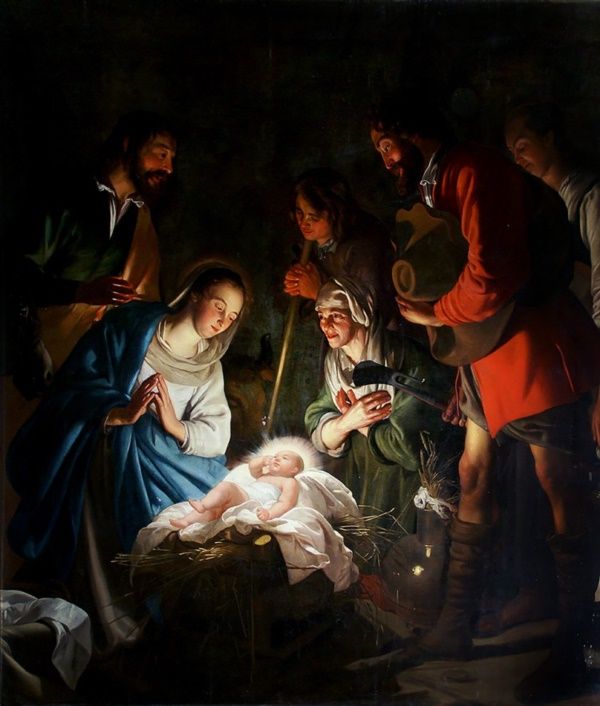
Introduction: Which Jesus?
Scripture Reading: Matthew 2:1-23 and Luke 2:8-20
I am going to say something controversial: I think the movie, Talladega Nights: The Ballad of Ricky Bobby, is Will Farrell’s funniest movie. Ya, Elf is a modern classic at Christmas. Ya, Anchor Man is probably the most quotable. However, Talladega Nights has a moment in the movie that gives one of the most pointed comments on popular cultural Christianity.
Ricky Bobby is a champion Nascar Driver, and there is a scene at the dinner table where he is instructed by his wife to say grace in order for God to continue to bless them with more Nascar victories.
Rick Bobby prays, “Dear Lord Baby Jesus,” and as he proceeds to thank the baby Jesus for all the good things he has, his wife stops him and says, “Sweetie, you know Jesus grew up, right? It’s kinda weird to pray to a baby.” Rick Bobby responds indignant: “I like the Christmas baby Jesus the best. If you say grace, you can pray to whatever Jesus you want: teenage Jesus, bearded Jesus, whatever.”
After which, his friend chimes in and says, “I like to picture Jesus in a tuxedo T-shirt…because it says, like, I wanna be formal…Right. But I’m here to party, too. Because I like to party, so I like my Jesus to party.”
His son pipes up and says, “I like to picture Jesus as a ninja fighting off evil samurai.”
This goes on for a little bit; Ricky Bobby continues to pray: “Dear 8-pound, 6-ounce, newborn infant Jesus… don’t even know a word yet…just a little infant and so cuddly, but still omnipotent… we just thank you for all the races I’ve won and the 21.2 million dollars…Love that money! Amen.”
Now, I hope no one is offended by my quoting this in church, but while this scene is ridiculous and theologically wrong, it also speaks of a kind of culture that has mixed consumerism with popular Christian religion, the cult of prosperity and achievement, health and wealth, with biblical illiteracy: Jesus is who I like him to be.
According to a 2015 survey by the Barna Group (and admittedly, these are American statistics), people believe the following things on average about Jesus: The vast majority of people believe Jesus was a real person. “More than nine out of 10 adults say Jesus Christ was a real person who actually lived.” However, “Younger generations are increasingly less likely to believe Jesus was God…Most adults—not quite six in 10—believe Jesus was God, while about one-quarter say he was only a religious or spiritual leader like Mohammed or the Buddha. The remaining one in six say they aren’t sure….” There is similar confusion about Jesus’ life: “About half agree, either strongly or somewhat, that while he lived on earth, Jesus Christ was human and committed sins like other people.”
That is perhaps somewhat typical given what we assume about living in a post-Christian culture, but one of the surprising statistics found was that the overwhelming majority of Americans say they have made a commitment to Jesus at some point in their lives.
What does this mean? David Kinnaman, President of Barna Group, commented at the end of the study: “This impressive number begs the question of how well this commitment [to Jesus] is expressed…dedication to Jesus is, in most cases, a mile wide and an inch deep.” As I said, these are American statistics, and you can imagine smaller numbers but similar factors going in for us.
It appears that there are lots of people familiar with Jesus in our culture, but not a whole lot that actually want to follow him. Lots of folks agree that Jesus claimed to be God, but that ultimately means they can carry on with their lives no different than those who don’t.
Pastor Chris and I got together for lunch one day, and out of that conversation came the idea of a series going through moments in Jesus’ life, taken from the four Gospels: His incarnation, core teachings, death, and resurrection, unpacking what these mean. So, that is what we are going to be up to leading up to Good Friday and Easter.
We have made Jesus Safe, Sweet, and Sanitized
Again, while Ricky Bobby is a buffoon in a comedy movie, what he says is brilliant satire. Notice how he prefers the Christmas Jesus, which, for him, means that Jesus is warm and cuddly in a golden diaper. I suspect many of us have a depiction of Christmas, as well as the portrayal of Jesus and his teachings, in our heads that is similarly safe, sweet, and sanitized.
Some of our Christmas Carols don’t help. Take “Away in a Manger”: “The cattle are lowing, the poor baby wakes / But little Lord Jesus, no crying He makes.” Why would someone assume that Jesus, as an infant, did not cry, whether hungry for his mother or because he had a dirty diaper? Isn’t Jesus human in all the ways we are human?
Take “Silent Night”: “Son of God, love’s pure light / Radiant beams from Thy holy face.” I love the song “Silent Night,” but I clench my teeth a bit when it depicts Jesus with beams glowing from him.
“All is calm, all is bright…” Why do we assume everything was calm? According to Luke’s Gospel, Mary, and Joseph got into Bethlehem, and it was so crowded and chaotic that she had to give birth in what is probably most accurately the equivalent of an alleyway, where the household animals were kept and were probably dangerous, loud, and dirty. Jesus is laid to rest not on golden, soft hay but in an animal’s feeding trough (some of you folk know full well what that might look like—it probably had bits of slop in it). Jesus was wrapped not in beautiful, bleached linens, but the word in Greek describes the ragged bands of cloth one used during traveling, wind-torn and caked with sand.
Those are details of Luke’s Gospel, and when we come to the events of Epiphany and the visit of the wise men in chapter 2 of Matthew, we have to admit this story has been packaged and sanitized as well.
By the way, I called it Epiphany—did you know that it is called Epiphany? I didn’t know this until literally four years ago when I preached at another church over the Christmas break, and I spoke on an unrelated scripture and was scolded for not upholding the church calendar, which apparently has 12 days of Christmas like the song says (that always puzzled me growing up—why are there 12 days?—also why does a person’s true love give them a bunch of birds?) I get the golden rings but If my true love gave me “eight geese a-laying,” can’t say I would feel very Christmasy about it. I apologize if I have yet again ruined another Christmas song for you.
Well, Epiphany is the last day of Christmas, twelve days after Christmas day that usually celebrates the next event in the Gospels: the dedication of Jesus in Luke, the coming of the wise men in Matthew, and the baptism in Mark and John, who do not have a birth narrative in them. Again, don’t feel bad if you did not know that. My family still puts the Christmas tree away after New Year’s.
However, as further evidence that we have the idea of Christmas so often packaged to us, in a lot of Christmas scenes, you have the shepherds at the manger scene from Luke’s Gospel with the wise men from Matthew’s. But notice what Matthew says: Jesus was a child when the wise men found Mary and Joseph living in a house in Bethlehem. This is a different timeline from Luke’s version.
Matthew tells the story differently and emphasizes certain things he wants his readers to see about Jesus. The churches of Matthew’s day were facing persecution and expulsion from the Jewish Synagogue: Jewish Christians, who seemed to be Matthew’s audience, were being seen as heretics and apostates for following Jesus. This compounded an already tense state of affairs where the people lived under Roman occupation, under the boot of a tyrannical empire, where violence and oppression were already a daily reality.
Again, we so often present the Christmas scene with clean and calm figures, but that is simply not the case for Matthew’s Gospel, which sets the scene for Christmas with a backdrop of tyrants, intrigue, and a bloodshed. That probably would not go as well on someone’s front lawn with lights and bows. Your front lawn would like that guy by Aldershot School that goes way too far in his Halloween decorations. You know who I am talking about, right?
If any of these elements of the story is a surprise to you as it was to me when I learned about them many years into my adult walk with Christ, I think we all have inherited our own pleasant, packaged, safe, and sanitized version of Jesus.
One reason why we like a safe and sanitized version of the Jesus story is that we don’t have to actually contend with what the Gospel demands.
When I was pastoring First Baptist Church of Sudbury, I had a congregant complain after I preached a sermon mentioning the Charleston shooting. This was in 2015. A deranged white nationalist walked into a church in a black community and killed nine people at prayer, hoping to start a race war. I had someone complain that I was mixing politics and religion in the sermon. I was confused by that criticism because that sermon never mentioned politicians, political parties, voting, or anything of the sort.
I soon found this man, a man raised in the church his whole life and even served as an elder in another church, openly espoused that he did not think Jesus ever spoke about racism or justice and even said to me that he did not think racism was sinful. I soon realized that despite his objection, he very much did mix religion and politics. It was just the worst version of both.
His was an extreme case, but we all so often give into a picture of Jesus, sweet, safe, and sanitized, that absolves us from having to do something about it.
1. A Different Jesus: True Moses, True Israel
But Matthew is different. Matthew presents a different Christmas story and a different Jesus. He is barely done mentioning the birth of Jesus when he starts mentioning the politics of Jesus’ day. It says the people were ruled by King Herod. Herod was a tyrant. Herod was not ethnically a Jew, but he claimed to be a faithful Jew for political purposes, nor did he have a royal lineage. His mother was from Arabia, and his father was an Edomite who found favor with Rome because Rome wanted a puppet king over these lands. Herod remained in power because he was very good at squeezing the people for more tax money to fund the imperial war machine, and he was absolutely ruthless at dealing with any threat to his power. In fact, he killed several close relatives who he thought might challenge his power.
Yet, a group of wise men from the east show up at his door wondering where the new king of the Jews is because a certain star sign has risen. Herod’s title was king of the Jews. You can imagine today’s ambassadors showing up to the White House asking the President, “Hey, we are here to honor your country’s new and true President. Where is he?” Yes, the messiah is political, just not in the way earthly politics want him to be.
Herod tries to trick and scheme, then intimidate and murder his way to stay in power, but God whispers in the dreams of the wise men and of Joseph, and both get out of Bethlehem before it is too late.
Matthew says that the holy family fled the massacre to go to Egypt and that they returned home years later when Herod was dead, coming to reside in Nazareth.
By doing this, Matthew’s story makes two subtle references here that tell us who Jesus is.
Who do we know in the Old Testament that had to escape the slaughter of infants? Moses the man who gave the Jewish people the law. In Matthew’s time, Christians are being attacked because their radical way is seen as a betrayal of the Jewish law, yet here, Matthew wants to say that Jesus is not only like Moses, Jesus is the true Moses. Jesus is showing us the true way to be faithful to God. And so, Jesus says in Matthew, “I have not come to abolish the law but to fulfill it.”
Second, who in the Old Testament came out of Egypt? Israel did. God’s people did. Matthew says that these things were done to fulfill what the prophet said, “Out of Egypt I called my son.” That is a scripture from the prophet Hosea, and if you look at it, Hosea is talking about the people of Israel as God’s child, and Matthew sees this as pointing to Jesus. Again, as Jewish Christians in Matthew’s time were persecuted and excommunicated from their families and friends for worshiping Jesus, Matthew says that Jesus is the true Israel. What God was longing to do with his people, a people set to be a redeeming presence to bless the rest of the world, God is fulfilling this first and foremost through Jesus and Jesus’ way. This is what God’s people are meant to be like.
Now, Christians throughout history have looked at passages like this in Matthew and concluded two problematic things: one is that God is done with the Jewish people or, worse, the Jewish people are evil for rejecting Jesus. This has led to some terrible stuff in church history. Others today do the opposite and look at what the modern state of Israel is doing in Palestine and automatically assume that Christians should support this country because this is biblical Israel. Matthew suggests something different.
If Jesus is the True Moses and the True Israel, God has not forsaken the Jewish people. Paul says the promises of God are irrevocable. Jesus is the very sign that God had refused to give up on his people. However, this also comes with the challenge that God’s people are called to follow God’s ways not the ways of this world, and God’s ways are most clearly shown in Jesus.
2. A Different Way: Jesus’ versus Herod’s
Between God and the world, we all have that choice presented to us.
Jesus’ way is different, and it is in brutal contrast to Herod’s.
Herod’s way of ruling involves lying and scheming, deceiving the wise men.
Herod’s way looks to religion to manipulate and maintain his power.
Herod’s way, worst of all, believes that peace and order are maintained by violence, even killing the innocent.
Herod is an especially cruel tyrant—he was a paranoid psychopath—but Herod’s way of ruling is known all too well:
It is the way that sees truth purely as what one wants it to be.
It is the way that puts one’s comforts always ahead of another’s needs.
It is the way that treats others as objects, valuable only if useful and worthless if not.
It is the way that looks at one’s enemies and sees something only to humiliate or annihilate.
It is the way that looks to God and sees religion as a source of power and God as nothing but the idolatrous echo of one’s ego.
Yet, just one chapter later, we see the contrast to Herod’s way as Jesus begins to announce the kingdom of heaven:
A kingdom not for the people who think they are spiritually rich but for the poor in spirit.
A kingdom not for the prideful and powerful but for the humble and humiliated.
A kingdom not for the compromised and the complicit but the pure and the peacemakers.
A kingdom for those willing to sacrifice for the sake of what is true and right, just as the prophets did.
That is Jesus’ way, and it cannot be reconciled with the way of Herod. Jesus is the narrow path that leads to life, whereas Herod’s way is the wide highway that leads to destruction.
3. Different Seekers
Which way are you on? Will you seek Jesus? In Matthew and Luke, it is surprising who does. Jesus has seekers who are different from what we expect.
The wise men seek Jesus in Matthew’s Gospel. Who are these wise men? Tradition gives them names and says there were three of them, one for each gift, but Matthew offers no specifics. Who are wise men? The word in Greek is “magos,” and it is used in the Old Testament for Pharoah’s magicians that oppose Moses in the Book of Exodus and the officiants of the king in the Book of Daniel. These are not particularly positive references: these men are a king’s astrologers and fortune tellers, and often, a king would send officials like them to honor an allied king. In the year 66 AD, magi from an eastern nation beyond the Roman Empire visited the emperor Nero to honor him.
Whoever Matthew’s magi were, they came to recognize Israel’s true king, even though they had no relationship to God’s covenant with Israel, and they are the ones who found Jesus while Herod and the rest of the people in Jerusalem were clueless. Let’s just appreciate this little irony of the story: When God’s people completely miss their messiah being born on their doorstep, a group of pagan fortune tellers travel across the known world led by an ancient horoscope in the sky, a notion Jews would have regarded as false—everything their religion stood against—but the magi did so to find and honor Jesus.
That might lead us to be a bit more humble in how we speak about people of different beliefs than us. For all we know, they may actually be pursuing Jesus—or Jesus is pursuing them—in ways we have fundamentally missed in our own lives.
In Luke’s Gospel, it is the shepherds who seek Jesus. Shepherding was one of the poorest jobs one could have in that society (and not to mention dangerous, out in the wilderness with the elements, wild animals, and bandits). It was a job for outcasts. The shepherds come and find Jesus, and the angels say that you will find your messiah wrapped in ragged cloth and lying in an animal feeding trough, a manger, and these things will be a sign to you of God’s good news for everyone.
If this event were to happen here, today in Kentville, you can imagine Jesus being born by the dumpers in a parking lot at center square, wrapped in someone’s second-hand coat, and the poor, the drug addicts, the folks that work night shift at the gas station or in the warehouse at Walmart realize if this baby is going to be our leader, things are going to get better, but he’s one of us.
A messiah born into poverty rather than power and privilege: This messiah is good news. He gets us. He is on our side because if God is on the side of the least of us, God is for everyone. And so the shepherds search out Jesus. Will we?
This chapter ends with the full display of what Herod is capable of: a massacre of the children in Bethlehem to try to find and eliminate Jesus. Matthew says this speaks of another prophecy from the book of Jeremiah chapter 31, “Rachel weeping for her children / She refused to be consoled because they are no more.”
Scholars have been puzzled about how this passage is actually a prophecy. It does not actually predict anything specific. It just speaks poetically of Rachel, one of the matriarchs of Israel, weeping over the casualties of the fall of Jerusalem several hundred years before Jesus. These were people slaughtered by the invading Babylonian army, who then carried off the survivors into exile. It speaks of the despair the survivors expressed as they mourned their deceased, walking off into slavery with nothing but ash and rumble behind them. Matthew cites it and by doing so connects their pain with the pain of the victims of tyranny in his day. And by doing so, anyone who read this and knew that scripture would also know what that passage promises to those who have suffered tragedy. The verses before and after proclaim hope. They say,
The Lord will ransom you…
I will turn your mourning into joy;
I will comfort you and give you gladness for sorrow…
There is hope for your future, says the Lord…
I will surely have mercy…
I will satisfy the weary,
And all who are faint I will replenish.
To the victims of tyranny and tragedy, Matthew is saying there is hope. Through Mary and Joseph, through wise men and shepherds, Luke and Matthew have been giving us unlikely examples as signs that if God is with these kinds of people, God is with us all.
To the victims of the violence in the Middle East, to those who have lost so much to the war in Ukraine, to those in Japan sifting through the remnants hit by the earthquake, to the broken and the hurting, the starving and the scared, God is with you. God is for you. God will ransom you. God will restore you. God will have mercy. There is hope.
God’s kingdom is here, and this is good news.
Jesus’ way is different because Jesus isn’t like how the world operates. He does not conform to our assumptions and expectations.
God cannot be bought, boxed in, owned, or sold off. God has come as the gift of grace, unlimited as it is undeserved.
Trust it. Let it sustain you in tough times. Let it transform you. Let it flow through you to transform others.
Let’s pray.
Loving and gracious God revealed in Jesus Christ.
You are God, Immanuel. God with us, God for us.
You lead as the true Moses; you teach us what it means to be Israel.
God, we repent for all the ways we honor you with our lips, but our hearts and our actions are far from you and your ways.
Forgive us and guide us by the leading of your Spirit on the way of Jesus.
We pray for these things in your name, amen.
The First Christmas: An Unbelievable Story about our Unbelievable God
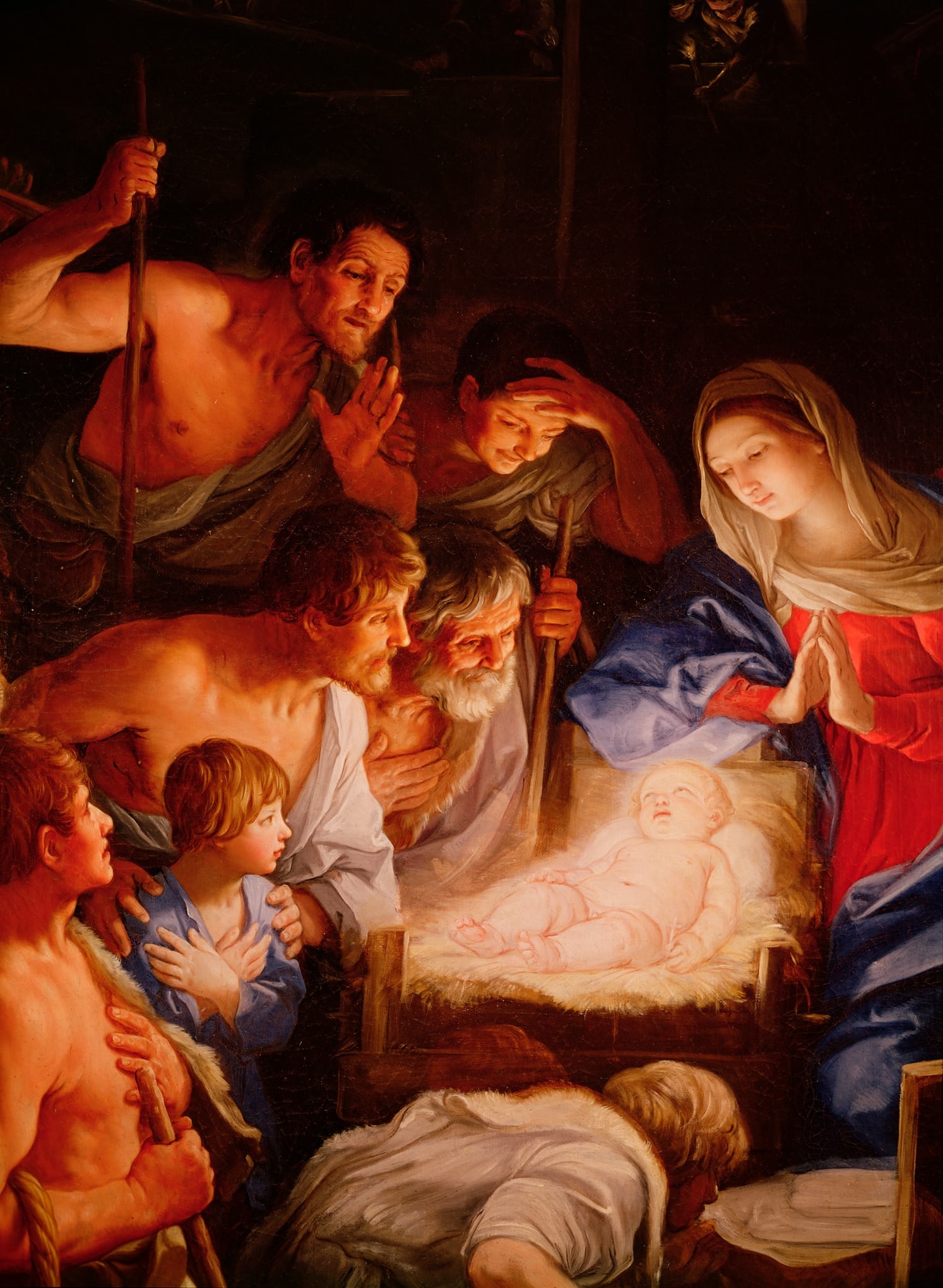
The Adoration of the Shepherds by Guido Reni (c 1640)
We have all heard the Christmas story before.
The Christmas story is the story of a baby born miraculously and mysteriously to a virgin mother.
About a nobody girl named Mary, who saw the announcement that she would be the mother of the messiah to be the greatest privilege of her life, despite its meaning she would be ostracized perhaps the rest of her life, since she was not married
It is the story about a good and merciful man, named joseph, who when he heard that his fiancé was pregnant and he was not the father, he could have subjected her to disgrace and even had her stoned in the culture, but moved with compassion, simple was going to dissolve the marriage quietly.
A man that was reassured by an angel to marry the woman, and that he would be the legal father of the savior of the world.
It is a story set to the back drop of God’s people conquered and oppressed by a massive empire, ruled a tyranny Emperor who claimed himself to be the Son of God.
It about this little unlikely family having to travel miles through storm and sand to the town of Bethlehem to be counted by order of the Emperor Augustus.
It is a story about this family who upon returning to their own hometown found that no one wanted to give them shelter for the night. No family wanted them.
It is a story about the king of heaven being born in the muck and mire of a barn.
It is a story about good news announced by angelic hosts to lowly shepherds, forgotten in the wilderness, tending their sheep.
It is a story about wisemen following stars, fooling a local corrupt ruler and coming to worship the messiah child with gifts of gold, frankincense, and myrrh.
It is a story about an escape in the night as Herod sent out guards to kill the children of Jesus’ age, trying to stop the potential usurper.
And so, this is a story about miracles and the messiah, about faithful servants and faithful spouses, unplanned pregnancies and ancient prophecies; it is about shepherds and tyrants, about journey and escape, about humility and royalty, oppression and hope.
This story is the first Christmas. It is the story. It is the most important story. It is the story of all our salvation. Our salvation began to be accomplished in history on that day, in that stable, in that dirty manger, to that poor Middle-eastern couple, two thousand years ago.
It is the truth that God is now with us: the incarnation. The infinite God dwelling with us mortals.
It is the truth about God’s rule. The messiah Jesus shows how God rules: he chooses the lowly; he chooses the poor; he chooses the unworthy, the forgotten, the unlikely. He prefers them to the powerful, the rich, the proud, and the oppressor.
It is the truth about forgiveness. Jesus wasn’t just the king of the righteous. He didn’t just love the deserving. He also loved sinners. In fact, he died for the people trying to kill him. He died for Emperor just as much as the shepherds. He died for King Herod just as much as the wise men. He died for the criminal and the terrorist just as much as he died for you and me.
The Christmas story is the truth about God’s fundamental character of love and compassion, about God being born in our form, identifying with our plight, binding himself to our fate, all to say that nothing can separate us from his love.
Immanuel: God is with us. He is not against us, he is for us. He gave us his son. He gave us himself.
It is also a difficult story to believe, too isn’t it? We live in a world of skepticism. It seems that usually about this time every year someone publishes an article, proclaiming their modern brilliance at just how unbelievable the Christmas story is.
Angels don’t exist. Miracles don’t happen. Virgins don’t have babies. Stars don’t give travelers directions. Gods don’t reveal themselves. It is simply an unbelievable story.
It’s preposterous; it’s impractical; it’s too spectacular; it’s too amazing. Things like this just don’t happen.
But our culture’s skepticism over the things of God – whether it is the possibly of miracles or the fact that God could indeed reveal himself – pays a high price.
Skepticism against the Christmas story is skepticism against hope itself.
We live in an apathetic age.
Wars can’t be stopped. Poverty can’t be solved. Politicians always lie. Life is always unfair. Marriages never work. Churches never help. God isn’t there.
There is no life after death, and ultimate no reason for life before it.
Right and wrong, good and evil, hope and tragedy, these are just creations of the human imagination with no real anchor in reality.
The world is not getting better. In fact, it is getting worse and to be honest, most people would think we are not worth saving.
Forgiveness? Hope? Love? Goodness? It’s preposterous; it’s impractical; it’s too spectacular; it’s too amazing.
It is unbelievable.
Perhaps the Apostles passed along this story not because they were primitive, but because they were just like us.
They lived in a skeptical age. Tyrants stayed powerful; peasants stayed poor; lepers stayed sick; women and slaves stayed property; the dead stayed in the grave; and there is nothing new under the sun.
…Until Jesus showed up. Perhaps the reason the Apostles passed along this Christmas story is precisely because it was unbelievable. Unbelievable yet true.
This is a watershed moment in history, a game-changer, a paradigm-shifter, an epiphany, an event.
God showed up. Hope showed up. Goodness and mercy and forgiveness showed up. Nothing like this had ever happened in their time. Nothing like it before or after. Prophets had foretold this, but who could expect it happening in this way?
Perhaps this story is true in all its remarkable, exceptional, unbelievable, beauty.
We can ask, just like Mary, “How is this possible?” And the angel’s words are just as true today as they were two thousand years ago: With God all things are possible.
With God all things are possible.
If we grant that, this story starts making sense.
Good does triumph over evil. Love does triumph over hate. Forgiveness does triumph over hurt. Peace does triumph over violence. Faith does triumph over idolatry. Hope does triumph over despair.
These truths are not the delusions of us human bi-pedal ape-species with an overgrown neo-cortex.
The deepest longings of the human heart, the groaning of the soul for a world without hunger, sickness, sin, death, and despair – as unrealistic as that sounds – that yearning knows this story is true the same way our thirsty tongues know that water exists.
Its real. Its possible. It is out there. It is here: in Jesus.
The only left to do with this story, when we are done pondering it and puzzling is to trust it.
Can you tonight trust this unbelievable story? Can you trust that with God all things are possible?
Can you trust that your life is not just there without value, but it is a gift, it was planned and made by a God that sees you as his child?
Can you trust that the wrong in your life, the sins we have committed that no excuse can defend has been forgiven by a God that knows you better than you know yourself and sees with eyes of perfect mercy?
Can you trust that God has come into history, has shown us the way, has died for our sins, and conquered the grave?
Can you trust that God can set right all that has gone wrong as we invite him to renew our hearts, our minds, our souls and strength, our relationships, our job and family, our past and future, our communities and our country?
Can you trust that this Christmas story about God’s miraculous power, his unlimited compassion, his surprising solidarity, can be shown to be true this night just as much as it did then? In you, in the person next to you, in this church, in this town.
We give gifts at Christmas time as a sign of God’s generosity, but do we look forward to God’s gifts to us each Christmas?
Do we look for the gift of renewed spirits?
Do we look for the gift of transformed hearts?
Do we look for the gift of forgiveness of past hurts?
Do we look for the gift of reconciled relationships?
Of new freedom from guilt and shame, from hurt and hatred, from addiction and despair, from materialism and apathy.
What gifts are we going to see given from God’s spirit this Christmas.
Perhaps it will be like what happened to Nelson Mandela (just one story I read about this week about how the truth of Christmas changed someone in remarkable ways). In South Africa where Blacks were segregated off from the privileged of White society, Mandela as a young man advocated armed uprising and was imprisoned for life in 1962.
In prison he faced all the things that would, by any worldly standard, destroy hope, love, joy and peace in any man’s soul. He was beaten by the guards. He recount one day being forced to dig a pit that the guards taunted him saying it would be his own grave. As he dug, they peed on him and spat on him. The prison was so dirty he contracted tuberculosis.
Conditions like that fester the heart not just the body, but the miracle of Christmas reached him. Mandela recovered his Christian faith in prison, and was moved with hope towards a better tomorrow, with love and forgiveness towards even his guards that beat him.
In a sermon he gave later in life, he spoke about the hope he gained knowing that the messiah was born an outcast like him. This unbelievable Christmas story, the story that we recite and remember till it we often take it for granted, restored a man’s heart in one of the darkest of places.
Christ’s name is Immanuel: God with us. God was with the shepherd, with Mary, with Joseph, with the oppressed Israeli people, and so, also with Nelson Mendela.
After 26 years in prison, campaigns to have him pardoned succeeded, and Mandela went from prison to the presidential campaign, running to become president and end apartheid, not through violence but through reconciliation.
He won and he even had the guard that beat him from prison, whom he reconnected with and forgave, at his inauguration, a guest of honor.
Its an unbelievable story isn’t it?
How will God work something unbelievable in you tonight?
We could say that our lives aren’t as fantastic as Mendel’s, but then again, if we say that, we would be selling ourselves and our God short.
You see, a story about angels and a virgin giving birth and about a God found in the form of a baby might be unbelievable, but we Christians take that as part and parcel of what our unbelievable God does.
There is a saying that goes if you are in for a pound, you might as well put in a penny.
If we know that God has done the miraculous, can we trust him now with the mundane?
If we know that God has given us life, can we trust him with our finances and family?
If we know that God has atoned for all sin, can we trust him with our fears and failures?
If we know that God has conquered the grave, can we trust him with the worries of tomorrow?
If we know our God is a God that can do all things, that he has already accomplished everything, perhaps can you trust him with something small now. Let’s do something small right now. Something small but still significant.
Let’s have a moment of silence and stillness. We don’t get enough of those in this busy season. Have a moment right now to say to God whatever you need to say or to listen to God and hear whatever he as been trying to tell you, then we will pray together…
*Pause*
Living God, Father of our lord Jesus Christ.
May the worship we have shared this Christmas lead ro acts of service which transform people’s lives
May the carols we have sung this Christmas help others to sing, even in times of sadness.
May the gifts we exchange this Christmas deepen our spirit of giving throughout the year.
May the candles we have lit this Christmas remind us that you intend no one to live in darkness.
May the new people we have met this Christmas remind us that we meet you in our neighbors.
May the gathering together of family and friends this Christmas make us appreciate anew the gift of love.
May these unbelievable stories we have told again this Christmas be good news of great joy to us and all people, proclaimed on our lips and embodied in our lives.
May the ways you have come close to us this Christmas not be forgotten.
May we remember your unbelievable love, mercy, grace, and forgiveness – that you are our life, our light, and our salvation, this season and always, because of Jesus Christ our Lord.
Amen
[End prayer modified from Gathering for Worship: Patterns and Prayers for a Community of Disciples by the Baptist Union of Great Britain]
 Spencer Boersma