
Category: Uncategorized
Let’s Go Idol Smashing

So, this past week was Black Friday. People lined up in a frenzy to get good deals on electronics and clothes and whatever else. Some go under the pretense of selflessness: that they are just trying to save a buck or two on Christmas shopping. Of those, I wonder what is the actual percentage of items bought for others and items bought for oneself.
While most are fairly decent about walking through the busy malls, this obsession with Black Friday has had darker moments. Since 2006, there has been a 98 reported injuries due to the craze of Black Friday shopping: everything from people fighting, rioting (in which cops had to deploy pepper spray), etc.
To date, there has been 11 reported fatalities: An old man was pushed and collapsed, getting trampled; people have gotten hit in the busy caring lots; others have gotten stabbed in the back as they ran ahead of someone for a sale; still others, have fallen asleep at the wheel, exhausted from shopping, crashing to their deaths.
The stabbings and trampling a helpless elderly man are what really get me. When I think of what would propel someone to enact violence of that nature, you have to care about your money, having things, in such a way that you have placed it way to high up your priority list in life.
You might just say that these people have a screw loose, but the truth is scarier.
If you have inflicted violence on another human being over a sale, this is not an emotional problem. It is a spiritual problem. You have invested a spiritual level of energy in it. You have invested your soul in it. You in essence worship it. I derived ultimate meaning from it. It for you is an idol.
I for one think secularism is a bit of a farce sometimes. Everyone is spiritual. Everyone worships. Everyone has a religion. Everyone has a god of sorts.
It is just that in the downfall of Christendom and the collapsing of modern ideals of political progress and enlightenment, the only thing left is the religion of consumerism.
Go to the mall, and you are bombarded with religious messages; Messages on how to find the “true you;” products purporting to change your life with overly salvific tones; advertising attempting to proselytize you to a certain brand name.
I know a lot of people that don’t believe in “organized religion” because it is full of narrow-minded, repressive, shallow people that just want you money. Yet, no one I know who holds such things is consistent and gives up shopping. Whatever authoritarianism, demagoguery and fideism religion can be accused off, consumerism is even worse.
Consumerism is a religion. Its products are idols. And they are not even that good.
Idols always disappoint us. Christ will not. That is why we need to smash them.
What Is An Idol?
Wikipedia gave a good definition, which I will add to: An idol is an image or other material object representing a deity to which religious worship is addressed or any person or thing regarded with admiration, adoration, or devotion.
My own definition is this: Anything we trust more than God is an idol, AND anything you care about more than what God wills for us to is an idol. The second part is often missed. We can turn some of the best things in life into idols by caring about them more than what we should (I’ll explain how to discern this shortly).
There are important examples of idolatry in the Bible.
Right from Genesis 1, we see a notion that God is transcendent from creation. Nothing in creation deserves our worship. The only image he has is humanity, and that means that only worship that is acceptable is one that respects God’s transcendence, and God’s love for people.
Our typological parents fell because they choose to eat of the tree of the knowledge of good and evil, in essence, claiming that they could be their own god. The result of that, however, was alienation from each other and God, spiritual death.
Abraham is told to “leave his father’s household” and this implies leaving his father’s religion of idols.
The Exodus is essentially a battle narrative between God and Pharaoh. The ten plagues show God is in control of all the things the Egyptians revered as god: the sun, sky, river, animals, etc. The most striking example is the hardening of Pharoah’s heart. Pharaoh claimed to be god, and yet, in the narrative, God has control over his very will! That passages sometimes gets turn into a double predestinationist theology, but what this is trying to say is that those that claim to be god are not. Such self-assertion against God is futile.
Of course, as soon as the Israelites leave Egypt, they commit idolatry. While Moses is up on the mountain, the Israelites compel Aaron to give them an image to worship. John Calvin once said that the human heart is a “factory of idols.” Here we see that at work. The people did not want to worship another god, they wanted a representation of YHWH to worship. They felt like they needed an image. They could not conceptualize a fully transcendent God – the “I am who I am.” When God brings this to Moses’ attention, God then threatens to disown his people and restart with Moses. Moses begs God to punish him instead, and because of Moses’ intercession and atonement, God “changes his mind.” God reveals that he is the God, who “has mercy on whomever I have mercy.” Here the transcendence of God manifests itself not in sublime terror, but in the surprising, unpredictable mercy that only a living God can offer. No idol could do that.
The war with idolatry is throughout Israel’s history. It is either the perpetual temptation of kings or their greatest concern to eliminate. The kings of Judah and the Northern Kingdom are assessed in 1 and 2 Chronicles according to whether they tear down the Asherah poles or offer them praise. Sadly many turn to idolatry, and for that the people are sent into exile.
In the narrative there are powerful confrontations between the Prophets and the false-prophets of idols. Elijah demonstrated that the Baal was lifeless, unable to cause flame to his altar as his prophets prayed to the point of cutting themselves in devotion. Elijah, on the other hand, drenched his altar with water, prayed, and it went ablaze. Similarly, Shadrach, Meshach and Abednego refused to bow down to the golden statue of Nebuchadnezzar, and for that, were thrown into a furnace only to be protected by angels. The biblical narrative attests to this constant struggle with idols, and the constant superiority of God over these lifeless, finite things.
Idolatry is a concept that gets expanded in the Bible. Isaiah and Micah turned to their own religion and saw any ritual that caused apathy to be detestable. Habakkuk looked at the empires of his day and saw trust in military power to be idolatry: “their might is there god” (Hab. 1:11). The prophets were truly brilliant people. They are the greatest social critics history has ever produced. They were capable of scrutinizing their beliefs in faith in a way that no secular atheist could do to their own. Why? Because they know that God was beyond all of it.
In the New Testament, idolatry gets applied to sin. Anytime we prioritize our sinful desires, we are placing ourselves before others and God. This is what I mean by idolatry as “anything you care about more than what God wills for us to is an idol.” Colossian 3:5 reads: “Put to death, therefore, whatever belongs to your earthly nature: sexual immorality, impurity, lust, evil desires and greed, which is idolatry.”
Why Are Idols So Harmful?
(1) Any god except God will disappoint us.
We have a thirst for transcendence. According to anthropologists and theologoans, humans are the only species that has refused to settle into a habitat. We are not at home in the world. We, as a species, always want something more (see discussion in Stanley Grenz, Theology for the Community of God, 130-131).
This thirst can be ignored, however. This thirst can be quenched by illegitimate things. There are commercials that have been designed to stimulate the religious centers of the brain, fabricating spiritual experiences. Why? Companies want people to be that attached to their products. Kind of messed up isn’t it?
The things of this word only satisfies us so far. Nothing but the forgiveness and love of the true God satisfies this. Why? Because only the perfect love of God casts out fear.
Will our houses always keep us safe? No.
Will our computers, Facebook, cell phones, really produce authentic relationships? No.
Will our clothes and cars gives our lives vocation and purpose? No.
Will our IPods safe us from the fear of death? No.
Can our possessions forgive our worse failures? No.
Nothing we are, have, do, nothing can satisfy us, protect us, forgive us, save us in the way God can.
Unless you know that God will do these things, that fear will always be there. That fear will drive you to destroy yourself within and destroy others.
We see the most deadly example of this in Scripture: the worshipers of the detestable god, Molech. Molech was hated by the Prophets because he demanded your first born son to be offered in the flames. One of the earliest metaphors for hell in the Prophets comes from the followers of Molech burning their children, and the Prophets warning that idol worshipers will have that done back to them. If they did not stop, Jerusalem will burn like the poor children they are sacrificing.
What drives a person to sacrifice their own children? It seems so distant to us. However, if you live in an agrarian society were fertility was life or death, the fear of whether God was on your side was an all consuming terror. People would do anything to know that God was one their side. To prove that, naturally, came the notion of the altar, offering something to show the gods gratitude in order for them to bless you. Of course, in desperation, knowing that one’s whole family might starve, feeling like one’s mistakes could be the cause of a drought – that fear could drive a person to make the calculated choice to sacrifice one of their children.
People were so afraid of the gods. Their worry and guilt and need for control drove them to murder their own children.
We might look at these people and consider them primitive, but we do the same.
In order to preserve our idol of self-importance, we will sacrifice our marriages, family and friendships.
In order to preserve our idol of safety, we sacrifice the lives of innocent Arabs as we drop bombs on them.
In order to preserve our idol of comfort, we sacrifice Syrian refugees.
We don’t want to pay more taxes, so the poor don’t get the programs they need.
In order to preserve our idol of consumption, we sacrifice our planet.
In order to preserve our idol of standards of living, we sacrifice our time working too much.
In order to preserve the idols of our own privacy, we avoid religious gatherings, even our own family and friends.
In order to preserve our religious idols of certainty, we shut out all other opinions and perspectives. We will shun those that remind us of how fragile our faith can be.
(2) We become what we worship.
We become what we worship, and if we worship the lifeless things of this world, we will become lifeless as well. David Foster Wallace, a college literature professor and one of the greatest novelists of our time, wrote this graduation speech. We wrote it shortly before he committed suicide from a loosing battle with severe clinical depression.
Because here’s something else that’s weird but true: in the day-to day trenches of adult life, there is actually no such thing as atheism. There is no such thing as not worshipping. Everybody worships. The only choice we get is what to worship. And the compelling reason for maybe choosing some sort of god or spiritual-type thing to worship—be it JC or Allah, be it YHWH or the Wiccan Mother Goddess, or the Four Noble Truths, or some inviolable set of ethical principles—is that pretty much anything else you worship will eat you alive. If you worship money and things, if they are where you tap real meaning in life, then you will never have enough, never feel you have enough. It’s the truth. Worship your body and beauty and sexual allure and you will always feel ugly. And when time and age start showing, you will die a million deaths before they finally grieve you. On one level, we all know this stuff already. It’s been codified as myths, proverbs, clichés, epigrams, parables; the skeleton of every great story. The whole trick is keeping the truth up front in daily consciousness.
The Scriptures know this well. Psalm 135:15-18 reads,
The idols of the nations are silver and gold,
made by human hands.
They have mouths, but cannot speak,
eyes, but cannot see.
They have ears, but cannot hear,
nor is there breath in their mouths.
Those who make them will be like them,
and so will all who trust in them.
In this regard anything can become an idol. Our possessions can become idols. Our jobs, our longing for recognition can become an idol. Our sexual gratification, when outside of God’s loving intent, can become an idol. Drug addiction, with how much the addict invests there life into their addiction, is an idol. Sports, when that euphoria and thrill of victory can lead to, for instance, rioting like the 2011 riots in Vancouver (where over 800 charges of violence were laid), can become an idol. The military, trusting in war to keep peace, is an idol, especially in the United States where its war spending is now three quarters of a trillion dollars and are now locked into perpetual war.
Even things like our marriages, family, and children can become idols. Our desire for comfort and provision for our families can cause us to be morally apathetic. Yet, my children need to know that there are certain matters of integrity that are fundamental.
Atheism can become an idol. While there are atheists who are more moral than Christians, the idea that reality is all there is, my life is all I have, can lead to a dangerous sense of self-concern.
On the other side, our religion can become an idol. When ever we use the Bible in an unloving manner, we violate the principles it gives us to use it appropriately. There is a big difference between believing the right things and believing in the right way.
If your “biblical beliefs” lead you to open fire on an abortion clinic. You religion is an idol.
If your “biblical beliefs” lead you to hate gay people, and exclude them from church. Your religion is an idol.
If your “biblical beliefs” lead you to demonize Muslims and fuel the longing for war. Your religion is an idol.
If your “biblical beliefs” lead you to hold any of your convictions in a way that causes hate, anger, disgust, condemnation, etc. towards others. Your religion is an idol.
So How Do We Smash Our Idols?
So, if we know these things will harm us and leave us unsatisfied, in fact, will even destroy us, how do we smash these idols? Smashing idols is the work of discipleship in a community. The church, a place of instruction and encouragement, is any believer’s best resource for learning what is an idol and working to bring all aspects of our lives into its proper place under Christ.
Stay open minded. Dietrich Bonhoeffer once said that, “He who cannot listen to his brother will soon find himself unable to hear the Word of God also.” When we can make the Bible and our interpretations into idols, listening in open-mindedness, humility, and fallibility to others will expose our own religious idols.
Test everything against the law of love. The Bible does not want you to read it in a shallow manner. The most pervasive test for any interpretation or prophecy or application in the New Testament is the law of love. If a biblical law is not loving, the biblical thing to do is to understand it as non-applicable today, to think about a better application, or to revise it.
Finally, draw close to Jesus. The crucifixion was a scandal to the Jews. Why? The pharisees made the law into an idol, and the cross smashed the arrogance of their legalism. God showed his only try representation, his incarnate self. At the cross, God became forsaken. God was found in the other, dying for others. God gave himself up for his very murderers. An idol, in so far as it appeals to our need for self-assertion over others and fear of the other, cannot stand when submitted to the test of cruciformity, dying to self. In the cross’ perfect way of love, every idol will break.
Why was Circumcision Removed? An Anabaptist Reading of Galatians
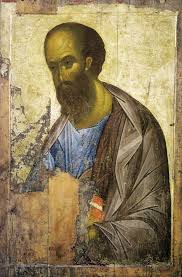
Reading through Galatians in my devotions, I simply am struck with its power and beauty, its revolutionary character. Something new always hits me with it, and this time around (I cannot count how many times I have meditated through Galatians) – this time around something new struck me. I will attempt to bring this out by meditating through Galatians and James.
I call this an “Anabaptist” reading, as it loosely conforms to an Anabaptist soteriology, which historically has seen obedient action to be apart of faith, grace, and salvation. As the cherished axiom states, there is no “faith without following.” It is also, loosely “New Perspective” in its understanding of Paul, but I will show that this perspective is in agreement with Anabaptist principles of interpretation of the law where any conviction is evaluated by (1) a Christocentric concern, (2) the leading of the Spirit, even beyond the literal teachings of Scripture, and (3) interpretation in the law of love.
In Chapter 2:11-12 it reads, “But when Cephas came to Antioch, I opposed him to his face, because he stood self-condemned; for until certain people came from James, he used to eat with the Gentiles. But after they came, he drew back and kept himself separate for fear of the circumcision faction.” Here it seems that Paul connects the “circumcision fraction” with those sent from James.
Now within Paul’s writings, in particular Rom. 4:12 and Col. 4:11, the circumcision party is also simply those “circumcised” or the “Jews,” which suggest that the group was must larger than just James. Knowing what Paul accuses this group of also and what we know of James, James is innocent of the hypocrisy Paul accuses some of the Judaizers of. It was a wide spread mentality of Jewish Christians, who wanted to hold on to their Judaism, even it if meant imposing aspects of it on Christians.
So, we can see that the Jewish-Christians, an understandably conservative fraction within the church, saw what Paul was doing as promoting moral laxity. While they did not use the word, it is not far-fetched to characterize Paul as a “liberal” within this movement: emphasizing his immediate religious experience over sacred writings, seeking to revise cherish beliefs, etc. I use this word vivaciously because Paul was not a liberal in the modern sense of being concerned about foundational principles of individual reason and rights. Perhaps “radical” is a better word. Whatever the case, James, a conservative, was not pleased. Many commentators attempt to lighten his words in his epistle to make it sound like his arguments are not directed at Paul’s theology and his followers, however, the polemic reads fairly plainly in James 2:14-26:
What good is it, my brothers and sisters, if you say you have faith but do not have works? Can faith save you? If a brother or sister is naked and lacks daily food, and one of you says to them, “Go in peace; keep warm and eat your fill,” and yet you do not supply their bodily needs, what is the good of that? So faith by itself, if it has no works, is dead. But someone will say, “You have faith and I have works.” Show me your faith apart from your works, and I by my works will show you my faith. You believe that God is one; you do well. Even the demons believe—and shudder. Do you want to be shown, you senseless person, that faith apart from works is barren? Was not our ancestor Abraham justified by works when he offered his son Isaac on the altar? You see that faith was active along with his works, and faith was brought to completion by the works. Thus the scripture was fulfilled that says, “Abraham believed God, and it was reckoned to him as righteousness,” and he was called the friend of God. You see that a person is justified by works and not by faith alone. Likewise, was not Rahab the prostitute also justified by works when she welcomed the messengers and sent them out by another road? For just as the body without the spirit is dead, so faith without works is also dead.
Notice a few things that suggest is directed to Paul’s followers. James and Galatians are early documents written around the same time. James and Paul use the same vocabulary of “faith and works,” “justified by faith,” “justified by works,” etc. James cites Abraham’s example, same as Paul (cf. Gal. 3; Rom. 4), as if in a proof texting battle. Now, most conservative commentators refuse to recognize that this is a disagreement between Paul and James (or each others’ followers – some of the accusations Paul and James lob at their opponents don’t match them, but perhaps radicalizations of their positions) mostly because they assume the early church somehow must have had perfect doctrinal agreement, which is a really idealistic and a rather silly assumption. The New Testament documents controversy after controversy that the early church leaders faced, within and from without. They were human after all. The more evident interpretation is that between Paul referencing James as part of the circumcision group, the confrontation at the Council of Jerusalem, and James’ polemical tone in his epistle, we are witnessing in the record of the New Testament canon a doctrinal feud between a form of Jewish-Christian conservatism and Paul’s radicalism. Paul, obviously, eventually won out.
Nevertheless, James seems to think that justification by faith removes all moral obligation, which is why he attacks it so hard. However, as we will see, Paul does not have anything against doing what is right or obeying loving commands as part of trusting Christ. The two misunderstood each other perhaps.
So, let’s draw near to the text of Galatians to understand what Paul is doing. Paul comes to the realization that removing circumcision is the way to go. It is interesting how he comes upon this. It is a matter that displays his charismatic experience. In Gal. 1:12 he reports that his gospel message, which includes the abrogation of circumcision, was from a “revelation of Jesus Christ.” This is not just his original vision on the road to Damascus, as he continues to report that “after 14 years…I went up in response to a revelation” (2:1). This was intensely personal, since no one else had this revelation, not Peter, James, Titus, or Barnabas. No one else. Paul, led by a private experience, was compelled to cease the practice of circumcision in his mission to Gentiles. Titus, even more interestingly, does not receive a revelation, but simply does not feel “compelled” as if it was simply not a burden to his conscience. This is why I, with tongue-in-cheek, refer to Paul as a liberal: he appeals to religious experience and reports Titus’ appeal to personal conscience.
Refusal to obey the laws of circumcision is no small step. Gen. 17:13 writes, “So shall my covenant be in your flesh an everlasting covenant.” It was a prerequisite for the Hebrews to participate in the Passover (Ex. 12:44). In fact, the eschatological promises of Isaiah 52:1 prophesy a day when the “uncircumcised” will never enter Zion. In the New Testament, Jesus was circumcised even, and he never explicitly denounced the practice. So, we cannot under-appreciate just how radical a move Paul is making here. He is virtually doing the equivalent of a Catholic ripping out the Apostle’s Creed from the liturgy, or for a Baptist to remove personal Bible reading (or, perhaps, the holy ordinance of the pot-luck). Paul is calling into question the heart of the religion he was raised with.
Some would say that Paul abrogated circumcision because it was apart of the “ceremonial law,” which has been a standard Christian interpretation from very early on. There are several problems with this:
(1) There is no distinction in the NT that divides the OT law this way. Grouping all the abrogated commands together as “ceremonial” was the interpretation of post-biblical thought. Doing so, however, does not work well when we realize that Jesus abrogated ethical commands also, such as divorce laws and retaliation laws (Matt. 5-7).
(2) There is no distinction in the OT that divides the OT this way either. The laws of Deuteronomy, as any contemporary commentary will point out, flow from the Ten Commandments. Thus, all specific commands do not fall into a schema of “ceremonial, governmental, and moral” but rather all the commands are read as specific applications of the Ten: all are understood to be moral. The ceremonial was ethical in the Jewish mindset. In fact, as any Jewish commentary would point out, to disobey circumcision, because it identified God’s people as a sign of the everlasting covenant, was an ethical, not ceremonial offense. It would be the same as a Christian today refusing to be apart of a church or refusing to pray. Similarly, to disobey the Sabbath was apart of the Ten Commandments, and thus, deeply ethical (something that Jesus transgressed by healing and picking wheat on). Consumption of pork was an ethical guideline, not just for health reasons as in the popular estimate, since it seemed to be associated with deviant pagan ritual (cf. Isa. 65:4; 66:17 – although the exact details of these rituals are unknown).
(3) We should even note that Paul has no problem with circumcision being practiced among Jewish Christians as Peter taught (Gal. 2:1-10). Paul was comfortable with multiple practices as long as both “remember the poor” (Gal. 2:10). In fact, in Acts 16:1-5, Paul insists that Timothy, whose mother was Jewish, ought to get circumcised in order for it not to hamper his missionary efforts with Jewish people. Paul does not have anything against circumcision, it is really the way in which it was held by some. It was the manner or “mode” in which it was held, we might say.
(4) Paul retained other ceremonial aspects of the law such as baptism and communion, both obviously given new importance by Christ, but nevertheless, both are based on aspects that could be understood as ceremonial. Baptism, especially, is based on the ritual washing laws of Leviticus, which if Paul was out to remove all ceremonial aspects, the idea that dipping in water for the forgiveness of sins one would think would be among the first to go. Thus, Paul is not objecting to circumcision based on its ceremonial character. That is simply inaccurate.
So, why did Paul remove circumcision from the retirements of new Gentile believers? Here our inherited Reformed theology offers us sloppy answers. It is not that it is wrong (Luther and Calvin resolutely insisted on God’s grace, to which we all inevitably say a big “Amen” to). But it used categories in a way that could be more precise. Paul is not saying that salvation does not require any effort on human parts or that obedience is part of understanding one’s salvation. Paul is quite explicit in the later end of Galatians that the Law does apply to all believers as it is interpreted through love (Gal. 5:14). There is the “law of Christ” that must be obeyed (Gal. 6:2). The law is still in effect, but it has been reinterpreted, such that actions that are against this love, namely the vices of 5:19, mean those who do them will “not inherit the kingdom of heaven” (5:21). Here Martin Luther’s interpretation of justification by faith is utterly unhelpful, as disobedience, even if one believes in Christ, is seen to have severe salvific consequences.
Now, losing the inheritance of the kingdom of heaven does not necessarily mean one is not going to heaven, but it does put it in doubt and it does mean that one has shut a form of grace out of one’s life in the present. Grace does in fact depend on, at least in part, what a person freely does. For instance, merely trusting in Christ while one chooses to continue in a drug addiction does cause one to lose grace in the present. A drug addict may end up in heaven by trusting God’s free grace, but that person is not “inheriting the kingdom of heaven” in the present if the addiction drives them to harm themselves and others, swallowing them up in shame and self-deception. A part of “inheriting the kingdom of heaven” is removing that addiction so that the person can have a better life. Thus, in Paul’s understanding, obedience is important still. Obedience is new life (similar to the Anabaptist emphasis). It just begs the question of what kind of obedience.
Paul is not against doing something as part of grace, he is against a particular perversion of “works.” As we see in Galatians, it is not that he had a problem with ceremonial aspects. He is not against the idea that obedience is apart of grace. As we saw, the ceremonial-moral interpretation of the OT law is a false dichotomy. So what is his reason for abolishing circumcision then?
(1) He is against any action that sees one’s salvation as self-initiated (such as how the Judaizers were appropriating circumcision), which downplayed the surprising, unmerited gift of Christ. Obedience is apart of grace, but obedience does not make God have grace on us. Repentance is only possible because of the opportunity God gives in the first place. Obedience is what God and people do together, not just the person by his or her own autonomous strength. Paul does not have anything against obedience, he has something against self-righteous attitude in obeying, the “holier-than-thou” complex. It is the mode of action that he is disturbed at.
(2) Since the event of the Spirit was a spontaneous event, that did not happen through taking on full observance to the law and circumcision in particular (Gal. 3:3-4), the idea that doing so after the fact was putting trust in the wrong place. He was against circumcision being used as a barrier, preventing Gentiles from coming to Christ, especially since the gift of the Spirit was happening while Gentiles were uncircumcised.
(3) For Paul (and this is prevalent in inter-testimental literature also), circumcision became associated with the ethnic identity of Jews, that which separated them from Gentiles, and Paul concluded that this was something that should not be imposed on the non-Jewish converts. It seems that Judaizers made this a cause for arrogance and superiority over Gentiles, in the same way men could claim religious superiority over women or free people over slaves (thus Paul’s axiom in Gal. 3:28). Paul saw the confidence in circumcision as ideological, causing racial inequality, regardless of the fact that it was “biblical,” and therefore sought to revise it. Since Christ became a curse (Gal. 3:13), God’s presence was found in that which was excluded from the law, no marker between those with the law (Jews) and those outside (Gentiles) could be left up, except those that functioned to bring people close to Christ and those that were loving.
(4) Within the context of Gal. 5, Paul seems to suggest that circumcision was abrogated because it was unloving, or at least ineffective in the Galatian context.”For in Christ Jesus neither circumcision nor uncircumcision counts for anything; the only thing that counts is faith working through love” (Gal. 5:6), or “the fruit of the Spirit is love, joy, peace, patience, kindness, goodness, faithfulness, gentleness, and self-control. Against such things there is no law” (Gal. 5:22). This insinuates, if the Galatians are evaluating their moral obligations they had inherited from the Hebrew Scriptures with such criteria, circumcision will fall short and therefore be non-applicable. This makes sense of why some commands remain while others do not. One can only imagine that the expectation that a new convert had to cut some of their genitals off to be in the church would be perceived by that believers as excessive and unloving! Meanwhile, ceremonial acts like baptism, Sabbath practice, communion, etc. were not seen as unloving and unproductive for Gentile believers, and therefore still applied.
Trusting circumcision downplayed confidence in Christ’s work; it did not accurately describe the experience of the Gentile Christians, who were given the Spirit (the true mark of whether they were included in Abraham’s blessing) apart form being circumcised; and moreover, the expectation of circumcision was simply unloving. We see here that the removal of circumcision was a radical revision that Paul initiated by a Christocentric interpretation of his Scriptures, a Spirit-led approach, in the law of love, that made him feel justified with forsaking thousands of years of teaching, removing the sign of the everlasting covenant, even to the point of battling it out with his fellow Apostles, who disagreed with him. Eventually, of course, Paul won out, and the Jewish-Christian conservative fraction dwindled.
If this is the way the early Christians interpreted their Scriptures, we should in some way do the same today. The question then becomes how do we apply these interpretive criteria to the Scriptures and the ethical dilemma’s of our day?
So, abolishing circumcision had quite a lot to do with racial reconciliation and equality. It had a lot to do with listening to the Spirit speaking, and prophetically evaluating one’s beliefs. While it had specific theological elements that only Jews and Christians share, its application demands that anywhere a group claims to be closer to God because of something they have, can be seen as ideologically. Whites are not closer to God than Blacks. The rich are not more favored by God than the poor. Straight people are not more loved by God than gays and lesbians, and where there are barriers in the church to reinforce that kind of spiritual inequality, we should follow Paul to tear these barriers down.
Faith in Fragments (Part Three)

My Mother’s Passing
After my wife and I got married, my mother and I were not getting along well. My brother was getting married (he had been married once before). When I met my brother’s fiancée, I could tell that she had a drug background that she was lying about. My brother, working in the US and needing a VISA (an objectionable underlying motive for marriage) rushed into marrying her. I formally opposed my brother’s second marriage because I did not think he was making the right choice. For that, my mother told me that she did not actually approve of my wife, and told me that I was not a productive member of the family.
However, we then heard that my mother’s cancer had taken a turn for the worse in the fall of 2009, (it had reappeared in her liver and she was quickly succumbing to it). My wife and I came home often to help her. I worked at doctoral courses during the week and my wife and I cared for her on the weekends with my sister. As I stayed with her before her passing in hospital, I reflected on the broken relationship we had. Thankfully, in the time in hospital leading to her passing, we were able to reconcile, and she reaffirmed her faith in Christ, passing in peace. I remember the words well when the former pastor of Hope Community Church came for a visit. He read Psalm 23 to her and gently asked, “Susan, you know that the Lord is your Shepherd, don’t you?” To which she smiled, nodded faintly, and a serene look came over her despite the pain she was in. She died at Christmas time in 2009. We had to have the funeral the day before Christmas Eve. I remember that year the whole family, my brother, sister, my wife, and myself all sat around a Christmas tree without any gifts.
Her passing caused deep pain in the lives of my older brother, younger sister and I. We found out that my mother, before her cancer returned, had gotten involved with dangerous people. It seemed that before her cancer was really bad, she was the mistress of one of the mafia in town, something that she only vaguely alluded to before. When her cancer was taking a turn for the worst, she borrowed several hundred thousand dollars from him in order to do a radical medical treatment in Europe. The medical treatment did not work. However, the mobster, concerned now only with recovering the money he gave, came to us expecting us to pay our mother’s debt.
I spoke with this man several times. My impression of him was that he was a terribly wretched man. So obsessed with making money that he no longer enjoyed life. He had multiple homes, but lived in his office, a collection of sports cars, but drove his company truck, a beautiful wife and kids that hated him – all from his unstoppable obsession with making more money. I remember going to meet with this man’s representative to stand up to him and tell him that I was not going to pay him anything. My wife gave me the strength to do this, and, to the man’s surprise, she gave him a good piece of her mind. After I told him that I was not going to give him any money, we were worried that he would come after us. However, in an interesting act of divine providence, he became embroiled in a police investigation.
Christmas has been a difficult time every year. For several years after my mom’s passing, I would re-experience that day in the hospital. I remember her choking on her liquid filled lungs, such that I remember almost fainting at the sound of coffee percolating at Christmas the next year. However, over time it has gotten easier, mostly because I have my children to celebrate Christmas with. These good memories have helped heal the painful ones.
Now, my brother found within a few months after my mother’s passing (which itself was only a few months after his wedding) that his wife was a drug addict, who ran off with quite a lot of his and his company’s money. She got caught with a DUI with possession of controlled substances, and went to prison. However, she also stole a doctor’s certified prescription notepad before running off. I got a call around that time from my brother. Apparently a DEA SWAT team raided his house in the middle of the night, looking for this notepad, rushing into his house while he was in his underpants. My brother admitted that he wished he listened to me. In our conversations in the months following, I talked him through getting his life back into God’s purpose, which also meant going back to church. He eventually listened, and he has been going ever since.
Working, School, and Marriage
My wife and I bought our first home in Bradford and had our first son, Rowan, in 2011. I was working full-time as a doctoral student, half-time as a student pastor at Bradford Baptist, a TA several hours a week for some courses at Wycliffe College, and the following year, I took on a 10 hour per week job of coordinating a soup kitchen. My wife, who then went on mat-leave, used her year off to upgrade her teaching degree from a B.C.S.E. to a B.Ed. Those were extremely tiring times. Money was short and my wife and I got on each others nerves. We both realized we had to rely on each other to get through it all.
I loved doctoral course work. I decided, since I had already spent five years at an evangelical Baptist institution, that I would take courses people as different from me as possible. I studied liberal theology at the United Church college (reading Schleiermacher). I studied Catholic theology with Jesuits (reading Hans Urs von Balthasar), postmodernism with postmodernists, Barth with Barthians, etc. I took deconstructionism, psycho-analysis, critical theory, and philosophical hermeneutics. I studied theologians like Pannenberg and Barth more closely. In my spare time, I read several books by Jurgen Moltman. I studied philosophers such as Aquinas, Kant, Hegel, Ricoeur, Adorno, Derrida, and Foucault. I took a lot of my courses at the Institute for Christian Studies, and loved their philosophical rigor and Christian radicalism.
Working at the Gathering Spot soup kitchen was one of my favorite places to work. As I often tell people, it is amazing how having meal with schizophrenic individuals once a week kept me sane. It kept me sane because I realized the insanity of our consumeristic, “normal” lives. I was often taught that those in poverty are lazy free-loaders, and of course there are those, but I found that the homeless are homeless well before they find themselves without a roof over their head. Most of the people that came to the Gathering Spot were abused, abandoned, often disabled. They were people that needed hope just as much as they needed a meal, just to get by. Some of the best nights of my life was coming back to Bradford on the bus after singing Karaoke with a 63 year-old man with the intellectual age of a 13 year old that thought was “the next Celine Dion”; or, talking with people who told me, because I was a pastor, how much they hated the church, but after months of listening to them and encouraging them, they would then come to me wanting prayer or an encouraging word from Scripture.
Of course, working at the Gathering Spot made for some of the saddest rides home on the bus also. One cold night in January a man came in after the food was all gone, freezing. Embarrassed we gave him scraps we scrounged up. I sat with him before he left and he said that he was going to try to get into one of the shelters. I prayed him through trusting in Christ for salvation, which he accepted and left. I went home that night feeling terrible, because I wanted to go with him personally, but I was not able to. The next day, I found out that 30 homeless throughout Toronto were found frozen to death.
I was also ministering at Bradford Baptist Church, a Fellowship Baptist Church, while I was fundraising to eventually launch a church plant in a nearby town. I loved working at Bradford Baptist. However, the plan for church planting with the Fellowship came to an end as I met with the association leader at the time, who was a self-described fundamentalist. I spoke about the need for church planting, and he turned the conversation to doctrine. He knew that I supported women in ministry, and he thought that was unbiblical. I told him that I used to hold his view, but after thinking and reading about it, and asking myself, “Could I be wrong?” I now see support of women in ministry to make better sense of the sweep of the Scriptures. He responded, “I don’t need to ask myself whether I could be wrong, I have the Holy Spirit.” This of course implied that my years of studies had quenched the Spirit in me. So, I pleaded with him that Christians needed to work together despite their differences and further the Gospel, rooting ourselves in God’s character, like the love of the Trinity, rather than on secondary things like gender roles. He replied – and this is what he said verbatim – “Gender roles is more important to the Gospel than the Trinity. And, Spencer, if you ever speak opening about this, I will cut your funding.” Now, he meant all this quite politely. He, like any other fundamentalist is a product of a way of thinking, one that sees church unity only possible by unquestioned conformity and exact uniformity of doctrine. I get that way of thinking about unity, but I just don’t think the early church was that uniform (James Dunn’s Unity and Diversity in the New Testament changed my paradigm on that). Unity for me is now seeing Christ in those different from me, working to understand and encourage people in the different places they are at in the journey of faith. When I got home, I told my wife that I was going to start looking to minister with a different Baptist denomination. That led me to start pastoring in the CBOQ. I think the grass has been greener.
Before taking the position of pastor at the First Baptist Church of Sudbury I proposed my dissertation on the narrative theology and baptist vision of James Wm. McClendon, jr., a progressive Baptist, who passed away in 2000. The dissertation pushed me to investigate my Baptist roots more, coming to appreciate Anabaptism, New Lighters, Black Baptists, and the Social Gospel, although not uncritically. The Anabaptist insistence on Christocentric, communal interpretation I found to resolve many interpretive problems I wrestled with. The lens of non-violence, while some might write off as naive, I consider so essential to God’s enactment of the Kingdom of Heaven through the (Non-Violent) Cross, our witness in a world exploding with violence and hate. The Baptist “New Lighters” like John Smyth (the first Baptist) or Henry Alline (the first Baptist in Canada), believed that Scripture speaks anew in every age of the church. I feel the Spirit is speaking afresh today. While I had previously condemned liberals, I found in the writings of Walter Rauschenbusch, E. Y. Mullins, Walter Connor, Martin Luther King, etc. voices that passionately cared about Scripture and living a Christ-like life, but had been labelled and dismissed without warrant because they saw Scripture saying something different from the main stream. I found myself just as appreciative of Charles Spurgeon and Oswald Chambers as I was of John Clifford and William Newton Clarke. I became convinced that this was the way forward, to seek appreciation of all streams of Baptist life, even if they do not want to affirm each other or even affirm me. I love and appreciate too many brothers and sisters on either side of the spectrum to demean their faith. Although it really hurts every time a conservative person tells me that they don’t think I am an authentic Christ-follower just because I don’t believe in doctrine x, y, or z. Such is the plight of the moderate, neither liberal nor conservative, attempting to use the best from both.
Conclusion (For Now)
I think of my faith much like a mosaic. My life has been a series of events very different from others. It involves a lot of brokenness, a lot of stuff that was never “supposed to happen.” Things have gotten fragmented. However, there is something beautiful in what God has done in my life and those around me. The broken fragments come together, fragment by fragment, for those that see more than just pieces, and it shows a picture of redemption and reconciliation, promise and providence: a picture of a faithful God. This picture is of a God that encountered me in my despair as a teenager, failure and doubt through my years in high school and college, was with me in times of pain and discouragement, and now, has equipped me to be picture of grace to those around me.
Faith in Fragments (Part Two)
In College
I went to Heritage Bible College and Seminary. There certain professors pushed me in my faith. Dr. David Barker’s hermeneutics course challenged me to take a precise look at the Scriptures in context. “Interpretation is about perspiration. Inspiration is about application not illumination,” he reminded us. Up until that point, I always assumed that the right answer in the Bible just magically popped into our heads after prayer (illumination). Dr. Barker taught that if you care about the Bible, you better be willing to put the time in to study it (perspiration).
Dr. Paul Wilson pushed me to be more academically thorough. I remember doing a history essay by correspondence course using only the books in the church’s library I was interning at. It was on how the early church grew, and in hindsight, I definitely got less historical and more preachy than I should have. I was convinced I got an A, and I confidently strolled into his office to receive my paper back at the beginning of the fall term. “So how did I do?” I asked Dr. Wilson. “Spencer, I’ll be honest. Your paper was just not very good.” He proceeded to take a few books off his shelf, saying, “You should have interacted with this book, and this book would have shown that what you said here is complete unfactual.” I think I came pretty close to crying when he told me my paper did not “even resemble a history paper.” In hindsight, that was just tough love.
The pinnacle achievement for my undergrad was receiving an A in Dr. Wilson’s Ancient Near Eastern and Greco-Roman History major paper. Mind you, that was only after taking the course once already.
I remember taking a course on contemporary issues in theology with a professor named Mark Boughan. The course text looked at doctrinal debates in Evangelicalism, and we had to think about both sides, weighing the options. This went against my fundamentalist insistence that there was only one answer, the clear one, and everyone who thought otherwise were liberals. I remember I did my essay for that class on the inerrancy of Scripture, a essay that left me with more questions than answers. But, that is what good education sometimes does.
While I was in college, I helped pastor a small house church as I lived with that pastor and his family. I remember one night after Alpha Course, I was angry at one person because they believed in infant baptism (how dare he!). I turned to my pastor saying, “We need to stop that person from thinking that way! It’s unbiblical!”
My pastor turned to me in the car, “How do you know you aren’t the one who is wrong?”
I responded, “I can’t be wrong. I have the Holy Spirit!”
He smiled and echoed my words back to me, “You are saying you cannot be wrong?”
“That’s right,” I said again, “I cannot be wrong. I have the Holy Spirit.”
This went on for a while, and he kept repeating my words to me till the thought struck me, “Wow, I sound really arrogant. I’m human. I’m a sinner. Of course, I could be wrong!” The day I learned to ask myself “Could I be wrong?” was the day my fundamentalist theology began to rapidly unravel.
The Contemporary Theology course also studied postmodernism and the emergent church, terms I did not understand, but liked to condemn. I found myself hating one proponent of the emergent church named Brian McLaren. It struck me, however, one night that I really had not read anything by him. I had just been taught to hate what he was about. So, I thought, at any rate, if I was going to critique him, I should at least listen to him in the way he would want me to listen. That way, I would critique him accurately. Now, the choice to listen to others different form you is a dangerous choice. I found myself agreeing with many things he had to say.
My most formative influence in seminary was William Webb, whose book on redemptive-movement in many ways saved the Bible for me in the coming months and years. His notion was that the Bible, far from being a flat culture-free book, had a dynamism, moving from culture to culture. This movement was the Spirit slowly reforming our ways slowly towards the ideals of the kingdom of heaven. He showed us that there are passages of the Bible that are quite culturally regressive, but through the prophetic push of Scripture into today, we can leave those behind and work towards the kingdom of God. I originally through Webb was a liberal, since he beleived women could be pastors. So, I made sure to grill him with questions in class. To my surprise, he gentle worked through each question with more patience than I would have had for a kid like me. In the end, he satisfied my questions, and I changed positions to egalitarianism. Webb in many ways, showed many of us a hermeneutic we already intuitively presupposed. We no longer believe in slavery, polygamy, holy war, and overt patriarchy. We all read Scripture in a way them extrapolates it based on what we know today. This made a profound impact on me, as it reshaped how Scripture’s authority worked. It was now dynamic, no longer static, pushing me to be progressive rather than regresssive.
Much of my theological exploration came at the gentle guidance of Stan Fowler, a man who I am convinced our Baptist denomination would have torn itself apart years ago if not for his constant peacemaking. Of course, many saw him as fence sitting, but I came to appreciate his attempts at promoting moderation.
Under him I wrote a master’s thesis on the postmodern theological method of Stanley J. Grenz. I originally began the thesis looking at the doctrine of Scripture, but turned to issues of methodology. Also, I originally was writing against Grenz, thinking that since he was “postmodern” he was therefore “liberal.” However I slowly found myself agreeing with him against his critics. I found that the very people calling him a liberal, were actually deeply unaware of how they had filtered the Bible with their own modernism. So, I changed my thesis to a defense of his theological proposals.
The Dark Summer
My most significant personal trial occurred in the final year of Bible College, which I call “the dark summer.” My father, who was remarried and just retired, complained at Christmas time in 2006 of stomachaches. Doctors diagnosed it as inoperable, pancreatic cancer. In four months he lost over a hundred pounds, shriveling up into something you would see in holocaust pictures.
Yet, my Dad had a very strong faith. He knew that he was going to die, and told me, “Spencer, I know I am not getting out of this one.” He told me how proud he was of me, and encouraged me to continue pursuing my ministry calling. As he said that, he took off his wedding ring and his favorite Swiss Army watch and gave it to me with my step-mom’s wedding band for my future wife.
He kept telling me that the last thing he wanted to do was see me graduate, so in April, they drove him to Forward Baptist Church, and brought him in on a wheel care for the graduation ceremony. He passed away two weeks later in hospice, just over four months after being diagnosed.
He showed me a wonderful example of perseverance in suffering. One time, his meds wore off, and he clenched his fists so that his fingers dug into his palms. Bent over in the tremendous pain, he prayed, “Thank-you, God, even for this. Thank-you for every opportunity you give me to show my love for you!” While his passing was painful, his example helped me in many ways through what happened as the summer continued.
At the same time, that summer, I went to the mall. I saw my other close friend, who was a part-time supervisor there and also an associate pastor in the area. He asked if I was up for coming to his car, while he was on smoke break. I agreed. When he got there, he confessed to me that his marriage had come to a brutal end. I asked, “Why?” and he responded: “Spencer, I’m gay.” This came as a complete surprise to me. He apparently married his wife trying to suppress or change his orientation, but the result was the opposite. When he told his senior pastor, the pastor threw him under the bus, firing him, saying, “Obviously you just need more faith!”
The ensuing scandal led him, my friend, to become suicidal. He had become convinced that he was predestined not to actually have salvation because, as he thought (similar to my own earlier perfectionism), “With enough faith I can do anything, but if I am still sinning, I must not have enough faith. And if I do not have faith, God must not want me to be saved.” He concluded that he might be one of those people that think they are Christians, but in fact, they will say, “Lord, Lord,” and Jesus will say that he never knew them. So, he concluded that if he did not have God in his life, life was no longer worth living. He attempted suicide and failed, and as he told me his story, he showed me his scared, sliced hands. I was moved with tears, recalled my own experience of God meeting me. I assured him that if he was willing to take his own life in the idea that life without God is not worth living, then truly, God must be smiling at his sincerity, as he did with my own. I assured him that it was the poor in spirit that are those that God blesses. I encouraged him to look at the forsaken Christ at the cross as an answer to whether he was chosen for salvation. Christ, the rejected one, was closer to him now more than ever. He left town for several years after this, but years later we reconnected. He informed me that my words helped him come back to faith and prevented him from committing suicide again.
[Some who know this story which I have told in person will know that I am leaving out another significant event here on this online version]
My father dying and my fiend coming-out about his sexuality and attempting suicide, both happened in one summer. That summer I got a job working night shifts, which left me hours at night thinking about my faith. I recall sitting in my room one night feeling that all rational grounding for my faith was left void, all practical examples of faith in my life had failed, left the church, or, even worse, had passed away due to horrific god-forsaken illness. It was in that moment of despair, I sensed a great void of meaning confront my life: Could all this be worthless? Is life an abyss of vacuous truth? Then something happened in a similar way to when I was younger; something else manifested itself to me. I remember sensing the truth of Christ beyond all the failures of human thought and religion, a hope that prevailed over all despair, come upon me again. It simply assured me that while I can get my faith terribly wrong, Christ is still there. My “truth” could fail, but Christ will not. The result was that I committed myself to rethinking my faith with that hope and reassurance.
That summer I must have read through about 30 books. I thought to myself that if Christ is true even if my beliefs have failed, then I must give Christianity the benefit of the doubt and investigate other traditions to see what they can offer. I was drawn to theologians like Karl Barth, who taught me that the Scripture still continue to speak, beyond doubts of historicity. I was drawn to Wolfhart Pannenberg, who pointed out that truth is only final in the eschaton (and so, until that time, all truth claims cannot be dogmatic and must be tentative, fallible, and revisable). He gave me the framework to examine my convictions in hope. William J. Abraham taught me that when I turn the Bible into a book of foundational rational certainty rather than a canon to nurture one’s walk with Christ, it collapses. Alister McGrath taught me the congruence between faith and science. Alvin Plantinga’s Reformed epistemology allowed me to think about God as a person (which oddly I think I was in many ways not doing before that). Plantinga wrote that if God was a person, belief in God is as basic as believing that other people exist. I was drawn to the Open Theism of Clark Pinnock, who impressed on me a relational understanding of God. My studies became excited by a deep personal drive, not merely for a good grade, but to explore afresh faith.
Losing my father was difficult. One day, working on my homework late one night, I stopped. I had an epiphany moment that the only person I worried about making proud of was gone, and so the only person that would see these grades was me. “Why do I bother trying so hard?” I asked myself. I thought to myself that I could, possibly, just do what I could to get by. Without a father figure, like many young men, the only person you have to worry about is the person you see in the mirror, and it is scary what you could be comfortable with if you refused to hold yourself to a higher standard. So, I remember praying that night to live my life by my heavenly Father’s standard.
Through that difficult time, I depended heavily on my girlfriend, Meagan, who I would marry several years later in 2009, and now we have two wonderful children, Rowan and Emerson (and a third boy on the way). Meagan and I are partners in life, and I know that because we have weathered some pretty heavy storms. So, after Meagan and I got married, we moved so that I could begin studies at Wycliffe College at the University of Toronto.
Faith in Fragments (Part One)
Faith is rarely acquired all at once, but instead in small fragments. Faith, as I have found, cannot probably be formed with a person shields themselves from the pain of this world. It is that brokenness – that fragmentation – that God uses to form a faith he can use.
Upbringing
I was born in Hamilton, Ontario. Thankfully, I was raised in a Christian home for the early years of my life. My father, a truck driver for Dofasco, was the son of a Baptist pastor, as my grandfather was a Dutch Baptist immigrant, who became a pastor in the Hamilton area. I remember saying the sinner’s prayer when I very little one night with my father. I recall doing so because I was jealous of how my brother did so the night before – and I wanted what my older brother had! I was fairly well grounded in the Scriptures at a young age as I was given the opportunity to attend a Christian private school till grade six and attended youth group and bible camp until going away to college.
I remember one odd miracle growing up. When I was in kindergarten, my hand was covered in warts. My mother had a similar problem. Oddly, she and I both had warts going up our arms. My mom took us to doctors trying different things to prevent it. However, stubborn as they are, nothing worked. However, one morning, as I came up for breakfast, my mom looked at me and said, “Spencer look at your arm.” I did and was surprised to find no warts. They were all gone. My mom showed me her arm, again not a single wart. Astonished, she said, “We prayed about this last night in Bible study. I went to bed with warts, and woke up with them gone.” I don’t presume to base me faith on an event like this (it has always seemed like an odd miracle, but there are many like it in the Bible), however it did at the time lead me to see at an early age the spiritual all around me.
The Sense of Eternity
One odd yet formative experience in my story was when I was seven. My great aunt passed away, whom I really did not know well, but I inherited an ornate marquetry chest from, built by my great-great uncle. At the time it was the most beautiful and costly thing I owned. Now, one night the notion of eternity struck me. I do not remember why, but the notion came to my young mind. It was more than the mere notion – more tangible. It was like a sense of eternity. It occurred to me that one day even something as beautiful as this chest could be nothing more than dust and vapor. It kept bothering me and in fact it frightened me. I told my father about it, whom I can only imagine was a bit puzzled; assured me that as we follow Jesus, every detail of our lives, no matter how small, has eternal value. Since then, the question of what I was going to do with my life that would have eternal value was always with me.
Difficult Teen Years
Sadly childhood bliss and naivety left as my parents divorced, rather messily, when I was in grade seven. After the divorce my father did not come around much. I later found out it was because my mother was unfaithful to him and he was hurt and frustrated. She told him they were separating in order to get back together and reconcile, but in fact, this was a pretense so that she could pursue another relationship while the divorce eventually went through. He confessed later that he became depressed, but we were able to reconcile through my high school and college years.
Through this, my early teen years were often quite alone as I was often teased or simply did not fit in at school. Since we switched schools after my parents’ divorce from a Christian private school, I was teased as the sheltered kid in public elementary school. I recall being very quiet. In hindsight I think I was unable to process the pain of what was happening to my parents. I was also 5’ 11’’ by grade seven, which meant I was very good at sports, and that made some of the tough kids really hate me. So, a tall, lanky, passive, introverted, nerdy kid made an obvious target for bullying. I remember receiving a petition signed from my classmates that they all hated me and wanted me to die. I remember the guys putting the girls up to asking me out, then reneging and mocking me. Many days I would go home, close the door to my room and cry, wanting it all to end. I don’t recall ever thinking to myself to take my life, but I did want my life to end. I did not believe in fighting people, and I remember having the idea that God had more for my life. I loved going to our church’s youth group at Stoney Creek Alliance Church, where pastor Cal Stafford was my youth pastor. He had a way of encouraging people without even knowing what they were going through.
My family chose to send my brother, sister and I to the Catholic high school, Cardinal Newman, rather than the public high school, which most of the kids from my school went. My parents did not know about the bullying, but it was a nice fresh start for me. I was able to develop a close circle of friends, several I have to this day. Having been bullied and teased, I concluded I never wanted to be like that. I would practice the principle that it is preferable to befriend people different from myself. I considered it worthwhile to sit with people that did not have anyone to sit with at lunch.
Oddly enough, in Grade 11, my high school Catholic religion teacher, Ms. Tessier, a former nun, encouraged me to read my Bible more. This was funny: she picked up that since I had gone to Sunday school, I had a lot of Bible knowledge that no one else had. She asked me, “Do you read the Bible?” I replied, “No, but I basically know what its all about.” She smirked (as I do now, having completed a decade of theological studies) and encouraged me to read it every night.
So, that night, I sat on my bed, wondering what part of the Bible to read. I cracked it open to Romans, probably because I thought the Roman Empire was neat. I remember being amazed at how the pages spoke to me that night. I took a highlighter, and highlighted all the passages that spoke to me. However by the end, I basically highlighted 90% of the book, which kind of defeated the purpose.
That year, upon my religion teacher’s encouragement, I practiced Lent, giving up television and video games, all while deciding to read Rick Warren’s Purpose Driven Life. It was during this time that I felt called into the ministry. The next year, I formed a small Bible study with Ms. Tessier’s help. Ms. Tessier had aspirations of me becoming a catholic and going on to be a priest, but I declined. I decided to go to Heritage College, the denominational school of the Baptist church I was attending at the time with my father.
Seeing the Light of God’s Smile
In high school I developed a strong perfectionism in my Christian walk. I figured that if you have faith, you must obviously be able to get rid of every sin in your life – you just need enough faith. Of course, I could not, and this bothered me. I was overwhelmed with self-hatred for all my flaws. I began to beat myself up about not having enough faith. I wondered whether I was even saved. If I did not have enough faith – something I thought you simply have by God’s gift or you don’t – and I was saved through faith, could I not have enough faith to be saved? One night I was so overcome that I sat on my bed angry. At that point I had a kind of vision. I saw myself trapped in a small cell, but the door flung open, leading up a staircase into light. A blue light, wrapped in a kind of cloud, descended and came around me. I sensed from the soft light that this was God’s smile on my life, meeting me in my poverty of spirit and was pleased with my sincerity. The light dissolved before my eyes and I found myself across the room lying on the floor. I sat up in awe of what just happened. I felt assured in a new way that God loves all sinful people. God wants sincere and authentic attempts to follow him, not perfection.
My Mother
Now, in grade nine my mother quickly remarried a man that I could only sense at the time had something off about him. I recall telling my mother that I opposed their marriage, and she did not listen. The man, named Dave, ended up being abusive. He threatened to beat her and my sister, and would constantly remind my mom that “You’re just a stupid woman.” He had a very bigoted faith where he believed women were inferior.
When I was in grade 11, my mother was diagnosed with breast cancer, and her husband proceeded to drain the family bank accounts, because he was expecting my mother to die and did not want to “waste” money on any extra care. My mother’s cancer went into remission, and they separated in a messy divorce, fighting for years over the business that they co-owned.
I recall in college, coming home and getting in the heated argument where my mother told Dave that she wanted a divorce and he needed to go. I broke up the fight before it escalated, and took my step-father aside, restraining my own anger, and persuaded him he needed to leave. He accepted. At the time, theologically, I know I did not believe in divorce, always hoping for resolution, but I also felt there was simply no other productive option.
They still couldn’t get a divorce because they owned a business together, and Dave made the work atmosphere so unproductive that it was affecting both of their livelihoods. So, at one point members of my family met to discuss what do about it. One of them, I believe it was my mother’s boyfriend at the time, put it on the table that he, proverbially, “knew a guy” that could have Dave “taken care of” for 10 000 dollars. It was also stated by another that a divorce could cost 50 000 dollars: “What is the point of wasting money on a person that doesn’t deserve to live?” I chimed in: “Because we are all made in the image of God, regardless of whether we think a person deserves to live or not!” Ashamed my mother’s boyfriend backed down and thanked me after for preventing him from doing something he might have regretted.
Police got involved in several occasions over the next few months over petty fighting about their business. My mother, however, was a very intelligent woman, and eventually figured out a legal technicality that succeeded in shutting him out of their business. My grandfather, who was ill, owned the building their business was operating in. However, he signed landlord authority over to me, and, one day while my mother and Dave were at her lawyer (which was about 45 minutes away), I changed the locks and posted eviction notices, saying that Dave was no longer allowed on the premise. When Dave figured out what my mom was doing, that he had been lured away, he rushed back to try to take anything from the property of value, not realizing I had changed the locks. I sat in the dark office waiting and heard him come, rip off the sign, try his key, furiously bang and curse, and left. I breathed a sign of relief, but then heard a drill on the lock. I called the police, and they arrived just as he wedged the door open, surprised to find me inside. He turned to run, and the cops caught him, went through all the legalities, and told him to leave. After that, my mom came into the office smiling – a moment I have never been more proud of her – and turned to me and said, “Not bad for a stupid woman, eh?”
At the time, we attended a church plant in Stoney Creek, New Hope Community Church, which was very supportive to our family. I was hired there to work over a summer, and the pastor there, Don Craw, was one of my first mentors in ministry. However, my mother left the church, seeing organized religion as too repressive and judgmental to her (a conclusion I always thought was unwarranted given how supportive the church had been). Also it seemed as though her fight with cancer had caused her mental health to decline. After the separation, my mother became extremely erratic. She became very promiscuous, and dated several men at one time to get money out of them. One of her boyfriends got her associated with New Age groups like the Unity Church. At one point after visiting a fortuneteller, she was convinced that her and her current lover were lost lovers from a previous life and that my older brother was their forbidden love child. Her actions caused a lot of disappointment from the rest of the family, as well as a rift between her and myself. As a young man, it was incredibly difficult to see the woman that first brought me to church end up abandoning it for irrational and morally content-less spirituality. During this time my siblings also left the church. So, I was left with the challenge of re-bringing the Gospel to my own home.
Eden: Physical Place or Spiritual State?

The truth of Genesis two, the truth of Eden is that we are all the man and the woman of this passage. We are all born into a state of innocence, and we all have the choice before us: to live life with God, eating of the tree of life, or to be our own god, eating of the tree of knowledge of good and evil. One means death; the other means eternal life.
It is amazing how this simple truth gets obscured by loony assertions about the geographic nature of Eden, attempts to find it, and the requirement to have it as a historical place or else the whole Bible is worthless. Consider the following a therapy to return us to a more spiritual simplicity. This may take some explaining of some complex fine points, but, like I said, it actually returns us to the simple truth of the text.
In this post and those subsequent we will look at Genesis two and point out obvious literary contours that suggest its character is often just as spiritual or poetic as it is historical, and so, its truth is its theology not necessarily its geography or history.
Myth or History?
Are the early chapters of Genesis history or myth? Well, technically both and neither. The either/or notion of history or myth is a modern invention. In fact, conservatives that attempt to force these passages to be history in the modern sense, ironically accommodate the Bible to a system of thinking very foreign to Genesis. While the Gospels are eyewitness accounts and memoirs, Genesis is not. While the whole Genesis narrative is enveloped in features of historicity – being written in a genealogical account with a rough chronology, it is simply not history in the precise modern sense. Ancient story tellers passed along their accounts orally, embedding them with rich poetic detail from the surrounding culture and its mythology. The stories were a set of oral traditions, passed along in a tradition of story telling and they retain that flavor. God was pleased to have it that way. Eventually the stories were written down hundreds of years later. God was pleased to do it that way.
Note what this process looks like: they were passed along without any fact checking (or worry of factually) and they were passed along because of their ongoing theological truth as told and retold in a community who understood themselves as being a people in covenant with God. The notion of writing history from primary sources and eyewitness reports, critically fact checking them is really a method of historiography that is only a few centuries old, developed in the Enlightenment. So, the narrative intends history, but its form is more complex than that. It intends historicity but is not bound to its historicity. Whether or not the passage happened is just not a worry of the ancient world. Thus, for us, we need to have a similar mentality. The value of the narrative is not in the history behind it, but in the story retold. These narratives are God’s word, using the means the people of the day had to communicate salvation truths today. As the baptist theologian James McClendon reminded, “The Bible is the story of God, retold in the way God was pleased to tell it.” God was pleased to use the ancient discourses just as much as he is pleased to have the present imperfect church as his body.
This poetic aspect has its own theological weight to it, as we will see, since literary devises suggest theological truths beyond historical references. While Genesis two is written to be an event occurring in the ball park of 4000 B.C. and Eden is in some way described like it is a physical place, there is also signs that the Eden is an ongoing spiritual reality fitted into this history-like account.
As we will get into, putting even all arguments about evolution aside, humans have been on this earth for a lot longer than 6000 years. The standard estimate is somewhere around 200 000 years. Young earth creationists, who, as we say in the previous post on Genesis one, bring an uneven literalism to the Genesis text, making up arguments to make their interpretations work such as Carbon dating is completely inaccurate or that before the flood the rays of the sun somehow made fossils look older. This is a far-fetched theory. It still does not reconcile why no human fossil is older than, for instance, dinosaur fossils, let alone how there are human fossils still that are dated around 6000 years, while others are far older, mostly found in Africa, not Mesopotamia. While most forms of carbon dating start to get less precise after about 50 000 years (which is determined based on the half-life of forms of carbon, after which point the carbon traces become minuscule), within that span of 50 000 years, it is reasonably accurate. If humans have only been on this earth for 6000 years, why are we finding perfectly persevered 10 000 year old totem polls in bogs in Russia, bogs where neither light nor air touch? Why are we finding cave paintings, sealed and protected in hundreds of feet of rock, that date 30-40 000 years (such as the Cave of El Castillo in Spain or the Chauvet Cave in France)?
Given that Scripture is true because it witnesses to Christ and shows us salvation truths to live righteously (2 Tim 3:15-17) and not because it gets every historical detail correct, we can apply what Baptist interpreters call the “form/substance” distinction. This moves the meaning of the passage from what the passage said to what it is saying. The ancient form of this passage is an origin story, assuming a 6000 year old earth and that humanity is relatively new. Yet, these are incidental. The enduring message of this text is that all humanity as well as the whole world was born into innocence and that all humans have a moral choice between obedience and life or disobedience and death. That is as true now as it ever was, with or without science.
So, in this post, we will look at (1) how Eden is talked about through the Bible, which applies to how Eden in Genesis is understood. This is in a way working and reading backwards. (2) We will look at features within Genesis two that corroborate a spiritual-poetic meaning. Note that this post only addresses Eden as a place. We will cover the nature of Adam and Eve, the Serpent, death and the curse, etc. in another post.
1. Eden throughout the Bible
In Genesis two, we see this particularly with how the geography is set up. As God forms the man the text mentions that “the Lord God planted a garden in Eden in the east.” Eden is a place existing before anything else, and then the garden is planted in it. This begs the question what was Eden before there were no people or plants? Hmmm…
The passage continues to mention that in the garden there is two trees and “a river flows out of Eden to water the garden” (2:10). Out of Eden proper to water the garden. Eden is still talked about as somewhat distinct from the garden. These should give us clues that, as Rabbinical commentators thought, what is being talked about here is a garden participating with the celestial Eden. I know that sounds bizarre, but treat it as a hypothesis that we will continue to test and explore.
a. Ezekiel
Eden in Ezekiel is spoken of as a spiritual reality. Eden is the garden; it is also mount Zion, where salvation will come to earth; it is heaven above, and oddly it is all of these simultaneously. It is deeply mystical. In chapter 28, the king of Tyre is understood to be “in Eden” like he is a fallen cherub, a glorious being with jewels like those on the priest’s breastplate (Ex. 28:17-20). This is metaphorical, but it is also spiritual. The passage reads as follows:
Mortal, raise a lamentation over the king of Tyre, and say to him, Thus says the Lord God:
You were the signet of perfection,
full of wisdom and perfect in beauty.
You were in Eden, the garden of God;
every precious stone was your covering,
carnelian, chrysolite, and moonstone,
beryl, onyx, and jasper,
sapphire, turquoise, and emerald;
and worked in gold were your settings
and your engravings.
On the day that you were created
they were prepared.
With an anointed cherub as guardian I placed you;
you were on the holy mountain of God;
you walked among the stones of fire.
You were blameless in your ways
from the day that you were created,
until iniquity was found in you…
Your heart was proud because of your beauty;
you corrupted your wisdom for the sake of your splendor.
I cast you to the ground (Ez. 28: 12-15, 17)
Again, while the king of Tyre is being metaphorically compared to a fallen cherub at the time of creation, notice how Eden is being talked about. The cherub is in the “garden of God,” which is also the “mountain of God” (Sinai and/or Zion in Jerusalem); it has the “stones of fire,” which may be referring to how God often appears as a pillar of fire, particularly as he did to Moses at Sinai. The pride of this person was so great that God threw him “to the ground” from above, either from the holy mountain or from heaven. The complexity of reference here simply does not work if Eden is a physical place in the past. It only works if Eden is a spiritual reality, interconnected in the past, present and future, paradise, Zion, and heaven.
What is interesting about this passage is that it is referring to creation and the fall, but it is not to a creation and fall strictly at the beginning of history. After all, Eden somehow also has the mountain of God in it, Zion. Eden is a present reality. It is talking about the king of Tyre’s creation and fall in the present. Eden is referring to the king’s former innocence and un-corrupted beauty. If Ezekiel had a doctrine of original sin, much less an idea that the fall was one historic point in the past, then he would not be able to talk about a pagan king being formerly “blameless” and “perfect” then being corrupted by pride iniquity. Instead of Eden and the fall being a moment and place in the past, it was a spiritual figure, a spiritual pattern we all participate in, rediscovered and relived in every person’s life as they moved from innocence to responsibility to fall.
Continue on in Ezekiel and we find a stronger example of Eden being a present spiritual figure. Chapter 31 has Pharaoh identified as a tree in Eden. Ezekiel 31:2-4, 8-9 reads,
Mortal, say to Pharaoh king of Egypt and to his hordes:
Whom are you like in your greatness?
Consider Assyria, a cedar of Lebanon,
with fair branches and forest shade,
and of great height,
its top among the clouds.
The waters nourished it,
the deep made it grow tall,
making its rivers flow
around the place it was planted,
sending forth its streams
to all the trees of the field…
The cedars in the garden of God could not rival it,
nor the fir trees equal its boughs;
the plane trees were as nothing
compared with its branches;
no tree in the garden of God
was like it in beauty.
I made it beautiful
with its mass of branches,
the envy of all the trees of Eden
that were in the garden of God.
 Here we have an interesting set of metaphors describing spiritual realities. Assyria is metaphorically described as a “cedar of Lebanon” that rises to the clouds with the “deep” beneath it and streams flowing out of it. It is spoken as in the garden of God such that the cedars of the garden are envious. Assyrian mythology, like many other mythologies, believed in the tree of life as a “world tree,” a tree whose canopy supported the heavens and roots formed the pillars of the underworld. This mythology is mixed with the Hebrew understanding of the garden to talk about the splendor of Assyria. Notice then that this is not a mere metaphor. This passage and Assyrian mythology talk about the garden of God and the world-tree as a present reality. Eden as a spiritual reality means the past is alive in the present and the present participates in the past. Eden is again a spiritual reality here, forsaking the restrictions of time and space.
b. New Testament
Now, the passages in Ezekiel are a bit difficult, but this only primes us for the move obvious examples that bring the point home in the New Testament. Jesus promised to the Good Thief on the cross that he will be with Jesus in “paradise” after his death (Luke 23:43). Similarly, Paul said that in a vision he was called up into “paradise,” which was the “third heaven” (2 Corinthians 12:1-4). Far from being lost in the flood, a distant memory of the past, Eden is heaven. Paradise, the Greek way of referring to the garden of Eden, is heaven. Revelation 2:7 says to the believers in Ephesus, “To everyone who perseveres, I will give permission to eat from the trees of life that is in the paradise of God.” This paradise, as well as the tree, is not a place of distant memory, it is a future spiritual reality connected to heaven and salvation. This corroborates everything said so far. Eden is a spiritual reality.
c. Eden as Destination
In this way, going back to the Old Testament, the prophets are adamant in using Eden imagery to talk about future salvation. For example, consider Isaiah,
For the Lord will comfort Zion;
he will comfort all her waste places,
and will make her wilderness like Eden,
her desert like the garden of the Lord;
joy and gladness will be found in her,
thanksgiving and the voice of song. (Isa. 51:3)
Eden, Zion, and the whole world ends up being connected in the promise for future restoration. In prophetic longing, Eden is referred to as something coming, not something lost. Isaiah 11:6-9 longs for the day when the “wolf shall dwell with the lamb.” This becomes important as while we know that humans have actually be on the earth for some time as well as physical death in the animal and plant world millions of years before that, this should not bother us. The spiritual figures of Eden is not about getting back to an event or place that may or may not have historically existed, but God using these poetic images to talk about the future he is bringing humans into.
Thus, Eden is a spiritual and symbolic reality, symbolizing our innocence, our original goodness, but also heaven, Zion, as well as our future salvation, and thus, it goes from a past image to a present and future reality.
2. Eden in Genesis Two
Does Genesis talk the same way about Eden as does Ezekiel and the writers of the New Testament? The rivers suggest the answer is yes. The rivers and trees are deliberately portrayed in symbolic and spiritual ways.
Genesis two opens up quite differently from Genesis one with no vegetation growing yet. One central stream rises from the ground to water the whole earth. This is the river of life (Rev. 22:1). God forms the man as if by molding him out of clay from the stream and breathing life into him. From there God plants a garden in Eden. Eden is already existing and now there is a garden in it. As we said, rabbinical commentators have noted that Eden is semi-celestial with the earthly garden participating in it.
a. East
The text mentions that this garden is “in the east,” which is an interesting detail. It may merely be the direction, but it may also be a literary devise. If the historical garden was at the top of where the Tigris and the Euphrates begin as some literalists suggest (which is modern day southeastern turkey), this is hardly in the east from the standpoint of where the Israelites lived. It is actually directly north. We will get to the identity of the rivers, but we must note the repetition of the use of “east.”
The east, however, was a spiritual way of saying a few things. It was similar to how the direction north connotes strength and leadership due to its function on a compass. In Genesis, Lot went east to Sodom (Gen. 13:11-12). Ishmael went east (Gen. 25:5-6). Jacob was tested by going out east (Gen. 29:1). Unsurprisingly it is repeated several times to describe the garden of Eden (2:8), one of its rivers (2:14). It is also the direction of Adam and Cain’s exile (3:23; 4:16). East connotes a place of mystery, testing, and exile. This is a minor point, but when we enter into the patterns of ancient story telling, even things like direction can be used to communicate deeper meaning. It was similar to how a person today might say, “I feel a million miles away from you.” Spatial distance has emotional connotation.
b. The Rivers
 Search the internet and you will find gobs of suggestions and goofy maps of where Eden was by trying to identify its four rivers. As the above graphic attests, many have attempted to find the four rivers in Mesopotamia (note that in the above graphic Havilah is in the wrong place, which we will discuss shortly). However, there is only geological evidence of the Tigris and the Euphrates (the Hiddekel and the Pherat are their names in the Hebrew) existing there. Ignoring this fact, some have said that Eden must have been where the Tigris and Euphrates meet at the Persian Gulf. However, they also ignore that the Tigris and the Euphrates flow into one delta, not from the delta into two rivers as Genesis describes. The Tigris and the Euphrates flow the opposite way this interpretation suggests.
The more likely place is in the north (not east) where the two rivers begin (modern day eastern Turkey). This still leaves, however, the problem of the location of the other two rivers, both of which have explicit lands mentioned in their location. The Pishon is described as being near Havilah, where there is gold, bdellium and onyx (also translated as other precious stones). Genesis 25:18 mentioned Havilah as “east of Egypt on its way to Assyria.” Havilah could be two possibilities, Genesis 10 mentions two men named Havilah, one a descendant of Ham, whose lands are southeasterly of Canaan, the other, a descendant of Shem, settled in Mesha (modern day Mecca) all the way to Sephar (modern day Yemen). First Samuel 15:7 helps clarify the location, “Then Saul slaughtered the Amalekites from Havilah all the way to Shur, east of Egypt.” All these descriptions place Havilah southeasterly of Israel all the way to modern day Yemen, which is the land east of Eden on the other side of the Red Sea. Geological work done in the area shows no sign of an ancient river and if there was one, it is in no way connected to the Tigris and the Euphrates. Some have suggested that the Red Sea is this river, which is not particularly helpful for a physical description of Eden.
The second river, the Gihon, again is quite troublesome to physically identify. Cush is consistently understood in the Bible to be modern day Ethiopia. This would make the Nile the most obvious choice. However, there are two problems with this. First is the Nile does not “flow around” Cush; it flows through it. Second, if it is the Nile, this again is nowhere near the Tigris and the Euphrates.
While the text mentions all four rivers being connected by a common source river from the garden, ancient commentators thought that the four rivers were the Tigris, Euphrates, and possibly the Ganges, Nile, Red Sea or Jordan – two of those four, the most likely possibilities we have already discussed. The problem with any discussion after this of possible rivers is that any river in the entire ancient near east becomes a possible river of Eden, ipso facto.
If the four rivers are, for instance, the Tigris, Euphrates, Ganges and the Nile, there is an obvious implication. These four rivers are not in anyway connected and every reader would have known that. The river feeding them would be spiritual (as we already discussed), being a symbolic way of say the innocence of the garden permeated all life like blood flowing from a heart through all the major arteries. Moreover, the four rivers suggest an obvious poetic device, the four rivers indicating something like when one said “from sea to sea” or “from North, East, South, and West.” The four rivers are a symbolic way of saying the whole world was in a state of innocence.
Adam and Eve’s exile from the Garden is interesting to think about because if the author is talking about four rivers as enveloping the whole known world, then exile would be physically impossible. The exile then would be spiritual. Similarly, Cain, when he sins, he settles in the land of Nod. Nod literally means “wandering,” so Cain’s exile of “settling in the land wandering” is again more of a spiritual state that he is left in than a actually physical place he goes to. Plus, we already covered how “east” is less a direction and more a connotation of mystery and exile.
If you interpret the rivers as merely physical rivers, like interpreting Genesis one as purely historical, you end up with an unsustainable interpretation. The burden of proof is on the Young Earth Creationist to explain these details of the rivers, and of course, they cook up a lot of fancy reasons to get around the obvious: these are unconnected rivers that suggest something more than mere geographical detail.
c. The Trees
Finally, we come to the trees, which really get at the substance of the passage. God makes two of them: the tree of life and the other the tree of the knowledge of good and evil. Eating of one means death (the nature of this death we will look at later as it does not straight forwardly mean physical death). As the trees are talked about through the Bible, the trees represent spiritual realities and present choices.
What is odd about this is that God’s ultimate test for humanity to be obedient or not is whether the man and the woman will or will not eat a fruit. This alone does not suggest that the trees are symbolic, but trees do seem to present two choices. The idea that it is just fruit might suggest that even seemingly banal disobedience has cosmic consequences.
However, knowing that in the surrounding cultures there were myths about the food of the gods bestowing divinity, the forbidden fruit makes cultural sense. Interestingly, the story of Eden shows the opposite. While demi-gods sought a way to cheat death and become gods by finding and eating the food of the gods, here the quest for self-divinity ends in death and exile. God even closes the tree of life off from Adam and Eve out of compassion in order to prevent people from being eternally trapped in sin. There is a stark polemical contrast. True life is obedience to God, not rebellion against the gods. The rest of the world sought self-divinity to beat death; Genesis two teaches that to seek divinity is death. By blocking the passage to the tree, God makes mortality in part a remedy to the presence of sin. It ensures that sin is as finite as the sinner.
We have already seen from Revelation that the tree of life is thought of as a ongoing spiritual reality that exists at the end of time, a symbol for the end gift of eternal life for perseverant saints. However, Proverbs also constantly alludes to the tree being a symbol for walking wisely with God. Proverbs 3:16-18: “Length of days is in her [lady Wisdom’s] right hand…She is a tree of life to them that lay hold upon her.” Again, Prov. 11:30 reads, “The fruit of the righteous is a tree of life” and Prov. 13:12 reads, “Hope deferred makes the heart sick; but when the desire comes, it is a tree of life.” In Prov. 14: 4 it is said, “A wholesome tongue is a tree of life.” So, the tree of life becomes an ongoing spiritual reality symbolizing our walk with God and our final destination, eternal life.
If you interpret the trees as merely existing 6000 years ago, you actually shortchange the Bible’s richness in understanding them ongoing typological realities in our walk with Christ.
Conclusion
Again, the ancient form of communicating at story meant that this story does assume Eden as a physical place, the world as 6000 years, Adam and Eve as the first original human pair, etc. but the message of this text, a suggested by its poetic crafting is much more: that the world has an underlying innocence to it, that we all face the decision to obey or disobey, to choose exile form harmony and death or obedience, life with God, and that means heaven and eternal life.
Kim Davis: The Difference Between Support and Affirmation

Kim Davis has been getting a lot of air time. Back when her original incarceration occurred, I thought the whole thing was fairly inconsequential. To be honest, Davis gives me the same vibe as people who have bumper stickers that depict a Jesus fish eating a Darwin fish or say “Are you following Jesus this close?” It is not that they aren’t well intentioned people. It is just that I would never hold them up as poster children of Christian witness. Well, tell that to the internet.
Now, tell that to the Pope, who recently met with her, prayed with her, and congratulated her for her courage and her stand for religious freedom. To be honest, the Pope is a classy guy. So, I’m just surprised he dignified this situation with a response like that. Good on him. But is what Kim Davis did really an appropriate way to stand for religious liberty?
So, I will briefly weigh in on the issues around Kim Davis. I admit, I am probably writing about this for the same reason I watch The Bachelor. There is virtually no substance to the story, but I am a big sucker for hoopla, but anyway, here it goes.
So, should a conservative Christian clerk issue same-sex marriage licenses? And while we are at it: Could a conservative Christian bake a cake for a same-sex wedding? Oh for the sake of historical-consciences, media amnesia be damned: Should the conservative Christian CEO promote gay employees (I’m referring to the Chic-Fil-A debacle)?
Notice that I am saying “conservative Christian.” I say this because I know just as many passionate liberal Christ followers that have a different interpretation and notion of biblical authority from my own. We all need to make our peace with the diversity the Spirit has chosen for Christ’s body. But if you are a liberal, I am asking you to step into the mind of the conservative. Attempt to understand it as you would want conservatives to understand you (I’ll say more about empathy later). From the perspective that homosexuality is against God’s design and that same-sex marriage is not a biblical practice, I would hope that any liberal understands that there are well-intended, open-minded conservative Christians without a drop of homophobia in them. Conservative Christians are just trying to be faithful to what God is showing them.
So, assume this with me, whether you agree with it or not. Now I ask myself, if I was Kim Davis, what would I do? Please don’t make any bracelets. It is purely hypothetical. It means what would I do in her employed position, so I am not saying literally her – although I will admit to staring at myself in the mirror and wondering: what would it be like to have Kim Davis’ hair?…Anyhow, I digress. What would I do?
I would frankly resign or ask to be laid off. That I think would be the appropriate response if I was in a line of work I did not morally agree with. You cannot be a pacifist and a soldier and just refuse to fire your gun. You cannot be a doctor and work at Planned Parenthood and expect to be paid but never do an abortion. You cannot be a Jehovah’s Witness and be a nurse at a blood donor clinic, refusing to take anyone’s blood. If you do not morally agree with the line of work, don’t do it, much less expect to be paid for doing less work than others.
If you feel obliged not to bake a cake for a gay couple, then you have chosen not to get any money from them. That’s fair. That’s religious liberty and its consequences. We all have the right to act as our conscience dictates. Unless you are Maria Antoinette, withholding cake is not oppressive. However, let’s remember that Kim Davis did not get imprisoned for having an opinion. This is not about religious liberty or free speech in many ways. She got in trouble with the law because she refused to do the legal duty she was hired for. If you don’t believe in the power of the State as something legitimate yet separate from the church, then do what the Mennonites did. Don’t be selective. Demanding the same pay for less work is turning religious rights and freedoms into religious privileges. Again, if you don’t agree with the line of work, the better witness is to resign.
But whether it is issuing a marriage license, baking a cake, or promoting a employee, I fear there is a persistent hypocrisy on the part of these Christians. Licenses were undoubtedly issued, cakes were unwittingly baked, and promotions blindly awarded for heterosexual adulterers of far worse sorts. Where was the integrity of conscience there? Theses events show that conservatives don’t just let us all be sinners equally, but unevenly see LGTBQ individuals as the worse form of sinner. Many conservatives Christians I know don’t just see homosexuality as sin like it is a sin to smoke or work on Sundays. Gay people disgust them. They are a political threat. They are the scapegoat of the church’s dwindling power. It is so much so that far more than all the other sin and injustices out there (including and especially injustices done by the faithful), these Christians see that their professions, in their minds, must be made into soapboxes of condemnation. Hypocrites full of condemnation…Jesus had a few choice words for people like that.
But back the truck up. I have gotten a head of myself. Allow me to compose myself again…
There is an overlooked question here. We have missed something. It is this: can I support without morally affirming? That is the question. It is the distinction that was never made. Kim Davis thought that issuing same-sex licenses means she is 100% agreeing theologically with same-sex marriage. Is that really the case?
By that same logic countless gay youth have been pushed out onto the streets because their conservative parents, in their mind, have been lead to believe that if they materially support their openly gay child they are actually affirming something their convictions condemn. Of course, they continue to delude themselves when they think that if they abandon them, a gay child will obviously then see the love of Jesus. Somehow they think these things logically follow.
Same with the person that refuses to bake a cake or a business that refuse promotions.
The next question is the shocker: Does the Bible actually offer a pattern where support is possible without affirmation? Like many debates in evangelicalism, authentic biblical zeal is dangerously mixed with biblical illiteracy, concocting a cocktail of well-intended bigotry. As the Baptist theologian James McClendon used to say, the problem with fundamentalism is that it is not fundamental enough.
Let us look at the example of men serving unethical governments.
(1) Joseph served the self-proclaimed god, Pharaoh, enabling Egypt to become even more of an idolatrous superpower.
(2) David served the pagan king Achish, providing military support for an enemy to Israel.
(3) Daniel served the oppressor of his people, Nebuchadnezzar (who also claimed deity for himself). It is not that he lacked conviction. When told not to pray, he still did. When his friends were told to bow down to a statue, they did not.
Let’s move on to Jesus…
(4) Jesus performed a miracles for a centurion’s household, healing his servant boy (moreover, some suggest the boy may have been his pederast). He could have told the centurion, “Well that is what you get for occupying land that is not yours. Go home!” He could have inquired into whether there was a pederast relationship between him and the boy. Whether that is the most obvious interpretation or not, the point is Jesus did not ask. He served.
(5) Jesus miraculously made more wine even when people were getting well sauced at a wedding. While the point of that sign is not promotion of drinking (it was the arrival of the “new wine” of the new covenant), Jesus nevertheless made a great bartender.
In each of these examples, the person could have been seen as complicit in helping someone do something sinful: helping the political enemy of the people of God, not to mention enabling idolatry, or worse, even using drunkenness as a grand stand for a kingdom sign. Yet for various purposes, they did so. Joseph and Daniel out of virtue; David out of necessity; Jesus out of compassion and prophesy, etc. All these examples are, of course, dissimilar from the present one in various ways, but I think the point remains:
Christians should have the freedom not to support what they think is sinful. However they are called to serve sinners and service need not be seen as affirmation. Serving others is an act of good witness.
The public sphere is not the church. The fight for political rights are not the same as Christian witness. They overlap some, but they are not the same. Christians would be wise to remember that.
The public sphere is a place where not all agree, and it is the job of the government to regulate relationships to promote common good and common well-being.
Would a Christian want an atheist business to refuse promotions under the notion that they can’t promote someone they thing is deluded? How would a church feel if a company refused to sell them communion cups? Or an atheist government clerk refusing to send charitable status paperwork or ordination papers out of their defiled conscience?
In a world exploding with differences, Christians can have a faithful political witness by merely promoting empathy, honesty, and fairness: something that will work fair better at creating a bottom line of common good and decency than any Constantinian strategy will ever do.
I am going to preach to you now. God’s Word addresses us today afresh as it has for thousands of years:
“The only thing that counts is faith expressing itself through love…You, my brothers and sisters, were called to be free. But do not use your freedom to indulge the flesh; rather, serve one another humbly in love. For the entire law is fulfilled in keeping this one command: ‘Love your neighbor as yourself.’ If you bite and devour each other, watch out or you will be destroyed by each other.“ (Galatians 5:6, 13-15).
Why Genesis One Does Not Teach Creationism

“One does not read in the Gospel that the Lord said: I will send you the Holy Spirit who will teach you about the course of the sun and moon. For He willed to make them Christians, not astronomers.”
– Saint Augustine, regarding Genesis chapter one
Many of my fellow believers are creationists, who hold that Genesis chapter one should be read as teaching a doctrine of how the world was scientifically made. While I respect the sincere faith of these believers, some are even in my church, I also see many Christians, myself included, encountering significant faith crises, because of the assumptions of that perspective. Many creationists see it as the opposite: that evolution will erode and destroy one’s faith. For me and many other Christ-followers, it simply hasn’t. For me, it is mostly because I found that Genesis one should not be made to comment on the scientific composition of the universe. Here is a reflection on why I think Genesis one is best understood as offering a theological narrative: timeless truths about God and creation delivered in a culturally bound way.
There are some very good reasons not to take Genesis one as offering a scientific description of the creation of the world. Not doing so, I think, is the most consistent way to interpret it. This is because there are pre-modern notions about the cosmos that these text assumes. In fact, I will go so far as to say that if we do take it as a historical description of the material origins of us and the cosmos, if we make that the truth of this text, we force the text to contradict itself, reducing a literalistic strategy to absurdity.
So, the following eight exegetical points attempt to point out the problems of a creationist approach. Because the text assumes a geo-centric cosmology, it cannot be used to support creationism which does not hold to these details. I am doing this without offering a full positive doctrine of creation (which is another argument that I will give later). However, trust me, I do think Genesis one is God’s Word and that the universe is God’s creation. But it is God’s Word in proper literary context, understanding the cultural climate it was written in. I believe in creation. I believe that Genesis one teaches us about creation. I just don’t believe in “creationism” as an idea that tries to extract science into this narrative or things all of the aspects of these narrative are applicable today.
As I said, my argument is an reducio ad absurdum. Creationism, by its own uneven exegesis (or more accurately is consistent neglect of what the text literally says), is an interpretation that collapses into self-contradiction necessitating a different interpretation, a reconsideration of interpretive principles. So here are the eight interconnected arguments or features:
Creation from Water?
The opening verses describe the heavens and earth as “formless and void” yet the spirit of God hovers over the waters of the deep. Before everything else is created, there is water. Before there is time, planets, stars, there is water. That seems odd. Why is that? Is water the eternal, primal sub-atomic substance in which all things were constructed? Does this passage, as some suggest, contradict creation ex nihilo, the notion that God created the world out of nothing? No.
Water was a symbol of nothingness. The Mediterranean Sea was thought to be an “abyss.” Why? If a sailor sank into the depths of the sea, they would disappear into what would seem like bottomless black nothingness, a void. Beginning with water is a metaphorical way of saying the world was “formless” and “void,” and so, God created the world out of nothing.
Notice right off the bat then that choosing to see metaphor rather than concrete descriptions makes the images in the text make way more sense. It makes them much more meaningful. It has a better interpretive fit.
Earth then Universe?
Next we see that the creation of the earth precedes the creation of the very universe it is supposed to be situated in. This should tip us off that this is not a scientific description. In fact, we commit violence to the text by reading out modern assumptions into it. By all accounts the Sun is older than the earth, and the earth (as well as the moon) all formed because they were in orbit around the Sun.
A creationist might retort and say that God held these things in place until the solar system was created, but then natural history is being portrayed as intentionally deceptive. However, the text does not say anything about such a process nor would it even be suggesting it as it is speaking to a non-scientific world. Often I find creationists doing these kinds of ad hoc interpretations in order to save their theology. What ends up happening is that creationist invent miracles that the text does not describe to make the simple narrative make sense by their interpretive assumptions. A good rule of thumb is that if you have to invent miracles in order for interpretations to make sense, you are probably reading into the text with the wrong approach.
Light/Day before Sun?
Light and darkness as well as night and day are placed before the sun and moon, by which light, time and day are generated and measured. Even the ancient people understood that light only comes from the sun and moon (remember, they did not have electricity). Yet the sun was often worshiped, so we see the sun’s importance relegated to a later day in creation. It is no longer the primary act of creation or its pinnacle. Light, the source of all the earth’s nourishment, the symbol of moral goodness, comes directly from God. Time and day, the forces that structure reality, again, are not controlled by a solar deity, but proceed directly from God. The sun, not even named, is demoted to merely being a sign for the seasons. The “seasons” are the times of the worship festivals. So, instead of being a god, it is merely a sign for the people of God to know when to worship the true God! Thus, we see that the creation days are most meaningful when we see them as a rhetorical strategy for countering pagan mythology.
Blue Sky Made of Water?
God divides the waters above to form the sky and the waters below to form the seas. The sky is described as being made out of water in the text. Again, I am amazed that creationists skip right over this. We know that the sky is not made out of water, but rather it is blue due to the fact that light rays going through the atmosphere show up blue, and the sea is blue because it reflects the blue of the sky. The sky is not blue because it is made of water. Again, this is a pre-modern description of the universe, not a scientific one.
I have heard some creations say that before the flood there was an expanse of water above the clouds that came down for the flood, since the text says it had not rained until then. There are problems with this. The biggest problem is that the “expanse” of water is not described as coming down at this time. In fact, the author that wrote at the time of Psalm 148:4 implores the “waters above the skies” to worship God. So, it is still there. Also, the expanse is not merely water held in the sky. It is literally thought to be a hard dome, which we will see in the next point…
Sky is a Hard Dome?
The sky is thought to be a hard “dome” (also translated “vault” or “expanse” or “firmament”). In the ancient cosmology the sky was made of water, separated by a dome-like wall. Creations oddly dismiss this detail, saying that it is no longer there because the waters came down in the flood. However, this neglects firstly that the dome is still around in Psalm 150:1 when the people of God are invited to praise him in this dome. The dome is a permanent fixture of the cosmos in the ancient mindset. Second, what is being described here is literally a hard dome, not a miraculously held up expanse of water. This dome has “flood gates” by which waters flood down (cf. Gen. 7:11). This dome is hard enough for God to “stretch out the heavens like a tent” over top and lay “the beams of his upper chambers on their waters” (Ps. 104:2-3). Isaiah 40:22 describes the heavens not like a spherical atmosphere, but as a “canopy” or “tent” on the flat earth. The flat earth rests on pillars. “When the earth totters, with all its inhabitants, it is I who keep its pillars steady” says God in Ps. 75:3. One cannot escape that the ancient people thought of the world like a building, with a dome over top and pillars below (cf. Ps. 104:5). For all their talk about reading the Bible plainly, creationist ironically read these passages as figurative.
Creation is a Building?
Expanding the last point, the sun and moon are described as embedded in this dome like lamps in a ceiling, “lights in the dome…God set them in the dome of the sky” (Gen. 1:1, 17). Experientially, we can look up and see that the sun and moon appear to be in front of the blue of the sky and it is no surprise that the ancient people literally thought this. They thought that the sun and moon were embedded in the dome of the sky, like lamps in a ceiling.
Instead of the earth moving around the sun, the ancient people saw the earth as a flat immovable building. Earth is described like a flat “circle,” not a sphere (Isaiah 40:22). God in Psalm 104:5 “set the earth on its foundations; it can never be moved.” Job 9:6 says God “shakes the earth…its pillars tremble.”
The sun and moon are described as revolving around earth’s building, not the earth around the sun. Ecclesiastes poetically describes this: “The sun rises and the sun sets, and hurries back to where it rises” (Ecc. 1:8).
A creationist might respond by saying these are merely a metaphor. To which, I would say that is an ironic strategy for defending an otherwise literalistic interpretation! In other words, that’s my point! Bracketing parts of the text as metaphor to preserve reading the rest of the passage as a scientific description is a sad, self-defeating strategy. Why not be consistent and read the whole description as pre-modern poetic description? That makes more sense.
Dragons Existing?
The fifth day mentions the creation of the great “sea monsters” (v. 21). This is often glossed as something less offensive to our modern ears, reading something like “sea creatures.” However the word in Hebrew is tannim, which literally means “dragons” or “monsters.” The Bible was written in a time when people assumed these things existed. For instance the Book of Job reports the Leviathan and Behemoth as massive mythological forces of evil and chaos, but assumes they are real: “as I made you [Job] I made it [Behemoth]” (Job 40: 15). Isaiah 27:1 refers to Leviathan as the “dragon of the Sea.” Psalm 74:14 mentions that Leviathan has many heads like a hydra. Creationists have tried to say that these refer to the dinosaurs before the flood. Dinosaurs certainly do resemble dragons, but these passages refer to these beasts as presently existing at the time of writing, well after the time that the flood supposedly wiped out the dinosaurs.
The Bible also mentions creatures like Rahab (Job 9:13; also called Lilith, cf. Isa. 34:13), not to be confused by the prostitute that helped the spies in Canaan. Rahab is described as a dragon-like enemy of God that God defeats: “Was it not you who cut Rahab in pieces, who pierced the dragon?” (Isa. 51:9). Rabbinic commentators describe her as a vampire-like woman. Job 26:12 describes God striker her down like he rebukes the Sea, the Sea (capital “S”) being a symbol for cosmic forces of chaos and nothingness in Job. Similarly, Psalm 89:9-10 refers to God conquering the chaos of the Sea, slaying Rahab and the enemies of God, Rahab being a kind of symbol for chaos and evil.
Why does the Bible include this stuff? It is because the ancient people thought they were real and the Bible is trying to comfort them by entering their cultural standpoint, assuring that God is more powerful than any evil they can imagine. What is more comforting? If the Bible said, “Those things don’t exist, silly” or “Whatever evil you can imagine, God is greater than that.” The Bible tends to choose the later strategy.
Different Creation Order from Genesis Two?
Notice in comparison to Genesis two that Genesis one reports the order and events of creation differently. Thus, if they are read as strictly historical accounts rather than literary-theological accounts, they are contradictory. It seems like Israel has two creation accounts that were quite different that the writer of Genesis knowingly put next to each other because both story’s teachings are true. They are both inspired stories. First, while in chapter one creation occurred in a week-long process, in chapter two it is in a day: “In the day that the Lord God made the earth and the heavens” (2:4). Now, “in the day” can mean a period of time, but in this context it does not seem to. This refers to Genesis two, where, as we will see, a new creation story is being presented, which does not use a creation week. Its events are presented undifferentiated by days. Thus, it seems that “day” could mean a week-long period, there are no creation days in Genesis two for it to correspond to.
Second, there is a different creation mode. Genesis one creates by divine word alone. Genesis two uses the imagery of a fountain (perhaps the river of life alluded to Rev. 22:1-2) springing forth and covering the earth (decidedly different from water being the beginning substance that is pushed back in chapter one). From there, God “formed out the ground” man, plants, animals, and birds. Chapter two describes creation not by word instantaneously but like a potter forming clay, then breathing life into it. In Genesis one God is a poet; in Genesis two, God is an artisan.
Third, there is a different order to the two creation stories. In chapter one, the order of creation goes birds and fish on day five, then on day six animals first and then male and female created simultaneously that same day. Day five: birds fish; day six: animals then humans, male and female. In chapter two the order goes as follows: the man, then vegetation comes up (v. 9 – where it is already made in the first account), then animals and birds are formed (v. 19), then the woman from Adam’s rib. It is an often neglected detail that in the second creation account God creates the man first, and it is only after he states that it is not good for the man to be alone that he then creates animals and birds, who are not suited for him, and only after that realization, the woman is formed.
Verse 19 sees the creation of every animal as a consequent act to realize Adam is alone: “So then out of the ground the Lord God formed every animal of the field and every bird of the air…” Creationists inject alternative meanings to say that God had already made the animals and birds, but the passage describes a subsequent and consecutive event. In fact, it is similar to most verses in this chapter that begins with what is called a waw consecutive (the Hebrew word for “and then”), which is the engine of Hebrew narrative (literally every sentence in a narrative will begin with a waw, “and then,” but most translations edit them out).
Again, if you read them as historical accounts, you force the passages to contradict themselves. If you try to use the passage to support creationism, you are glossing over a lot of details to make it work. If you read them like they intend to be read, as theological narratives, something closer to a parable, then you will have no problem seeing these different orders as incidental to the enduring theological truth of the passage.
What should we do with this? Is Genesis a Myth?
Is Genesis a myth or is it history? The Bible never uses the term myth to describes its contents. In fact 2 Peter 1:16 is quite condemning of the category. So, many are troubled to hear that the creation myths around and before Israel had similarities to Genesis one. In Genesis chapter one, we see what can best be described as an “inspired story” or a “counter-myth.” This is a story that resembles myths that proceeded it, told using the form of story that ancient people used to explain their world, but uses that medium to present truth that counters pagan ways of thinking about God.
Is it purely fictional then? Didn’t ancient Israelites think it was factually true? Creationists are right to think that the writer of Genesis one probably did think the universe was created in six 24 hour periods 6000 years ago. However, it assumes the geo-centric cosmology of culture as well. The text does assume a cultural history that the ancient people assumed, but is crafted through the covenant relationship with God to present us with redemptive truths that speak beyond the ancient assumptions.
The idea that Genesis one has pre-modern qualities or assumes a history that we do not hold to today, does not disprove its enduring theological worth. Far from, it shows its incarnational beauty. God worked from within the ancient culture. We as responsible interpreters need to be discerning about what is cultural and what is timeless. We do this by discerning the context of the text in its historical context and as it has been reflected upon by Christians for 2000 years.
Are we condemned to disbelief about God as a creator, creating the world out of nothing because of these prescientific descriptions? No. It should be no scandal that God used people where they were at to communicate his Word. The notion that God was trying to teach physics and astronomy to a pre-scientific people implies that that Bible is true because it is a science text book and not a book about a God that comes into our world. In fact, people who want to read the Bible as offering a culture-less statement of timeless principles often have a very docetic view: a Word from God without human flesh. It makes way more sense that, just as Jesus stepped into human (Jewish!) flesh, God stepped into a world that thought in terms of story to offer redemptive truth using the media of the culture. Just as Jesus assumes that the mustard seed is the smallest seed (which was the ancient assumption) to teach as about the power of faith, so also Genesis assumes a geocentric universe to communicate God. The meaning of faith is not damaged by the mustard seed not actually being the smallest seed nor is creation disproved by astronomy. So, the fact that God used ancient means of communicating theology should not bother us. In fact, it is a comfort: God uses imperfect authors to write his perfect Word just as he uses us imperfect people to be his Body. He uses our cultural thoughts to communicate his perfect thoughts.
This passage is offered in the form or medium of a nonscientific counter-myth or origin story (which is how the ancient people thought), yet its enduring message or substance is that God is creator and nothing else is, the creation is good, life-giving ordered, and beautiful, and humans are made in God’s image, designed to inherent dignity and to find themselves in his love, etc.
What we have to keep in mind is that God has communicated something enduring in something culturally-bound. This is called the form/substance distinction that Baptist interpreters (such as E. Y. Mullins and Walter Connor) have suggested for over a century. Does the Bible assume a hard domed universe? Yes. Does it assume a 6000 year old cosmos? Yes. Does it assume a geo-centric universe? Yes. Does it assume the existence of dragons? Yes. Does the Bible implore us to believe these things now in order to believe God is a creator? No. Those things are incidental.
We might also call this the medium/message distinction. The form or medium of this passage is prescientific counter-myth, an event of creation that is dated somewhere around 4004 B.C. involving a domed universe and all that, which are details that the ancient people assumed to be true. However, the substance or enduring message of the text is more than that. It is teaching the following:
- God is creator of all that exists, creates out of nothing, and therefore, is greater than all the forces of chaos in our world.
- God is beyond creation, and so, nothing in creation is to be treated as god, and therefore, humans ought not to be enslaved to the worship of finite things.
- Creation is made by divine decree, and therefore is ordered, good and life-giving.
- Creation is designed for peace, worship and Sabbath.
- All humans, not just kings, high priests, or warlords but all people, male and female, rich and poor, are made in God’s image, deserving the dignity and rights God’s children deserve.
- All humans are designed to act like God, emulating his “likeness” of goodness and love.
- People have a responsibility to be stewards of the environment, not to destroy it or waste the precious gift we have been given, but to care for it.
- Reading Scripture through the entire canon, we know that Genesis one is true because it points to Christ. Christ is the logos of God, bringing creation into being (John 1). Christ is the truth of creation, and the truth of creation points forward not backward: Christ is the light shining in the darkness and is ushering a new creation in our midst. The power of Genesis one has not merely happened but is happening as we look to the transformation that Gospel is enacting.
All of that is still true and simply does not depend on whether a creation event happened six thousand years ago.
There are, of course, more truths in the text, and these can be discerned with wisdom, in the community of the faithful, gathered to listen to how the Spirit will use the Scriptures to speak to us.
You can hold to evolution and that universe is billions of years old and that Genesis is God’s Word. Why? For the same reason we trust the Gospel today: God has meet us where we are at.
Why God did not stop the Charleston shootings

Charleston, South Carolina. June 17th. 9:05 p.m. Twelve congregants gather for prayer and the reading of God’s Word at Emanuel Methodist Episcopal Church. A 21 year old, white, sandy-blond haired man walks in, sits down, and begins to speak with Rev. Clementa Pinckney. They begin to argue, and he stands up pulling out a .45 cal. pistol, aiming it at 87 year-old Susie Jackson. Jackson’s nephew, 26-year-old Tywanza Sanders, tries to calm him down. The man replies, “I have to do it. You rape our women and you’re taking over our country. And you have to go.” Sanders moves in front to protect his aunt, heroically acting as a human shield. He is shot first and drops to the ground. “Y’all want something to pray about? I’ll give you something to pray about,” the gunman cries, shouting racial slurs. He proceeds to pump dozens of rounds into people there. He has to reload five times to continue the premeditated carnage.
The suspect is Dylan Roof, a deranged racist hell-bent on starting a new civil war. This is evil of the most chaotic and unnecessary sort.
Why did God allow this senseless killing? Why did he not intervene?
Why did he not show up to protect his children as a white bigot gunned them down in a house of prayer?
This question was posed to me by a friend, but we ask this question not just for these people but for all who came before them, the greatest victims of history: the martyrs.
While the world cries out for vengeance, we, the spiritual family of the victims, must lament this loss in a different way. We know that the way of Christ necessitates the most costly sacrifice. This makes our laments as bitter as it is beautiful. Every Christian when they are pulled up from the waters of baptism should know that they have committed themselves to a non-violent witness in the face of the powers and principalities of hate and violence in this world. We cannot give into the same hate the fueled this massacre, and we are oddly moved towards thanks for the martyrs are have shown us so great a witness.
We have a resolve to refuse a heart of vengeance that is predicated on the sobering realization that to long for the punishment of sin, egregious sin, against others is to condemn the sin we excuse in ourselves. However, to answer the question, “Why did God allow this?” I just don’t think the question gets answered with this reminder.
A classical apologist would appeal to how we have free will or that suffering is pedagogical. However, I am of the opinion that human freedom is neither this absolute to the divine prerogative nor this desire for our own.
I am of also of the opinion that tragedies and the question of “why?” do not get answered in Scripture with reason as we commonly understand it. Reason and logic are parts of the good order of creation. Rationalizing evil is to assign it some of the goodness of reason. However, evil must be understood as an absurdity. It has no reason. It ought not to have a reason. An inexplicable tragedy should probably be left as such: unexplained.
We can say that Christ is with those that suffered. We can say God’s faithful are always prepared to take up their own non-violent crosses as Satan bares his teeth. We know that the way of the cross will prevail, and we pray that the martyrs’ lives will work a witness to effect the redemption of those lost in the darkness of hate similar to that of the perpetrator. We know that there will be a day of judgment and restoration as God loves even the perpetrator. We know this because he loved us while we were his enemy. This disarms our hate, pushing us towards the compassion needed to perhaps bring a bit of that much longed for restoration here in our midst today. However, not all suffering is remedial. An omniscient God does not need to test his subjects for he already knows the answer. God does not require suffering, evil, and tragedy to accomplish his will. All things can be used by divine providence to bring about good, and we sincerely hope that good comes out of this evil, despite this evil. However, if God caused the felix culpa, our original fall or this one, in order to enact our redemption, no matter how spectacular, God is immeasurably wasteful.
To ask “why did God not intervene?” (we circle around this vexing question) is not to occasion a place for atheism either. Atheism is too easy. If God does not exist, the brutality of this life is inconsolably permanent. The only response, no matter how undesirable, will ultimately be a paralysis of acceptance. All condemnation of it is rendered as vacuous as any hope beyond it. If God is dead, the stench of the problem of evil still lingers.
But Scripture never sees moments like this, moments where God seems absent, to be a basis for intellectual disbelief. It is a cause for faithful lament. The words of Scripture offer vocabulary to name the groanings of our saddened souls. It compels and allows us to ask similar questions to what reverberates constantly through the Psalms: “How long O Lord?” or as Christ’s cry on the cross, echoing Psalm 22: “Why have you forsaken me?” Interestingly enough, not even Christ, not even his prayer, was answered during his life. An inexplicable tragedy remained as such: unexplained. Only sin required the solution that meant Christ willingly died for us.
God responded three days later with the resurrection, and we wait on that promise. The Christian philosopher Gabriel Marcel once said that the problem of evil and tragedy is not an intellectual problem to be solved so much as a mystery to be lived. How is it lived? The only way, the only respond to our original question might be to say that we pray, we mourn, we resolve live differently. We commit to solidarity, to compassion, to lament, to justice, to reconciliation, and to hope. May we not be paralyzed with apathy or hate or despair.
We live awaiting the restoration of all things. We live trusting the promise of the resurrection. We live waiting on the crucified God as the Apostle of the persecuted churches of Revelation cried out, “Come Lord Jesus Come!”
We dare not dishonor the victims by speaking easy answers or blaspheme our God by ascribing to him the authorship of evil or condemn ourselves to a broken and brutal reality that is beyond hope of repair. And so, we do not give an answer, we cup our hands to our mouths in the face of divine mystery and tragedy as Job did. And after this we give a response.
We live this response in the lament-filled space of compassion and prayer.
How long O Lord? How long?
The Figure of Empathy: The Good Samaritan
Just then a lawyer stood up to test Jesus. “Teacher,” he said, “what must I do to inherit eternal life?” He said to him, “What is written in the law? What do you read there?” He answered, “You shall love the Lord your God with all your heart, and with all your soul, and with all your strength, and with all your mind; and your neighbor as yourself.” And he said to him, “You have given the right answer; do this, and you will live.” But wanting to justify himself, he asked Jesus, “And who is my neighbor?” Jesus replied, “A man was going down from Jerusalem to Jericho, and fell into the hands of robbers, who stripped him, beat him, and went away, leaving him half dead. Now by chance a priest was going down that road; and when he saw him, he passed by on the other side. So likewise a Levite, when he came to the place and saw him, passed by on the other side. But a Samaritan while traveling came near him; and when he saw him, he was moved with pity. He went to him and bandaged his wounds, having poured oil and wine on them. Then he put him on his own animal, brought him to an inn, and took care of him. The next day he took out two denarii, gave them to the innkeeper, and said, ‘Take care of him; and when I come back, I will repay you whatever more you spend.’ Which of these three, do you think, was a neighbor to the man who fell into the hands of the robbers?” He said, “The one who showed him mercy.” Jesus said to him, “Go and do likewise.” (Luke 10:25-37)
First to understand this beautiful passage, we must recognize it is a parable. We ascertain this as a hermeneutic judgment upon the text. Indulge me for a second. Understanding the passage on the Good Samaritan literally would not be to fret about whether historically there really was a man who got beaten up, left for dead, passed by a Levite and Priest, and then finally, a man from Samaria rescued him. Jesus responds to the lawyers’ question, “Who is my neighbor?” with this story. It references real places and it seems plausible. He never says whether it is a parable. Why would we doubt it to be anything but history? Many so-called literalists worry about texts of Scripture like whether the origin stories of Genesis, the story of Jonah, or the drama of Job are historical and if they are not they are worthless. They would feel obliged to see it necessarily this way because they must read it “literally.” But literal reading of Scripture merely means to read the passage they way it – the letters on the page – intend to be read. To read any passage of the Bible literally might mean reading it as poetry, parable, metaphor, or some complex mixture of the above.
This parable reminds us of these often forgotten hermeneutic considerations. We all intuitively recognize that Jesus is not reporting a historical account and if this story did not historically happen, its truth would be no worse off for it. The parable does this without having any historical reality behind its statements. The story is doing something quite beautiful by displaying a set of figures, patterns of action, mentalities and convictions that transcend times and culture. Jesus is here dismantling the arrogance of the lawyer, who “was seeking to justify himself.” The lawyer wanted a way of excusing himself of his obligation to his neighbors, whom he did not want to care for. We all do this in our broken world of sweatshops, oil sands, racial killings, ISIS and drone strikes. We look for ways to say to those who we do not want to feel obliged to that “You are not my responsibility. You do not deserve my compassion. I don’t have to care about what you think.”
Thus, the lawyer asks “who is my neighbor?” implying that he wants criteria that will absolve him of his responsibility to certain neighbors (like his enemies) and Jesus answers with a story about a generic man from Jerusalem who got robbed (a situation that the lawyer easily could himself in). Because he was near death (which would make him ritually unclean according to strict reading of the Law), a Levite and a priest pass him by. Yet a man, a Samaritan, who by his ethnicity would be an enemy, had compassion. This implicitly forces the lawyer to ask of himself, “If I was in dire need, who would I want to be a neighbor to me?” Jesus forces him by the figures in the parable to say that he would want all people, including his enemies, to be a help him.
Jesus continues and says “Who do you think was a neighbor to the man who fell into trouble?” The man is again rhetorically compelled to recognize that a neighborliness is not an object to be identified – “Who is really is my neighbor?” – but a mentality to embody, a posture of compassion towards anyone we cross paths with in this messy world: “A neighbor was the one who showed him mercy.”
Jesus responds, “Go and do likewise,” which implores the actions of the Samaritan figure to the (non-Samaritan) lawyer, inducing him to think of himself not as the man going from Jerusalem but now as the man going about showing mercy.
Because this is a parable, it transcends its cultural time frame. Because it is the inspired word of God, we know that it does happen in places of need in this world. It is a figure alive before us that we are to live and embody. This parable is real. It is happening now, calling a different world, a different kingdom into our midst. This kingdom transcends the opposed identities that are further the wounds of this world – rich/poor, male/female, black/white, citizen/immigrant, gay/straight, Christian/Muslim, Western/Eastern, cop/criminal, so on and so forth. This figure obliges God’s chosen ones to be agents of reconciliation and empathy.
This story could be about Muslims lining up to protect Christian churches in Egypt.
It could be about a bigoted cake maker in Indiana who was financially supported by a gay person.
Those stories actually happened.
May we all come to terms with how we can all act like the lawyer.
But may we live the Good Samaritan in compassion and grace.
May we go and do likewise.

