
Tagged: God
The First Christmas: An Unbelievable Story about our Unbelievable God
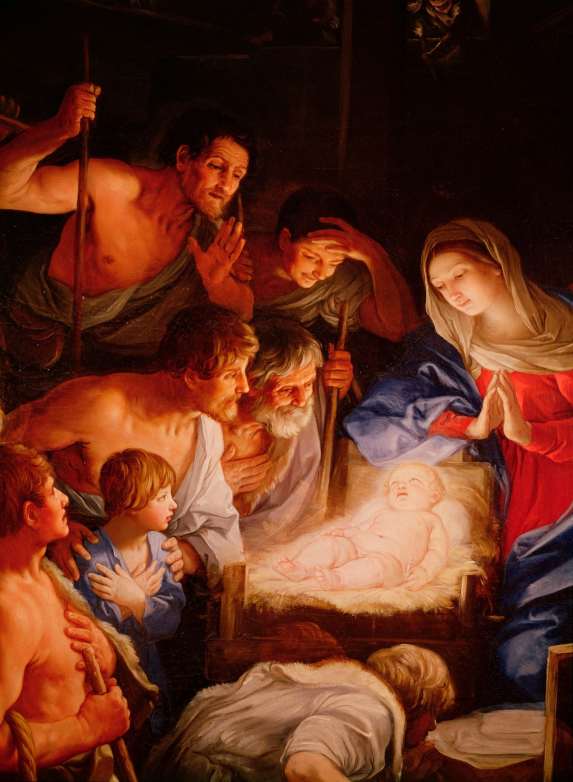
The Adoration of the Shepherds by Guido Reni (c 1640)
We have all heard the Christmas story before.
The Christmas story is the story of a baby born miraculously and mysteriously to a virgin mother.
About a nobody girl named Mary, who saw the announcement that she would be the mother of the messiah to be the greatest privilege of her life, despite its meaning she would be ostracized perhaps the rest of her life, since she was not married
It is the story about a good and merciful man, named joseph, who when he heard that his fiancé was pregnant and he was not the father, he could have subjected her to disgrace and even had her stoned in the culture, but moved with compassion, simple was going to dissolve the marriage quietly.
A man that was reassured by an angel to marry the woman, and that he would be the legal father of the savior of the world.
It is a story set to the back drop of God’s people conquered and oppressed by a massive empire, ruled a tyranny Emperor who claimed himself to be the Son of God.
It about this little unlikely family having to travel miles through storm and sand to the town of Bethlehem to be counted by order of the Emperor Augustus.
It is a story about this family who upon returning to their own hometown found that no one wanted to give them shelter for the night. No family wanted them.
It is a story about the king of heaven being born in the muck and mire of a barn.
It is a story about good news announced by angelic hosts to lowly shepherds, forgotten in the wilderness, tending their sheep.
It is a story about wisemen following stars, fooling a local corrupt ruler and coming to worship the messiah child with gifts of gold, frankincense, and myrrh.
It is a story about an escape in the night as Herod sent out guards to kill the children of Jesus’ age, trying to stop the potential usurper.
And so, this is a story about miracles and the messiah, about faithful servants and faithful spouses, unplanned pregnancies and ancient prophecies; it is about shepherds and tyrants, about journey and escape, about humility and royalty, oppression and hope.
This story is the first Christmas. It is the story. It is the most important story. It is the story of all our salvation. Our salvation began to be accomplished in history on that day, in that stable, in that dirty manger, to that poor Middle-eastern couple, two thousand years ago.
It is the truth that God is now with us: the incarnation. The infinite God dwelling with us mortals.
It is the truth about God’s rule. The messiah Jesus shows how God rules: he chooses the lowly; he chooses the poor; he chooses the unworthy, the forgotten, the unlikely. He prefers them to the powerful, the rich, the proud, and the oppressor.
It is the truth about forgiveness. Jesus wasn’t just the king of the righteous. He didn’t just love the deserving. He also loved sinners. In fact, he died for the people trying to kill him. He died for Emperor just as much as the shepherds. He died for King Herod just as much as the wise men. He died for the criminal and the terrorist just as much as he died for you and me.
The Christmas story is the truth about God’s fundamental character of love and compassion, about God being born in our form, identifying with our plight, binding himself to our fate, all to say that nothing can separate us from his love.
Immanuel: God is with us. He is not against us, he is for us. He gave us his son. He gave us himself.
It is also a difficult story to believe, too isn’t it? We live in a world of skepticism. It seems that usually about this time every year someone publishes an article, proclaiming their modern brilliance at just how unbelievable the Christmas story is.
Angels don’t exist. Miracles don’t happen. Virgins don’t have babies. Stars don’t give travelers directions. Gods don’t reveal themselves. It is simply an unbelievable story.
It’s preposterous; it’s impractical; it’s too spectacular; it’s too amazing. Things like this just don’t happen.
But our culture’s skepticism over the things of God – whether it is the possibly of miracles or the fact that God could indeed reveal himself – pays a high price.
Skepticism against the Christmas story is skepticism against hope itself.
We live in an apathetic age.
Wars can’t be stopped. Poverty can’t be solved. Politicians always lie. Life is always unfair. Marriages never work. Churches never help. God isn’t there.
There is no life after death, and ultimate no reason for life before it.
Right and wrong, good and evil, hope and tragedy, these are just creations of the human imagination with no real anchor in reality.
The world is not getting better. In fact, it is getting worse and to be honest, most people would think we are not worth saving.
Forgiveness? Hope? Love? Goodness? It’s preposterous; it’s impractical; it’s too spectacular; it’s too amazing.
It is unbelievable.
Perhaps the Apostles passed along this story not because they were primitive, but because they were just like us.
They lived in a skeptical age. Tyrants stayed powerful; peasants stayed poor; lepers stayed sick; women and slaves stayed property; the dead stayed in the grave; and there is nothing new under the sun.
…Until Jesus showed up. Perhaps the reason the Apostles passed along this Christmas story is precisely because it was unbelievable. Unbelievable yet true.
This is a watershed moment in history, a game-changer, a paradigm-shifter, an epiphany, an event.
God showed up. Hope showed up. Goodness and mercy and forgiveness showed up. Nothing like this had ever happened in their time. Nothing like it before or after. Prophets had foretold this, but who could expect it happening in this way?
Perhaps this story is true in all its remarkable, exceptional, unbelievable, beauty.
We can ask, just like Mary, “How is this possible?” And the angel’s words are just as true today as they were two thousand years ago: With God all things are possible.
With God all things are possible.
If we grant that, this story starts making sense.
Good does triumph over evil. Love does triumph over hate. Forgiveness does triumph over hurt. Peace does triumph over violence. Faith does triumph over idolatry. Hope does triumph over despair.
These truths are not the delusions of us human bi-pedal ape-species with an overgrown neo-cortex.
The deepest longings of the human heart, the groaning of the soul for a world without hunger, sickness, sin, death, and despair – as unrealistic as that sounds – that yearning knows this story is true the same way our thirsty tongues know that water exists.
Its real. Its possible. It is out there. It is here: in Jesus.
The only left to do with this story, when we are done pondering it and puzzling is to trust it.
Can you tonight trust this unbelievable story? Can you trust that with God all things are possible?
Can you trust that your life is not just there without value, but it is a gift, it was planned and made by a God that sees you as his child?
Can you trust that the wrong in your life, the sins we have committed that no excuse can defend has been forgiven by a God that knows you better than you know yourself and sees with eyes of perfect mercy?
Can you trust that God has come into history, has shown us the way, has died for our sins, and conquered the grave?
Can you trust that God can set right all that has gone wrong as we invite him to renew our hearts, our minds, our souls and strength, our relationships, our job and family, our past and future, our communities and our country?
Can you trust that this Christmas story about God’s miraculous power, his unlimited compassion, his surprising solidarity, can be shown to be true this night just as much as it did then? In you, in the person next to you, in this church, in this town.
We give gifts at Christmas time as a sign of God’s generosity, but do we look forward to God’s gifts to us each Christmas?
Do we look for the gift of renewed spirits?
Do we look for the gift of transformed hearts?
Do we look for the gift of forgiveness of past hurts?
Do we look for the gift of reconciled relationships?
Of new freedom from guilt and shame, from hurt and hatred, from addiction and despair, from materialism and apathy.
What gifts are we going to see given from God’s spirit this Christmas.
Perhaps it will be like what happened to Nelson Mandela (just one story I read about this week about how the truth of Christmas changed someone in remarkable ways). In South Africa where Blacks were segregated off from the privileged of White society, Mandela as a young man advocated armed uprising and was imprisoned for life in 1962.
In prison he faced all the things that would, by any worldly standard, destroy hope, love, joy and peace in any man’s soul. He was beaten by the guards. He recount one day being forced to dig a pit that the guards taunted him saying it would be his own grave. As he dug, they peed on him and spat on him. The prison was so dirty he contracted tuberculosis.
Conditions like that fester the heart not just the body, but the miracle of Christmas reached him. Mandela recovered his Christian faith in prison, and was moved with hope towards a better tomorrow, with love and forgiveness towards even his guards that beat him.
In a sermon he gave later in life, he spoke about the hope he gained knowing that the messiah was born an outcast like him. This unbelievable Christmas story, the story that we recite and remember till it we often take it for granted, restored a man’s heart in one of the darkest of places.
Christ’s name is Immanuel: God with us. God was with the shepherd, with Mary, with Joseph, with the oppressed Israeli people, and so, also with Nelson Mendela.
After 26 years in prison, campaigns to have him pardoned succeeded, and Mandela went from prison to the presidential campaign, running to become president and end apartheid, not through violence but through reconciliation.
He won and he even had the guard that beat him from prison, whom he reconnected with and forgave, at his inauguration, a guest of honor.
Its an unbelievable story isn’t it?
How will God work something unbelievable in you tonight?
We could say that our lives aren’t as fantastic as Mendel’s, but then again, if we say that, we would be selling ourselves and our God short.
You see, a story about angels and a virgin giving birth and about a God found in the form of a baby might be unbelievable, but we Christians take that as part and parcel of what our unbelievable God does.
There is a saying that goes if you are in for a pound, you might as well put in a penny.
If we know that God has done the miraculous, can we trust him now with the mundane?
If we know that God has given us life, can we trust him with our finances and family?
If we know that God has atoned for all sin, can we trust him with our fears and failures?
If we know that God has conquered the grave, can we trust him with the worries of tomorrow?
If we know our God is a God that can do all things, that he has already accomplished everything, perhaps can you trust him with something small now. Let’s do something small right now. Something small but still significant.
Let’s have a moment of silence and stillness. We don’t get enough of those in this busy season. Have a moment right now to say to God whatever you need to say or to listen to God and hear whatever he as been trying to tell you, then we will pray together…
*Pause*
Living God, Father of our lord Jesus Christ.
May the worship we have shared this Christmas lead ro acts of service which transform people’s lives
May the carols we have sung this Christmas help others to sing, even in times of sadness.
May the gifts we exchange this Christmas deepen our spirit of giving throughout the year.
May the candles we have lit this Christmas remind us that you intend no one to live in darkness.
May the new people we have met this Christmas remind us that we meet you in our neighbors.
May the gathering together of family and friends this Christmas make us appreciate anew the gift of love.
May these unbelievable stories we have told again this Christmas be good news of great joy to us and all people, proclaimed on our lips and embodied in our lives.
May the ways you have come close to us this Christmas not be forgotten.
May we remember your unbelievable love, mercy, grace, and forgiveness – that you are our life, our light, and our salvation, this season and always, because of Jesus Christ our Lord.
Amen
[End prayer modified from Gathering for Worship: Patterns and Prayers for a Community of Disciples by the Baptist Union of Great Britain]
The Shack (Part Two): The Ironic Move from Calvinism to Orthodoxy

I have heard some really vitriolic criticisms of the movie, The Shack.
I am reminded of the parable of the emperor’s new clothes. A foolish emperor commissions new clothes to be made. They were invisible, a deception on the part of the tailors, but they tell the emperor that anyone who thinks they are invisible are foolish. So the emperor pretends he can see the clothes and scorns anyone that does not. On parade, an innocent child points out that he is naked, and the jig is up. The emperor realizes he is in fact naked.
Paul Young is that child, I think. The emperor is evangelicalism; his clothes the pretension to orthodoxy. Our children know our flaws better than anyone, and Paul Young, as a child of evangelical thinking, a pastor’s/missionary kid, is speaking from the inside. He is not an outsider.
Some of Paul Young’s testimony resonated with me. I was raised with a very conservative theological paradigm. I went to seminary, where we liked to joke, “Of course, we are fundamentalists, we just aren’t as angry as those other people.” But the truth was we were angry too. Anyone that held beliefs different from us, if they were significant, were wrong and worse than that, dangerous.
I have learned there is a big difference between “right belief” and “believing in the right way.”
Some of the biggest critics of The Shack have been Reformed Christians. Now, these Christians are our brothers and sisters. They often don’t recognize that, but that is on them not us. I’d prefer to take the high road. We have the same Gospel, just different particulars, but I would point out there are some particulars that I think are deeply problematic.
I do not speak as an outsider on this. In college, I loved listening to John Piper. I read Calvin’s Institutes and I thought Wayne Grudem’s Systematic Theology was the greatest contemporary work to put theological pen to paper.
Now, I think the only reason I thought that was because I had not read much else. Since then, I have read at least one systematic theology every year. For me I moved beyond some of my more ultra-conservative convictions because they fundamentally could not stand up to either the Bible, historical Christian thinking, or the phenomena of life itself. I’ll explain…
For Calvinism, since God elects some to salvation and others not, and there are those Christians that claim to be “Christians” (like those Catholics and liberals and people that watch HBO) but are not (grace was not enough for them), I had to be hyper-vigilant theologically. I found myself always angry and annoyed at someone’s theology, even disgusted. I did not want them to contaminate me. If there were people that were not Christians but thought they were, the only way I knew I was saved myself was to always keep articulating every question I had theologically, ever more precisely, and to stay away from those that differed (you can read more about my journey in learning to accept other Christians here). Questions over infra-lapsarianism or super-lapsarianism became faith crises as to whether or not I actually believed God was sovereign and therefore whether or not I was saved. Discussions like this all became slippery-slope arguments. Arminians denied God’s sovereignty; open theists God’s impassibility; egalitarians, God’s authority. I was very good a pointing out the proverbial speck in another, ignoring the proverbial log in my own.
I could not reckon with the fact that there were sincere, biblically-minded Christ-followers that did not think the same things as me. See, when I looked at a biblical passage, and had an interpretation I thought was by the Holy Spirit, I could not doubt that. Everything hangs on certainty. I have often said that a fundamentalist cannot ask whether or not they are truly wrong on a core issue of doctrine, because to do is to doubt God and to invite doubt about one’s salvation assurance. Self-fallibility is too risky, even if it is true.
In this scheme, I did not believe in justification by works, but that just meant I was saved by doctrinal works. I was certain of my salvation because of the correct ideas in my head.
This proves potentially fatal if you ever encounter an important yet ambiguous text, which was often in seminary, or change your mind, or just don’t know what to think. The Bible became a scandal to my own theology, whether it was the unsustainable idea of its inerrancy, the refusal to admit the existence of woman leaders, or passages that did not fit an impassible God. As I began to see some of my theological convictions being contradictory, I felt like I was losing my salvation.
In one summer, while that was happening, my “shack” occurred. My father died of cancer; my mother was also suffering from cancer. Several friends of mine went through severe moral and faith crises, which for their sake I will not go into (you can read more about the whole experience here). I was left penniless, working at a Tim Horton’s on night shift, wondering if all this Christianity stuff was even true.
I ended up having a remarkable shift where God encountered me in the abyss of my confusion. I realized that if God is love and God is in Christ, then my ideas of faith can fail, but God will still have me. It was a profoundly mystical experience.
That lead me on a journey to rethink my faith, since I suspected there was more to it than just one tradition that no longer nourished me. This is a hard thing to say to some of my Calvinist friends, who I do consider my brothers and sisters, but I find that this theology is so intellectually and biblically problematic that it induced a faith crises for me, yet still nourishes them.
Nevertheless, that summer I began to I read deeply. I went to the University of Toronto soon after where I got to study under so many different voices. In high school I was a fundamentalist, in college I moved to being a conservative evangelical, in seminary I felt like I was becoming increasingly liberal, in post-grad studies I read deeply in postmodernism and mysticism, by doctoral studies I found myself gravitating to the school sometimes call “post-liberalism,” which lead me to do my dissertation on James McClendon, a Baptist narrative theologian.
Along the way, I started reading church fathers, mothers, and doctors. These are the most esteemed thinkers and saints the church has looked to. I gravitated to the mystics: Dionysius, Nyssa, the Cloud of Unknowing, St. John of the Cross, Julian of Norwich, and Meister Eckhart, but also Irenaeus, Aquinas, Athanasius, Anselm, and Augustine, etc.
One thing that I started noticing was that what I thought was “unorthodox” was widely held by those who were actively bound by creeds. When I told them about my upbringing, they looked at me recoiling, noting how unorthodox it was.
I found that, ironically, the narrow view of what I considered orthodox was actually not viewed that way by those who had read deeply in the tradition of historic Christianity and had strong conservative commitments to historic orthodoxy. What is “orthodox” here is the bounds of acceptable biblical reflection that the church over 2000 years has developed, using church fathers and doctors, councils and creeds. The sad thing was that the over-protective, arrogant, isolated, and suspicious mode of my past beliefs ironically made me closed to something the greater sweep of Christianity held to be appropriate.
Bonhoeffer once said that those that cannot listen to a brother or sister will soon find themselves unable to hear the word of God also. I think this statement is applicable.
Here lies the irony of those that criticize the “heresy” of The Shack. The notion that Young has moved beyond conservative evangelicalism is not abandoning orthodoxy; it is coming back to it!
I’ll explore this further in my next post.
The Shack (Part One): Am I Missing Something?

The other day I got to participate in a showing of The Shack that our church, First Baptist Church of Sudbury, and Valleyview Community Church sponsored.
It happened in the beautiful Imagine Theatre Movie Lounge with its wonderful recliner seating (I am not being paid for that plug by the way – it really is nice!).
The Shack is a movie based on a book where a man, Mack, suffers the loss of his daughter. His daughter, Missy, is murdered, and he hates God for it. His life is beginning to unravel when he gets a card requesting his presence at the shack where his daughter was murdered, signed by “Papa,” the name for God his daughter used.
Mack goes to the shack wondering if the murderer is there, and Mack comes ready to kill him. When he goes there and finds no one, he lets out his anger at God. Shortly after in the woods, a man who we find out is Jesus, invites him back to the shack to have a weekend with the Trinity.
God the Father, “Papa,” is portrayed as female, a big black lady and the Holy Spirit is portrayed as an Asian woman, Sarayu. Mack is invited into fellowship with them. Mack is struck by the warmth of Papa, the relatability of Jesus, and the mysterious wisdom of Sarayu.
Mack learns that the Father is fundamentally love. Rather than seeing God the Father as distant and unforgiving, disconnected from Jesus – essentially being the thing Jesus saves you from – the Father is unified with Jesus, one in the purpose of loving humanity. The cross is the full disclosure of the love of God, all of God. Mack is surprised to see the mark of the nails on Papa’s hands.
Mack goes out to the garden and speaks with Sarayu. They begin digging a hole. Mack wonders why the garden is so messy and wild. The garden, Sarayu indicates, is Mack’s heart. Her work is wild and beautiful and creative and she is working in him, growing something that he does not understand right now.
A pivotal point in the journey is that Mack goes out on a boat. He begins to think about his pain and his loss, and realizes the boat is sinking into the dark waters. The sea is the primordial chaos of satanic sin, seeking to swallow him. The only thing that saves him is that he sees Jesus walking on the water towards him. He grabs a hold of Jesus and does not let go. After that is some, as I call it, “Christian cheese,” where Jesus and Mack goof around walking on the water. The point is theological: Mack admits that Jesus is the most accessible of the members of the Trinity.
Mack is taken to a cave where he is confronted with lady Wisdom. Mack angrily wishes God to smite the killer of his daughter. Wisdom invites him to sit in God’s throne and play God for a moment. Wisdom invites him to give judgment on who will live and who will die. Eagerly Mack sits, ready to pour out his ire on his daughter’s killer. However, Mack’s other two children are placed before him. Their sins are recounted, and Wisdom requests Mack to choose between them, who will be preserved and who will die. Mack is confronted with the fact that if God is a loving Father to all people, God still loves the murderer, despite his brokenness, and is working to save him just as much as all his other children, not wanting any to perish.
At this point, Mack is given a glimpse of heaven, and sees Missy enjoying the fellowship of Jesus. He realizes that God in his love has placed her in a place beyond the pain of her death, and this comforts him to know she is okay.
Mack begins to heal as he learns to forgive as God has forgiven him. In the process, Mack learns he has to forgive his father, who was abusive. Interestingly after he does this, Papa appears to him as a male. Mack needed healing to approach God as Father. Papa previously appeared as a mother to appeal to the love that Mack already knew. Now, Papa is about to teach Mack a new stage of forgiveness. Papa brings him to the place where his daughter’s body was hidden. Along the walk, Mack is confronted with the need to forgive his daughter’s killer. As Mack lets go of his hate, Papa then brings them to the small cave where the body is stashed.
They delicately bring the body back to the shack and Mack realizes that Jesus has been working on a beautiful casket for his daughter. They bring the casket to the garden, and Mack realizes that the hole he was digging with Sarayu was a grave to bury Missy in. Mack realizes the love the Trinity had for Missy is the same as his and that God was with her through all that she went through. They all have a little funeral service there together.
Mack leaves the shack with a new found love at work in him, which he uses to rebuild his fractured marriage and family.
The movie was wonderful: good acting and cinematics. It is a bit of a crier, with many emotional and touching scenes. Admitfully, a movie of this nature is hard to pull off. Depicting God as a character, let alone the Trinity as a black lady, a young middle eastern man, and a weird Asian lady, is hard to do with warmth. We expect either the comical Morgan Freeman of Bruce Almighty or the powerful austerity of the voice coming from the burning bush like in The Ten Commandments. To depict Mack engaging in a friendship with God, and to do so tastefully, is perhaps most difficult because we don’t often want to think about God that way.
The movie presented the love of God, the invitation to trust Jesus, the wisdom of the Spirit, the need to live out God’s forgiveness and love as a response to the problem of evil in perhaps some of the most clear and success ways I have seen in Christian cinema. I look at some of the crap out there in Christian movies, not to name names, but The Shack was frankly refreshing.
Now, some will say that this is just literature and others, the movie’s critics, point out that it is teaching theological convictions. Both are correct. My reaction to the theological themes of the movie, which I will take up next post, are same as the book. Several years ago I read the book curious as to whether it was “heretical” but was surprised by how much I enjoyed the book. My reaction is the same: “Am I missing something? Why are people getting angry at this?”
If you want to understand the book you really must listen to Paul Young’s testimony here. People need to walk a mile in Young’s shoes before casting judgment. In deed, as Christians I don’t think they can do that without listening to him. The Shack is a metaphor for his wrestling with God, as a man that was the son of missionaries, thoroughly indoctrinated in evangelical thinking. We would be wise to listen to the views of such an insider. Our children know our flaws better than anyone. His father abused him and taught him a theology of shame. Later in life he was unfaithful to his wife, repented, and sought counseling. The level of vulnerability and emotional insight in his testimony is staggering. The counseling was so intense that he almost committed suicide, but through it, he finally understood God’s love and grace. The book was written as a present to his kids, never intended to be published at the scale it has achieved. For any critic of Young, even if you disagree with his ideas, I would hope they would extend understanding on a person that shows us so much about how to follow Christ through suffering and brokenness.
As someone who is a person that saw abuse in our home (my mother’s husband to her), as someone who did grow up around emotionally toxic Christianity (my father was a pastor’s kid and his father abused him), this movie is highly therapeutic. As someone that has experienced a lot of difficulty, especially in my college years with my parents dying of cancer, while I will get into it more in the next post, this movie has forgiveness and faith at the center.
That is, I think, what the book is about at the end of the day: A man learning about the love of Christ through pain and suffering, propelling a person towards forgiveness. Am I missing something? What is wrong with that?
How (Not) to be Patriotic (Part 1): Understanding Culture and Faith

My wife and I, on our honeymoon, did a Mediterranean cruise. We saw Malta, Naples and Pompei, Rome and the Vatican, Florence and Pisa, and finally Cannes, France.
Florence was a gorgeous city. We toured the city’s cathedrals, and through the streets we saw statue after statue, all by walking along very picturesque cobble stone roads.
We came to the city center where the Duomo was. This is a massive cathedral constructed by the same architect that did the St. Peter’s Basilica. The baptismal chapel on the one end of the Duomo has gold gates, called the “Gates of Paradise,” lined with plates of biblical artwork.
I remember thinking, we really don’t have stuff like that in Canada. We don’t have the depth of history like a place like Florence does.
The tour took a break and so I want to the bathroom. As I was washing my hands, one of the other people on the tour started talking to me. Apparently it was acceptable to talk to others in a bathroom in his culture.
“Are you enjoying the tour?”
“Yes, the gates were awesome,” I said.
“You’re an American, yes?” he asked.
Of course, I replied, “No, I’m Canadian.”
To which he replied with one of the most insulting things you could say to a Canadian in that instance: “Oh, same thing!”
If this was hockey, the gloves would have come off!
So, I turn to him and asked, “Your ascent – its Irish, isn’t it?”
“No, I am from London.”
To which I replied, “Oh, same thing!”
Now, since then, that story has caused me to reflect on what it is to be a Canadian. What does it mean to be a Canadian? Are we, as John Wing joked, “Unarmed Americans with healthcare”?
This is not as obvious a question as it sounds. Yes, I was born in the area in between the Pacific, Atlantic, and Arctic Oceans, North of America and South of Greenland, but that does not tell us much about what it means to be a Canadian. That’s geography. However that may tell us something or two.
“Canada [geographically] is like an old cow. The West feeds it. Ontario and Quebec milk it. And you can well imagine what it’s doing in the Maritimes.” – Tommy Douglas
My apologies to all the Maritimers in the room.
Anyways, what I am talking about is being a “true Canadian.” Is there such a thing?
Do Canadians have a particular culture? We love hockey. We love camping. Outdoor sports in general. Everyone in this room knows what it is like to walk out of your house in the winter and breathe in -45 degree Celsius air.
Canadian food: Maple Syrup, bacon, Nanaimo bars, poutine with globs of gravy and cheese curds, beaver tails, etc.
We like to drink unhealthy amounts of coffee, double double. We get our milk in liter plastic bags, not jugs.
Our money is all sorts of goofy colors, and for some reason, the Canadian mint is slowly turning all our bills into progressively larger coins. The 5 and 10 dollar coins are coming, people. What then? I think eventually we will have 20 dollar coins the size of frisbees and eventually 100 coins the size of manhole covers!
We have iconic figures like beavers, moose, the Canada goose. We are apparently really proud of our wildlife!
We sort of go to those kinds of things in order to understand ourselves, but those kinds of things are pretty surface level and outward. That does not tell us a whole lot about us. Hopefully there is more to us than that.
The fact that we have receded into those kinds of cutesy notions of who we are shows what the Canadian media philosopher Marshall McLuhan said decades ago:
“Canada is the only country in the world that knows how to live without an identity.”
McLuhan was the man that stated, “The medium is the message.” Canada had these brilliant culture philosophers like George Grant and Northrop Frye that no one really remembers today. It’s kind of sad.
Anyways, we are a pluralistic, multi-cultural society, not a culture but a set of cultures, and that leads us to feel a sense like we don’t have a uniform set of values. We often don’t feel like we know who we are deep down as Canadians.
However, interestingly enough, while many Canadians are unaware of it, there is a bizarre consensus in Canada on values.
In college I read the book, Fire and Ice: Canada, the United States, and the Myth of Converging Values. It was a bit of an eye opener. Canada, according to sociologist Michael Adams, is becoming very different from its American counterparts. We are similar to Americans, but as far as values goes, the presence of America to the South of us as caused us to be increasingly different form them on lots of stuff.
That is one way of saying who we are, isn’t it? Canadians are not Americans. Whoever we are, we ain’t that. We are proudly not that.
We always define ourselves in terms our brothers and sisters to the south. Pierre Trudeau once likened North America to a bed where Canada was a beaver trying to sleep next to a raging Elephant (the US).
And while Americans assume they have a more uniform melting pot kind of culture and Canada has a multi-cultural, diverse culture, Canada is actually far more uniform from sea to sea than the US. That’s ironic.
In values of Authority vs. Individuality and Survival vs. Fulfillment, American regions are very diverse: the Deep South is strongly Authority-Survival, South Atlantic is Individuality-Survival. Some states were closer to Authority-Fulfillment while others closer to Individuality-Fulfillment. Meanwhile, all Canadian provinces fell within the Individuality-Fulfillment quadrant.
What does that mean? Here are some of his statistics: Only 20% of Canadians attend church weekly versus 42% for Americans. Only 18% of Canadians feel that the father must be Master of the house versus 49% for Americans. 71% of Canadians felt that a couple living together were family versus 49% for Americans. Only 25% of Canadians were prepared to take great risks versus 38% of Americans. Only 17% of Canadians feel a widely advertised product is probably good versus 44% of Americans
Adam’s said, and I think this sums it up well: Americans would be more likely to brag about a new car; Canadians more likely to brag about the trip they went on.
Adams feels that “an initially conservative society like Canada has ended up producing an autonomous, inner-directed, flexible, tolerant and socially liberal people. On the other hand, “an initially liberal society like the US has ended up producing a people who are materialistic, outer-directed, intolerant and socially conservative.”
Now, here is the important question for today. Does that make our culture the right one?
According to the news, people from both American and Britain have been googling “How to move to Canada” at record rates, but I think that is short-sighted.
I don’t think anyone of them is necessarily bad or good. I see things like and things I am concerned about in those statistics. Sure there are cultures that have strong education or have less crime or promote religion. However that can all have good aspects and bad aspects.
Of course, if we said that Canada’s culture was the best, we would be saying that out of bias, and we would also be failing to cultural arrogance, which is not good.
The fact is that you can take your culture in a good way or a bad way. You can’t blame your culture for stuff you know is wrong. Any culture has upsides and downsides. The point is to be aware of it. There will be extremes. Culture is not necessary a thing to be opposed in faith, but is something to be understood critically, placing our faith and discernment first. We need to celebrate the good and work at eliminated the bad.
Christians have usually two dangerous responses to our cultural identities:
(1) Isolation: Churches that Retreat from Culture
This is very common of fundamentalist churches. Our culture is bad, impure, evil, so lets huddle in our faith bunker where it is safe.
Churches that get isolated don’t use the goodness the Spirit of God has planted in the culture to use to communicate the Gospel. Paul knew this when he spoke to the people at Mars Hill.
There is no such thing as a culture-less church. No church is free from culture. God did not intend it that way. The Bible was written within a culture of its own, but the Word of God speaks to all cultures. The church should be working to promote the best of culture. The point is discerning the good from the bad.
It is not weather we will have a Canadian culture within us or not, the question is will we be aware of it and response appropriately.
Canadians are more skeptical about consumerism and war, and more hospitable to immigrants. That’s good. I think Jesus was too!
Canadians are individuals that value strong relationships over institutions and programs. That is something we can work with.
Canadians might be skeptical about religion, but they are open to talking about justice, spirituality, ideals, and values. In a round about way, that sounds religious!
Lots of people want to lament that our culture is becoming less Christian. That is true in one way, but that does not mean the Spirit has stopped working in our culture to make opportunities for the Gospel.
(2) Accommodation: Churches Claim All Culture for their Own
The worst example of this in history is when Emperor Constantine in the third century made Christianity the state religion. To be Roman was to be Christian. To be Christian was to be Roman. Roman law was ordained by God. The church went to war against Rome’s enemies.
We saw horrific examples of this in Nazi Germany where the state church proclaimed Hitler to be chosen by God to bring glory back to Germany.
We see the same in the British Empire. Where the Anglican Church sanctioned colonialism. The British colonized half the world and now complain about immigrants taking their identity!
We see this also in America today, sadly. American wars for oil have become evangelical crusades against Muslims. The American motto of “life, liberty, and the pursuit of happiness” is preached as gospel in some churches.
We Canadians can do the same.
I think ours is a culture of apathy and skepticism. We have allergic reactions to organized anything, except organized sports. We have trouble committing to community. We are terribly afraid of offending people with the truth. We are individualists that don’t know who we are and don’t want you to tell us.
That comes out in our religion.
We say stuff like, “I believe Jesus in my Lord and Saviour, but that is just my personal opinion.” (A joke often made by the ethicist, Stan Hauerwas).
We are multi-cultural, which is great. But also we have allowed tolerance to go a bit too far. There are two kinds of tolerance, by the way. One kind says, “You are different from me, so please help me understand you, and let me make a space for you, so that we can have peace.” That’s good.
There is bad tolerance that says, “I don’t know you, I don’t care, you stay out of my business and I’ll stay out of yours. If we bump into each other at Foodland, lets have a shallow conversation about the weather or local sports team, but not anything meaningful, let along religious.”
We are terribly afraid of speaking truth and very afraid to commit to organization and community. That fear has caused us to shrink back from opportunities to encourage people with the Gospel. We are so afraid of offending people that we miss opportunities to encourage.
When we think about our nationality, we have to be critical. We are called to be “in the world and not of the world”
We need to understand that there is good and bad in our culture. We need discernment to that we do not fall into nationalism. Being Canadian can be a good thing, but not necessarily.
This is why we look to how we are apart of another nation: the kingdom of heaven…
Seven Last Words: Forsaken
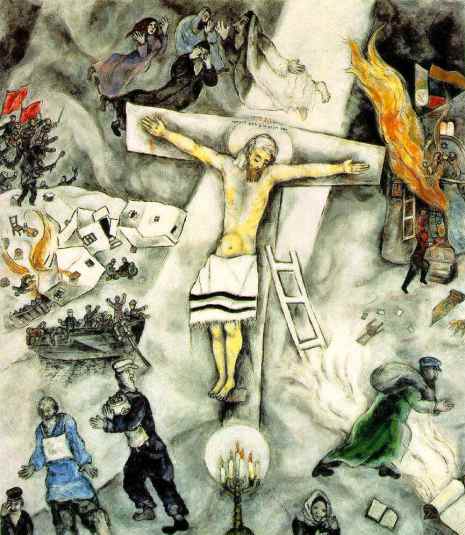
“My God, my God, why have you forsaken me?” (Mark 15:34)
In his book, Night, Elie Weisel gives his bitter account of the Holocaust, an event so horrifically evil it unsettled the very core of his Jewish faith. He was only a boy when he saw the execution of an innocent man, starved, emaciated, beaten, broken – broken of his very humanity. He was robbed of his dignity by people devoid of their own humanity, the Nazis.
This man was hanged in front of all the other prisoners: the poor man was made into a spectacle of the Nazi’s brutality as the audience was made to watch, feeling the full measure of their own powerlessness. Weisel, a boy, was made to watch.
As this happened, someone called out, “Where is God?” That man had had enough, the injustice caused him to cry out at the risk of his own execution. “Where is God?!” As if to say: How can he not be here? How could he not intervene in a moment like this? The crowd could give no answer as he indicted God in a crime of cosmic proportions.
“Where is God?” the voice rang out again, again and again.
Elie Weisel, a young man at the time, felt in his heart the only possible explanation: Where is God? God is dead. He died there in those gallows.
Weisel saw this admission as the very moment his faith collapsed into a bitter semi-atheism. His hope in God was shaken.
But as Weisel reports, he did not lose faith, for while he felt hurt by God, the prospect that there was no God at all rendered the events of the Holocaust even more tragic: no God to denounce the evil as fundamentally wrong, no God to command compassion rather than indifference, no God to offer the promise of restoration.
Weisel’s shaken faith, I think, is an honest faith. Faith calls for nothing less than honesty about ourselves and our world, and that honestly about our world calls for nothing less than the honesty of being deeply upset over the tragic injustices of this life.
But to have that honesty in faith means addressing that frustration and lament before God as Jesus did: “My God, my God why have you forsaken us?”
This phrase comes from Psalm 22, a psalm written by David, who was a righteous man that was attacked by his king, his friends, and later, even his own family. He spent much of his life on the run, hunted like an animal.
One way to understand the cross – perhaps the most basic way – is to understand that Christ died, “according to the Scriptures” (cf. 1 Cor. 15:3-4). Jesus embodies the story of Scripture. He is the word of God.
He is the suffering servant of Isaiah 53: “But he was pierced for our transgressions, he was crushed for our iniquities; the punishment that brought us peace was on him, and by his wounds we are healed.” He is the “stone that was rejected that is now the corner stone” (Psalm 118:22 cf. 1 Peter 2:7). He is the perfect Passover lamb, slain as a sin offering for us, etc.
Jesus fulfills this scripture as the rest of the psalm shows:
Dogs surround me,
a pack of villains encircles me;
they pierce my hands and my feet.
All my bones are on display;
people stare and gloat over me.
They divide my clothes among them
and cast lots for my garment. (vv. 16-18)
In claiming these words as his own, he is not merely fulfilling the Scriptures. He is showing God’s solidarity, his oneness, with all the forgotten of this world. Jesus in crying out in forsakenness, embodying the cry of the oppressed, the abused, the victimized, the neglected, the humiliated – all who feel that God was not there when they needed him. Listen to the rest of the Psalm:
My God, my God, why have you forsaken me?
Why are you so far from saving me,
so far from my cries of anguish?
My God, I cry out by day, but you do not answer,
by night, but I find no rest (vv. 1-2)
But I am a worm and not a man,
scorned by everyone, despised by the people.
All who see me mock me;
they hurl insults, shaking their heads.
“He trusts in the Lord,” they say,
“let the Lord rescue him. (vv. 6-8)
I am poured out like water,
and all my bones are out of joint.
My heart has turned to wax;
it has melted within me. (v. 14)
This is the lament song of a soul in despair. This is also the words of God in Christ.
In Christ, God knows what it is like to be abandoned, betrayed, tortured, humiliated, blamed, and executed.
Jesus, in his trial and crucifixion, was the subject of personal betrayal: his best friends and students ran, denied him, and even received money to betray him.
Jesus, in his trial and crucifixion, was the victim of religious corruption and abuse. He was accused of blasphemy for his message of forgiveness: that God is with us, sinners. He was tried falsely by corrupt priests who didn’t want their sins exposed or their power taken away. As John 8 tells us, Caiaphas, the high priest, ironically saw Jesus as his sacrifice to save their religion.
Jesus, in his trial and crucifixion, was the target of political oppression. He was brought before the magistrate, Pilate, who ultimately cared only for order at any cost. So, he gave Jesus over to his psychotic soldiers for torture, humiliation, and finally execution by the slow death of the cross.
The cross is a rare kind of anguish. It is the slow death by bleeding out from the torture and nails. Hanging on the nails meant one’s diaphragm would be stressed, causing the person to gasp for air. The subject would hang there starving to death, slowing hallucinating in a delirium of despair as people stand there and mock. Nailed there, few pictures of the atonement render it accurately: few picture the victims unclothed and naked, exposed to desert sun that would blister exposed skin. (Ironically, no crucifix renders Jesus naked – an accurate depiction of the cross is still too scandalous, even Christians!) And the nakedness of exposure was more than physical: hanging there naked, the victim was exposed to the scoffers, jeering, removing whatever dignity remained. Jesus had the added pain and humiliation of a thorn crown pressing into his head and a sign above, mocking his claim to the throne of David.
How could God let this happen to Jesus? How could he have forsaken him? Where is God?
The answer is right there. God was right there. God was in the man who was godforsaken. God revealed that he is with those who feel forsaken by God.
Jesus, Immanuel, “God is with us,” is here as God bound to our fate, our death, our despair, our pain, our sense of the absence of God. He loves us so much he stands with us in our darkest moments.
This does not make sense by our worldly logic, but this is the logic of God. Dietrich Bonhoeffer put it well when he said, “Only a suffering God can save us.” Only love that is willing to suffer with a victim, feeling their pain, willing to take their pain as his own, can disarm the anguish of suffering.
Jesus cried out, “My God why have you forsaken me?”
Jesus deserved justice’s vindication, but he gave it up to live in solidarity with those whom justice has forgotten.
Jesus deserved the throne room of heaven, but chose a crown of thorns.
Jesus deserved to inhabit heaven, but instead he chose to harrow hell.
So, we return to our Holocaust anecdote: Where was God as an innocent man died in the gallows of the Holocaust?
God was with that dying man. He was in that dying man. He was dying for that dying man. God is that dying man, “slain before the foundation of the world” (Rev. 13:8).
God did die that day, but not in the sense that would lead us to atheism.
God did die that day, because he is love; he is suffering love; he is a God that refuses be far away from those who feel forsaken.
God refused to stand far off as his beloved children suffered. It is that same refusal of a God that chooses to suffer with us that refuses to leave suffering forever forsaken in our broken world. If God suffers with us, we know that God did not cause our suffering. If God suffers with us, we also know that he would not will this suffering to be without end. A God of love is a God of hope for us.
We know this because three days after the cross, Christ rose from the grave. Suffering will stop because the cross leads to resurrection.
So the Psalmist affirms in his suffering that one day…
The poor [i.e. the oppressed, the abused, the abandoned] will eat and be satisfied;
those who seek the Lord will praise him—
may your hearts live forever!
All the ends of the earth
will remember and turn to the Lord,
and all the families of the nations
will bow down before him,
for dominion belongs to the Lord
and he rules over the nations. (vv. 26-28)
There will be a day when suffering stops, when tears are wiped away, when hunger is satisfied, when wounds are healed, when pain turns to praise, when repentance and reconciliation reigns.
There will be a day of perfect justice, perfect mercy, and perfect peace.
That day is coming because the God who died on the cross, rose from the grave. Death could not change the impassible character of a God who is boundless life.
The cry of the cross was answered with the triumphant joy of resurrection. Let’s pray…
Father,
We ask with Jesus sometimes, “Why have you forsaken us? Why all the injustice? Why all the destruction? Where are you?”
God, remind our broken souls that you were with us in the times that seems like you were absent. Help us to look to Jesus and trust that you are not far off. You are with us. You are for us. You bear our pain.
You did not abandon us as you did not abandon Christ. Soften our hearts to let go of that pain and anguish, knowing that you have already taken on that pain in the cross.
Lord, allow the wounds of our past to heal in the same way the cries of Golgotha were answered with the resurrection.
Allow the cross and resurrection to inspire us. Give us the grace to live out what your promises demands. Convict us of the courage to confront the injustice of life with Jesus’ innocence. Convict us of the empathy to confront the suffering of this world with Jesus’ solidarity. We pledge to act in trust, compassion, and hope, knowing that you will restore all things.
Amen.
The Risk of Becoming A Father: A Theo-Poetic Reflection

This is a reflection I wrote back in 2011, when my first son, Rowan, was born. It is, as I call it, a “theo-poetic” reflection, as I could not help but think about the grandness of this event as connected with faith in God.
Some would question whether fatherhood is a valid impetus for religious reflection. What do the two have to do with each other? I am of the opinion that even an atheist, when gripped with the beauty of life’s greatest moments ultimately resort to religious-like vocabulary: words of transcendence like “sublime” or even, “sacred.” There is a reason why the Hebrew prophets were not scientists or philosophers – those who think the mysteries of life can be objectified, scrutinized, and exhausted, those that naively hold that thought begins in doubt and ends in certainty rather than beginning and ending in wonder. Rather, all of the prophets were poets.
Many know their fathers as appearing cold and silent, perpetually poker-faced. After my son was born, my wife turned to me wondering why I did not cry at the sight of my son. I said that I did not know. I almost felt ashamed that I did not. Could I be that emotionless? However, as I reflect on this, and many of the powerful moments of my life, I have found that there are, for me, moments so profound that their magnitude invokes such a complex polyphony of emotions, our bodies do not know how to express one where our minds are wrestling with many. It is not that men are emotionless or emotionally shallow (as some have said), it is, I think, that sometimes we are so complicated, no one expression of emotion does justice. Thus, we appear reductionistically simple.
For this reason the Christian scriptures were not written as pure historical reports, logical propositions, and empirical data – objective yet dry, stale, and irrelevant – but rather as narratives, poetry, proverbs, and epistles – subjective, personal, and thus, real and relevant. Poetry is the enemy of science, as science accuses poetry of un-realism, yet it is poetry that seems to come to grip with what reality is for the human experience more than science. In French, the same word is shared for an account of history and a story, l’histoire, as it is understood that in order to communicate the flavor of life’s memories accurately, one must ironically use the metaphor, forsaking the demands of the factual in order to fulfill it and employing the rich meanings found typically in fiction. The wondrous thing about poetic reflection is that it is the attempt to wrestle into words the things that matter most to us, yet render us silent and speechless.
It is a strange wordless feeling becoming a father. Watching my wife’s pregnancy was just that: watching, a position that intrinsically predisposes a father to a sense of aloofness. Another’s pregnancy, for all its power to produce the sense of maternity, is no process to prepare for one’s own paternity: no inherent connection is formed between father and fetus, no nesting instinct clicks on automatically. A guy does not spend his childhood unwittingly rehearsing for childcare with his toys and their many nursery related accessories. Compared to the astounding ability to produce life from within oneself, to shift seamlessly and intrinsically into a parental-consciousness, men are left feeling as the “weaker sex.” Fatherhood, at least in its initial impulse, far from its place in perceived male headship, subverts the great chains of social hierarchy – hierarchy with all its promise of strength and security – that we as men wish to remain unthreatened.
I take Meagan in to be induced on the evening of Good Friday. We stay the night for observation. I don’t sleep. I can’t sleep: part anticipation part the stiff hospital chair-bed-thing is not actually suitable for sleeping.
Then the labor happens in the morning, Easter Saturday, April 23. Trumpets from heaven might have well of blasted: all the signs were there, all of it expected, however, an urgency sweeps over you that makes you feel you were never ready for what is to come. All preparations feel illusory and inadequate. It is the eschaton of my life, as I know it.
Moments become eternal as memory fragments into snap-shots that somehow also bleed together like a long exposure photograph: At the hospital, Cervidil administered, epidural, lunch from the Hospital’s Subway, contractions set in, the movie Ben-Hur plays in the background, cervix is fully dilated and ready to push. I look at my watch, its 4:25. Ben-Hur is at the chariot race scene. I hold Meagan’s hand. I hold her leg. Meagan’s mother, on the other side, does the same. Breathe. Push. Pause. Breathe. Push. Pause. I see the head.
I am not going to lie, it is gross. Life in it’s most raw forms, we often find disgusting; without all our prim and proper adornments to shield ourselves from the overwhelmingly messy purity that life is, we find it scary before we can properly appreciate it as sacred.
A haze of helplessness, ignorance, and anxiety from watching my wife have contractions, have pain, have labor, have something I have never witnessed before and can never understand, leaves me unsure of what is going on, what I should be doing, what I could even do at all. Men are supposed to “fix things.” I don’t know what to do. I say, “Good job,” as if I am the expert, as if I am not feeling awkwardly pathetic.
It all comes to the pivotal moment I see the little body and the loud cries begin. The sur-reality of labor splits sunder by the sharpness of the in-breaking reality of delivery. Adventus at 4:57.
The image behind the shadowy ultra-sound phantasms and amorphous movements within the belly manifests itself for the first time in one tiny distinct form: the crying naked body of a tiny baby boy. The tohu-wa-bohu of childlessness break by the bara of conception, that leads to the badal and miqveh of pregnancy, and culminates in the final barak of birth.
I give my wife a kiss, no longer simply between two lovers, but from the father to the mother of our child. A mature love is affirmed, love that culminated in new live, a new journey: our family. I hold my wife, my wife holds the baby, the baby holds my hand. Bone of my bone holding flesh of my flesh: we are three, yet, in love, we are one.
We named him Rowan Albert Boersma, Albert after my dad, John Albert Boersma. However, I was so tired after the birth that when I called my family to tell them the news, I told them the wrong name! It was the most pleasant point of exhaustion, I’ve ever felt!
I take my son in my arms and I look at him, and he opens his eyes and stares at me. Some refer to a religious experience as an “I-Thou” encounter, the finite “I” encountering God’s absolute “Thou.” The presence of the infinite being produces a sense of being infinitesimal, under the weight of the wonder of that which is Wholly Other. To hold my son for the first time is an similarly unspeakable feeling, apophatic yet oddly inverse: I feel like the thou, staring down at this being that is in my “image and likeness,” this person that is utterly dependent on my providence: so small, so fragile, so vulnerable, so innocent, but above all else, just so. With all that I am, I pronounce blessing on this being: I see him as “very good.” His finger reaches out and touches my finger in Michelangelo-esque sublimity.
As I sense myself as the Thou, the child becomes the I. And thus, I see myself in something other than me. In doing so, eye to eye, I sees I, self-hood is seen in another and otherness in self, an infinite reciprocal circle of identity and alterity. A type of self-transcendence occurs. The I-Thou reverses as I stand before a new tiny Thou. All senses of deity, the feeling of being bigger than you have ever been, paradoxically permeates with the sense of being smaller than you ever have been, feeling the full weight of fatherhood, the magnitude of responsibility, and the fear of innumerable potentialities of failure. The future in all its awesome potentiality presents itself, simultaneously dazzling as dangerous.
In holding that child for the first time, with the instantaneous love, you feel that you are more sure about what is right in the world than ever before, yet at the same time the most unsure. With love, an kenotic agape occurs as someone other than yourself becomes the measure of your essence. As you love this little someone, you see yourself in them, and your own idenity as a loving person becomes bound to them, covenantally. You bind your self-hood to something other than yourself, freely allowing yourself to be taken hostage to this someone that you know has the uncontrollable judgment to pronounce you a success or a failure in your task of loving, in your ability to be loving. The certainty in love appears also as the greatest risk. For those that define masculinity as a man’s self-sufficiency, power, and ability, fatherhood appears as a threat-to more than a fulfillment-of manhood.
Is this what God felt like as he beheld Adam? Is this what the Father felt as he looked down upon Christ lying in a manger? Through the divine tzimtzum, is this the risk of God’s essence as love entails as he constantly proclaims to his children, those other than himself yet from himself? Is this the mystery of God’s promise and proclamation to all humans, when he says, “I am love; I created you from love; I love you; I will always love you”? Is it in the finite response of gratitude for God’s love that God’s infinity is realized? Did God, as a being whose supreme ontological predicate is love, risk his very deity in the act of creating humans? It is only when every “knee bows and tongue confesses” the Spirit’s love, Christ’s lordship, and the Father’s paternity that God will truly be “all in all.” The marvel of God’s sovereignty is his willful vulnerability.
How can God be vulnerable? In Greek mythology, Cronus the Titan devours his children so that none can challenge his sovereignty. Zeus the all powerful, Cronus’ son, slays his father, only to become an absent uncaring father himself to myriads of bastard children of the women he seduced. He, the “father” of all gods, is a god that intervenes to win wars for his subjects – wielding the symbol of his power: the lighting bolt – only for the profit of more temples, more worship, more reputation, more fear of his might. The gods of the Greeks were defined as timeless, impassible, unchangeable, omnipotent and omniscient. And because of this, the Greeks logically concluded, in all their metaphysical sophistication, that the gods do not care about us. They must not care, or else they would not be gods! To care is to be weak. This is what the world conceives of as divinity: power and control.
Some wonder why an infinite deity would choose to identify himself as gendered and allow himself to be named by his people as “our father” (although there are many parts of scripture, I should point out, where God is depicted as motherly too), yet everywhere in our world we see absent fathers – people, perhaps, afraid of the risk of love – broken homes, abandonment, even abuse. And yet in our darkest moments something, someone, beyond all our experience, beyond all notions of how the world is, pierces the veil of despair and shines through in glorious consolation: God as love appears as the one that never abandons, always keeps his promises, always protects, is always proud, is always daring to love.
The God who identifies himself with the stories retold by the community that claims their brother is Christ is a God that we profess does nothing like what a god is expected to do: he comes into history, changes himself into a sacrifice, suffers with us, becomes weak and helpless choosing powerlessness over violence, chooses compassion over wrath, and even is said to have become the very thing God is not: the misery of sin and death. Though the vile yet beautiful cross – the symbol of the Christian God’s awesome ability – all this was done to say to all the fatherless: to all victims those crying out for rescuing, to all the abandoned that will never understand themselves as being worthy of a father’s proud smile. All this to say to all people: you have a father! Daddy loves you. He is proud of you. He will rescue you. He is never going to leave you.
Indeed, no psychological projection, no philosophical system, no misguided mythology constructed by human minds could invent the notion that a God would choose to use masculine language to define his magnificent characteristics yet fundamentally in his very essence, in his very being and becoming, be something so unbecoming of the impassible power and sovereign invulnerability of our notion of “male” deity, that is, the unfathomable and ineffable reality that God is love.
Hearing my crying child, holding him for the first time, and not knowing what to do to end the crying is an absolutely terrifying experience. Something so small renders someone so much older, bigger, and more capable that itself, ultimately incapable: omnipotence dissolves into omni-incompetence. However, he calms down and sleeps sweetly, and I pause to take in the strange soothing fragrance of a new born baby at peace on my chest, his soft head against my cheek. We both rest, I in pride and Rowan in purity. I think to myself that this is how God must have felt on the seventh day. Shalom, the peace that all existence strives for, engulfs us.
I use the blue musical teddy bear to comfort him, the same one my father used to comfort me. Now I understand what my parents felt, and I regret every moment that I ever took their love for granted. My father has passed away, my mother also, yet I am here. I say, “Daddy is here. Daddy is never going to leave you.” A generation passes, a generation comes, and yet in the flux of life’s frailty, for all its uncertainty, love is what remains eternally and assuredly the same. Death is no competitor to the renewing power of life through love. The “risk” of becoming a father, love’s risk of being inadequate, vulnerable, and the potentially a failure, in turn, is then what becomes illusory, dissolving into epiphany, as love’s jeopardy becomes life’s victory, as love demonstrates itself as the essence of immortality, as love demonstrates that love “always protects, always trusts, always hopes, never ends and never fails.”
The Motherly Love of God: Theological Reflections on Mother’s Day

A mother held her new baby and very slowly rocked him back and forth, back and forth, back and forth. And while she held him, she sang:
I’ll love you forever,
I’ll like you for always,
As long as I’m living
my baby you’ll be.
This is from the story by Robert Munsch. It is very dear to me because my mom would read it to me. She read it to me to remind me that she loved me no matter what, that one day she won’t be around, so she wanted me to remember how much she loved me and how I should pass on that love.
That sounds a lot like the love of God, don’t it?
Today we are going to reflect on mothers. We are going to reflect on the significance of the gift of our mothers, and how the love of our mothers remind us of God’s love.
First I’ll tackle the tough stuff of metaphors we used to understand God: Is God a he or a she, a father or a mother? Or neither and both? Second, with that ground work laid, we will survey the rich images of motherly love in the Bible.
Understanding God as Father to understand God as Mother
First, we need to understand what God as Father means. Why in the Bible does God refer to himself as a “father,” or at least as a “he” rather than a “she” or both? I have often wondered that.
God in the Bible is almost always referred to as “he.” Jesus teaches us to pray to God as “Our Father.” Some people get offended at that. They think that is sexist. Some Christians have advocated modifying liturgical documents, editing out male references on that basis. I think that misunderstands why male references are used. Changing, for instance, the prayer, “Our Father” to “Our Mother” misses why it is the way it is.
Nevertheless, many conservative Christians don’t understand why God is portayed this way. One feminist objector to the faith, Mary Daly said, “If God is male the male becomes God,” and sadly, a lot of Christians think that. And so, church history has seen the Bible used to value men more than women under the notion that men are closer to God than women because God is male and not female. Their concern is not without warrant. Some Christians have argued on theological grounds that women were not in the image of God (based on a misreading of 1 Cor. 11) or that women are less human then men (which followed the Greek philosophical traditions of Plato and Aristotle that saw women as “defective” males). However, this is not why God refers to himself as a father. The abuse does not necessarily invalidate the use, but it does reiterate that to call God “Father” begs questions about why we are saying it. If you are calling God “Father” because you think these things, your notion of God has been reduced to something idolatrous. God is not male because God is not a thing.
Why does God get communicated as a father in the Bible?
First off, God in beyond gender, but God communicates with us personally, so he takes on gender. God is the “I am that I am” (Ex. 3:14) indicating freedom of existence, but God is not an “it.” So the use of the personal pronoun, “he,” is not to insist God is male so much as to prevent God from being abstracted. God is beyond creation and therefore beyond gender and sexuality. God is beyond everything. Yet he reveals himself to us using the good things around us. God allows himself to be imaged in order to have relationship.
God uses many images, not just gendered ones. Anything that is good can be used to communicate God’s goodness to us. God is a shepherd, a warrior, a king, a servant, a midwife, an artist, rock, light, fire, etc. This includes fatherhood as well as motherhood, because these roles are intrinsically good. While the Bible uses “he,” God is not more a he than a she. God is these things to get to the inherent goodness of himself that his created order shares from him.
God is understood as a “he” and a “father’ in the Bible for a very good reason. We, just like in the world of the Bible, have many absent fathers. God constantly communicates himself as a father, because there are so many people out there that, while they have a good mom, they don’t have a father. God communicates himself to us as a father, primarily because that is the love that most of us our missing, the love of a father. God seeks to be a father to the fatherless. God is a loving father in a way that says to absent fathers, true fathers do not do this. God communicates himself primarily as a father not because of patriarchy but to counter its abuse.
In fact, one of the first displays of God as a father in the Bible is the blessing and protection of Abram. God acts like a father to him as Abram leaves his father’s household. Abram is left fatherless, leaving his father’s idolatry for God’s call of obedience, and here God promises to be his father, protecting and blessing him. God is a father to the fatherless.
God is a father and the Holy Spirit is a “he” as well, particularly in the New Testament to reiterate the closeness of relationship they have to Jesus.
So, God primarily communicates to us that he is a loving father, the Father of Jesus Christ. However, many people neglect that God often does in the Bible speak of himself as a mother, loving us like a mother. This only makes sense:
God’s love is good.
Our mother’s love is good.
All that is good is of God.
Therefore, our mother’s love shows us God’s love.
Or, God’s love is good like a mother’s love.
Specifically, God loves like a mother.
Now this is important. While the Bible only uses the pronoun “he” for the reasons sketched out. To call God a “mother” or even to provocatively say “she,” is not actually against Biblical faith. Jesus does refer to the figure of Lady Wisdom, a figure that is divine in the inter-testamental books he seems to be alluding to, and Jesus says that “Wisdom is vindicated by her children” (Luke 7:35). Other than this, while God is not primarily referred to in the Bible as a “she” there is no reason to say God is more a “he” than a “she” or that masculinity is closer to God than femininity.
To use the term “she” to refer to God is similar to referring to God as a “Trinity.” No where in the Bible is the word “Trinity” used. Nowhere is the language of “three-in-one” used. While they are not explicitly found in the Bible, they are compatible with its logic. In fact, the trinity makes sense of its logic, helping us to image the God of the New Testament. If God is good and motherliness/femininity is good, then their goodness can be used to communicate God.
Think of a similar example. In the Chronicles of Narnia, God is portrayed as a lion: majestic and powerful. One could just as easily use a dog to represent God. Any dog lover will understand this simile: God is loyal, a companion, a protector, a friend. Yet God is not a lion or a dog.
Scripture goes further to use non-living objects to communicate God. God is a rock, connoting secure firmness. God is a fire, indicating warmth, power, the capacity to purify and even to destroy.
Now, like I said, when we understand why Scripture uses “he” and “father” we know that it is not in a sexist or patriarchal way, although some abuse them for that purpose. We don’t need to jettison that language, nor do we need to have such a fuss about conceptualizing God as feminine. All the goodness of creation communicates God, not least of which is motherly love.
So, this is what we are going to mediate upon today. God’s love is like the procreative, unconditional, sacrificial, protective love of a mother. Our mother’s love points us to the love of God, and this will allow us to appreciate both God and our mothers today.
1. We come from God like how a mom gives birth to us
“You have forgotten the Rock who bore you and put out of mind the God who gave you birth.” (Deut. 32:18)
Deuteronomy warns don’t forget that you came from God. God is your creator like how a mom gave birth to you. Don’t forget that you owe who you are and what you are because God created you like a mother.
My earliest memory was when I was a little over three. I remember the day we moved into our house that I grew up in in Stoney Creek. I don’t remember anything of the house before that. I don’t remember anything of what my parents had to do for me before that. At three I was walking and talking.
That means for three years before that, I don’t remember how much my mom had to work to feed me, clothe me, bath me, brush my teeth, change my diaper, put me down for naps, comfort me when I was upset.
My mom told me that I cried incessantly for months after I was born. My mom brought me to the doctor, concerned about how much crying I did. The doctor told my mom that it was nothing, and she was just being crazy. After several times insisting to the doctors that she was not crazy. They ran some tests to find that I had a herniated stomach from birth. It took six months for them to finally get around to diagnosing it and operating on it.
My mom told me that the operation happened late December, and on Christmas morning, my mom woke up in a panic. I did not wake her up in the night, so she, like most mothers naturally do, assumed I had died and ran to my bedroom. She found me waking up smiling. My mom, until that day, had not slept a full nights rest in six months up until that point. You can imagine the patience, the perseverance, the devotion that takes? That is the same patience, perseverance, and devotion God has for us.
Deuteronomy warns don’t forget God who bore you; don’t forget the God who gave you birth. You are not a self-made person. You exist because someone cared for you while you could not care for yourself.
God here feels forgotten and under-appreciated like a mom!
I admit that I am a man. Red Green has taught me the important mantra “I am a man; I can change; if I have to; I guess.” Nevertheless, I forget special occasions often. I am also a human. There is something about me that causes me to be very forgetful of God some days.
In the times that I have forgotten Mother’s Day, I don’t think my mom was mad at me or disappointed because she missed out on her reward for all her good work in my life. Moms don’t do what they do for any recognition. Saying “thank you” to your mom on Mother’s Day is not rewarding her because she needs a reward, right? But every parent wants to know that they have raised their kid right. That means they have come to recognize goodness done to them when they see it, whoever is doing it, and they respond appropriately: with gratitude and appreciation.
The same goes with God. God wants to see us mature in his goodness, and that includes learning to have gratitude towards him and responsibility towards others. This is why praising God in church is so necessary. It is not necessary to God. God does not need us to sing to him. We need to sing to God. We need to be constantly thankful so that we can dwell deeper in the awareness of all that is good.
Thus God reminds us: Don’t forget the one who bore you, says Deuteronomy. Don’t forget.
2. God protects us like a mother bird
God guides Israel like a mother bird teaching her young to fly:
“Like an eagle that stirs up its nest, that flutters over its young, spreading out its wings, catching them, bearing them on its pinions, the Lord alone guided him” (Deut. 32:11-12)
This is a fascinating picture of God’s providence:
How often do we refuse to trust God in order to guide us?
How often do we think God is making us fall when actually he is helping us fly?
God, in the Bible, is often described as a mother bird protecting her young.
Be merciful to me, O God, be merciful to me, or in you my soul takes refuge; in the shadow of your wings I will take refuge, until the destroying storms pass by. (Ps. 57:1)
Jesus even looks at Jerusalem and longs to protect them like a mother bird in Matthew 23: 37-38:
“Jerusalem, Jerusalem!.. How many times I wanted to put my arms around all your people, just as a hen gathers her chicks under her wings, but you would not let me! And so your Temple will be abandoned and empty.”
Paul, similarly, guides the church not as a father but as “a mother caring for her little children” (1. Thess. 2:7). Both examples, taken to their ultimate conclusion, poses the possibility that gender identity is porous with regards to roles and abilities, roles like be an apostle or a pastor not necessarily being “patriarchal” or innately “fatherly” roles.
Again, God is often described as male, as a father, as a king in the Old Testament to draw on the cultural experiences of men as protectors of the home. However, have you ever seen a female bird defend its nest? You can see what even Jesus prefers a motherly metaphor here, particularly, that of a mother bird.
Hawks have the ferocity to beat up bears if their nest is disturbed. Think about that. A 4 pound bird has the ability to send a 400 pound bear running for its life. Go ahead and look it up on the internet. It’s amazing. When a bear disturbs the tree where a hawk nest is, the mother hawk in a protective frenzy swoops down and claws the bears back. The bear runs yelping as the hawk continues to fly down, dive-bombing it. It’s incredible. The hawk beats up an animal 100 times its size in order to protect it’s young.
How confident that God will fight for you when you are in trouble?
How often to you think the things that are attacking your life are too big?
How often do we forget that God will fight for the death for us?
Believe it or not, God is fighting for you right now. The terrible thing about some of our sins – some of the dark things we are trapped in – is that we don’t know what trouble we are in. We don’t worry about all trouble we could be in.
Two things I look forward to seeing when I get to heaven. The first is all the moments God protected me in life that I did not realize. I imagine we will get to see the play by play of our lives in heaven, sort of like on sports channels. When that happens we will see all the moments God was there for us, saving us, protecting us, providing for us, and we did not even know it.
The second thing I look forward to seeing is all the prayers my mom prayed for me. How many times I went out and goofed around with my friends late at night and my mom could not sleep because she was waiting, worrying, and praying for me.
Moms fight for their kids, physically and spiritually. Moms want to protect their children with every ounce of their being. God is fighting for us right now and always. Do you realize it?
3. God also is wrathful like a mother
God’s wrath is often attributed to male metaphors, emphasizing power and patriarchal authority. However this appeal is not uniform. God is also seen as wrathful in a special way that only a mother can be.
“I will fall upon them [disobedient Israel] like a bear robbed of her cubs” (Hosea 13:8)
Notice that while God does not directly get the pronoun “she,” here the simile employs the feminine pronoun “her” to speak of God. God is wrathful like the awesome ferociousness of a mother bear whose cubs are in jeopardy.
Similarly, the salvific wrath of God is likened to a woman angrily in labor:
“For a long time I have kept silent, I have been quiet and held myself back. But now, like a woman in childbirth, I cry out, I gasp and pant…I will lay waste the mountains and hills and dry up all their vegetation…I will lead the blind by ways they have not known, along unfamiliar paths I will guide them; I will turn the darkness into light before them and make the rough places smooth. These are the things I will do; I will not forsake them.” (Isa. 42:14-16)
I remember when my wife was in labor with our second son. Labor came on so quickly by the time we figured out that she had gone into full labor and got to the hospital (this happened in about three hours) our son was born within minutes of her arriving.
I will never forget on the way to the hospital seeing my wife in pain. She furiously tried to hit the wall of the van. I grabbed her hand trying to stop her, so that she would not damage a knuckle. She looked me with a killer look in her eye and lunged at me to bite my hand like Bilbo when Frodo did let him see the ring. That was a whole other level of wrath I had never seen before. I have never felt that angry.
Understanding God’s wrath as motherly helps to understand it rightly. God has wrath not because God has stopped loving us but because God loves us passionately. When I have done wrong, my mom was angry at me because she knew I was capable of better and would do anything to help me be the best I can be. That is God’s wrath. It is a loving wrath that wants to help us not hurt us.
4. God as motherly by professional role
There are other uses of feminine language that employs cultural language that refers to typically female roles. God is portrayed as a midwife attending a birth in Psalm 22:9-10, 71:6, and Isaiah 66:8-9.
“‘Yet no sooner is Zion in labor than she gives birth to her children. Do I bring to the moment of birth and not give delivery?’ says the Lord. ‘Do I close up the womb when I bring to delivery?’ says your God” (Isa. 66:8-9)
Paralleling God as shepherd (male) in the parables, God and his kingdom is described as being like a woman working leaven into bread (Lk. 13:18-21) and a woman seeking a lost coin (Lk. 15:8-10), both chores of Galilean peasants woman. Jesus identifies God in these parables as women.
This again reiterates that if something is good it can communicate the divine. If a role is good, it can in some way, metaphorically communicate God’s goodness.
5. God refuses to let us go like a mother
“Listen to me, descendants of Jacob, all who are left of my people.
I have cared for you from the time you were born. I am your God and will take care of you until you are old and your hair is gray. I made you and will care for you; I will give you help and rescue you.” (Isa. 46:3-4)
God here is described as a mother, who bares her child Jacob, but continues on for the rest of our lives, providing, caring, rescuing. What wouldn’t a mom do to rescue their child?
Fire broke out in Harrison, Arkansas of January 7th of this year. Police and firefighters worked to search the homes of a burning multiplex to evacuate anyone inside. One of the homes was engulfed in flames on all sides. The firefighters sprayed through and ran in the home to check it. In the upstairs bathroom they found a woman, Katherine Benefiel, 41, heavily burned, arms wrapped around her five year old son, covering him from the flames. Both were rushed to hospital, but the mom succumbed to her burns. The son, while badly burned himself, remained in critical care, but lived. The story continues to mention that the pastor of the nearby church stepped in to help the family.
Katherine Benefiel with her last strength, when it was apparent that there was no way out, used her self as a shield to protect her son.
What wouldn’t a mother do to rescue her children? She would give her very life. Is it any wonder why Scripture uses the metaphor of the love of a mother to teach us about God’s love for us? Isn’t that exactly what God did for us in Jesus Christ on the cross? God loved us so much that God would die to save God’s children. God died so that we could have life, eternal life.
So, it goes much further than that. God’s motherly love goes beyond any earthly motherly love. Creation is limited. God is infinite. Thus, the love of a mother is similar, but also infinitely dissimilar.
“But God’s people say, ‘The Lord has forsaken me, the Lord has forgotten me.’ Can a mother forget the baby she is nursing, and have no compassion on the child she has borne? Though she may forget, I will not forget you!” (Isa 49:14-15)
Here Isaiah in his poetry enacts a similar move to the apophatic traditions of Christianity where God is ineffably more than all created things. God’s love is unspeakable better than any metaphor we use to talk about it. God reminds us that even the beautiful love of our mothers, while it points to his love, while God uses it to illustrate his love for us, it is inadequate at fully representing the perfection of love God has for us.
God bore us like a mother to physical life, but even more than that. God causes us to be born again of his Spirit to receive everlasting life.
God protects us like a mamma bird, but more than that, God protects us perfectly.
God has wrath like a mother, but perfectly, never doing so abusively.
God refuses to let us go like a mother, only God has laid down his life for us so that we can not only live this life, but for ever and ever in heaven afterwards.
This mothers day I am deeply reminded of this. My grandmother passed away this year. This means this year I do not have any of my families mother’s life alive. This week is a particular bizarre week. This week marks the anniversary of the passing of my grandmother (my Dad’s mother 16 years ago and the passing of my Dad from pancreatic cancer 8 years ago. My mom passed away 5 and a half years ago. That means, like I said, I don’t have any of the mothers directly related to me left.
Yesterday was also my wife and I’s six anniversary. We have been married for 6 years. It makes this time odd. It means I go out to celebrate the gift of having Meagan in my life, but it also reminds my that I don’t have my mother or grandmothers left to celebrate.
I do have a wonderful step-mom and mother-in-law, but of course, the can never replace my mom.
God, as I have been saying from Deuteronomy, says don’t forget where we came from; don’t forget who cared for us; don’t forget who gave us birth. He is urging us never to forget him, the author redeemer, sustainer of life, but to truly understand what God is communicating to us in these metaphors, we cannot take for granted the love we get from our mothers. Sadly, we won’t have them forever. I learned that the hard way.
May you cherish your earthly mothers as a gift from God that points us to his perfectly love.
May you know that God loves you like the perfect mother, who cares for you, protects you, even disciplines you when you are have strayed.
May you know that God in motherly love has died your death and given you life in Jesus Christ.
***
For those interested, my book The Father and the Feminine: Exploring the Grammar of God and Gender, is forth coming, hopefully by the fall of 2024. This blog post was the first attempt to put my thoughts down on the matter. Since then I have written several scholarly articles, the most succinct of which is published with Council for Biblical Equality’s academic Journal, Priscilla Papers, also entitled “The Father and the Feminine,” and the link for that article online is here.

